20th Century
now browsing by category
Glenmore’s Championship Senior Football County Final 1938

Last week Pat Coady, a native of Tullogher, shared a copy of a newspaper clipping from 1938. Unfortunately the newspaper clipping does not reveal which newspaper published the article entitled “Glenmore Take Football Title,” but the advertisements on the back of the clipping are all for Kilkenny City businesses. We were able to locate a number of newspapers that did cover the championship game and these are listed below. Most of the following account is from the old clipping and additional facts gleaned from other newspapers are included. For ease in the account below a [G] had been added to identify Glenmore players. It appears that it was quite common during the 1930’s with mass emigration for teams to be made up of players living in other parishes. Thus several of the Glenmore players were from Mullinavat. A list of players for both teams is at the end. We are trying to identify all the players, so we would appreciate any help readers can render particularly with Tullogher and Mullinavat players.
First Match in Thomastown Abandoned
The first County senior football championship match between Glenmore and Tullogher took place at Thomastown on Sunday, 12 September 1938. The two adjoining parishes were old rivals. In fact, Pat Coady recalled today that at another match in Thomastown a Tullogher player when facing the prospect of a loss to Glenmore kicked the ball into the river and there was just the one ball causing that match to be abandoned.
The referee of the 1938 Championship game played in Thomastown was Sergt. S. Kerr, of Ballyhale (Munster Express, Fri. 28 Oct. 1938, p. 8). [Sergt. Kerr was father of Eddie Kerr of Kilkenny hurling fame.] At halftime the scores were level. Then about ten minutes before full time a dispute arose between two opposing players. Glenmore was leading Tullogher, 2-1 to 0-3. The spectators encroached on the playing pitch, and the match had to be abandoned. Notwithstanding the referee was a Sergt. no arrests were reported in the newspapers. The re-match was fixed for Nowlan Park on Sunday, October 30th.
The Final—Sunday 30 October 1938
In the final at Nowlan Park there was keenest rivalry, and the referee was again Sgt Kerr. It was stated that nearly 1,000 spectators were in attendance (Munster Express, Fri. 4 Nov. 1938, p. 7) . What the game lacked in the way of spectacular football was made up for by the earnestness with which each of the 30 players set about his task. Close scoring, and the play traveling from end to end, kept interest alive all through Tullogher were in arrears almost from the start, a goal at any time would put the team on level terms.
The game opened with some spirited exchanges, the ball traveling from end to end without result for about ten minutes. [Glenmore began playing against the wind and sun (Irish Independent, Mon. 31 Oct. 1938, p. 20)]. Glenmore were the more forceful and were rewarded with a goal. Tullogher made raid after raid to draw level, but weak finishing left them without the score required. Glenmore raised a white flag, [for our international readers a white flag signifies a point was scored] and shortly before the half time whistle Tullogher had a like score, leaving three points dividing.
Glenmore defence put up a great show in the second half, and some great rallies by Tullogher were stemmed almost in the Glenmore goal mouth. The forwards on both sides were kept well in check, while at centre field honours were about even. Only two points were registered in the second half, each side registering one, and the final scores left Glenmore champions by 1-2 to 0-2.
The Play: First Half
Holden [G] put P. Fitzgerald [G] in possession on the right wing in a Glenmore attack but T. Malone cleared. J. Walsh [G] centred from a free but Heffernan [G] shot wide. Tullogher attacked when Roche sent well, but a free resulted. Glenmore got moving again per Heffernan [G] who received from Connors [G] and sent a nice pass to the right wing. P. Fitzgerald [G] dropped to the goalmouth and J. Fitzgerald [G] finished to the net. Tullogher took up the running and forced play to the Glenmore end. A hot attack brought a 50 which Bird sent well in for Gaule to send wide. Two frees to Tullogher brought no score and W. Lalor lost a great chance in the goal mouth. Heffernan [G] fielded near half way and after a good movement shot wide. A free to Glenmore reached the goal area but Barron cleared. From another free on the left wing J. Walsh [G] centred to L. Roche [G] who passed to Holden [G] for the later to shoot a point.
Tullogher went away in spirited fashion and Lalor was almost through for a score when he was fouled. Bird placed the ball in the goal mouth from the free and there was a great tussle before it was fisted over the bar when a goal seemed likely. The halftime scores were: Glenmore, 1-1; Tullogher, 0-1.
The Play: Second Half
On the change over both sides attacked in vain. The defenders on both sides giving a great display and the forwards could make little headway. Tullogher missed a great chance when Roche put Lalor in possession. Bird was the mainstay in the Tullogher defence and was responsible for abating several attacks. M. Morrissey was playing a grand game at left half forward for Tullogher while the two Fitzgeralds [G] and P. Gaule did great work in the Glenmore attack. T. Malone cleared from a Tullogher attack and Holden [G] sent Glenmore away quickly. J. Wall [Walsh, G] gathered and shot a grand point. Glenmore led by four points.
A Final Rally
Malone saved a penalty kick and Tullogher were away in a great dash. They kept the Glenmore defences busy, but they were equal to the occasion and beat off all attacks. Tullogher made determined efforts to draw level at the beginning of the second half, but Duggan [G], Butler [G], and Grace [G] presented a stout last line of defence (Irish Independent). Again and again Tullogher attacked only to be driven off. With only a few minutes remaining the forwards swept through in a grand movement and Dwyer had a point. Pressure was continued, but the Glenmore defence prevailed and the final whistle sounded with scores: Glenmore, 1-2; Tullogher 0-2.
Match Commentary

The Munster Express (Fri. 4 Nov. 1938, p. 7) opined that there was nothing classic about Sunday’s display, but plenty of dash and spirit held the interest of the onlookers. Both teams had big followings, and with never much between them in the matter of scores, excitement at times was intense. Glenmore established an early lead of a goal, and all efforts of Tullogher to equalise were frustrated. It was a dour struggle in which the finer points were disregarded in favour of more direct tactics and the result hung in the balance to the final whistle. Glenmore were worthy winners, but on the run of the play Tullogher were worth more scores.
Glenmore: [Most of the first names were gleaned from Bill Grace’s obituary (link available at end of post).
[1] P. Roche (goal); [Paddy Roche, of Mullinavat]
[2] J. Duggan; [Jack Dugan, of Farnogue, Mullinavat]
[3] M. Butler; [Martin Butler (c. 1904-1976) of Moulerstown, Glenmore]
[4] M. Grace; [Should be W. for Wm. “Bill” Grace (c. 1918-1991) of Kilbride, Glenmore]
[5] P. Holden; [Pat Holden, of Mullinavat]
[6] P. Aylward; [Pat Aylward, of Mullinavat]
[7] Larry Roche; [(c. 1910-1965) of Haggard, Glenmore?]
[8] J. Freyney; [Jim Freyne of Kilbride?, Glenmore]
[9] E. Connors; [Neddie O’Connor (c. 1919 -2002) of Graiguenakill, Glenmore]
[10] P. Fitzgerald; [Paul Fitzgerald? of Moulerstown, Glenmore]
[11] M. Heffernan; [Mick Heffernan, (c. 1920-2019) of Aylwardstown, Glenmore]
[12] J. Walsh; [John Walsh? of Mullinavat]
[13] J. Fitzpatrick; [John Fitzgerald?—Irish Independent wrote about Fitzgerald brothers. ]
[14] M. Cody and [Martin Cody? of Weatherstown, Glenmore]
[15] N . Mullins. [Nicky Mullins (c. 1913-1989) of Flemingstown, Glenmore]
Tullogher:
[1] M. Malone (goal);
[2] James Malone
[3] T. Malone
[4] P. Barron
[5] M. Purcell
[6] T. Bird [Tom Bird (c. 1911-2003) of Hoodsgrove, winner of 7 Kilkenny Senior Championship medals.]
[7] J. Dwyer
[8] L. Roche
[9] E. Moore
[10] L. Gaule
[11] M. Morrissey
[12] W. Lalor
[13] M. Malone
[14] M.J. Malone
Some of the other newspapers that covered the games: Kilkenny People, Sat. 5 Nov 1938, p. 9; The Post, Wed. 2 Nov. 1938, p. 1; Irish Independent, Mon. 31 Oct. 1938, p. 20; New Ross Standard, Fri. 16 Sept. 1938, p. 12.
Please send any corrections or additional information, particularly the first names of the Tullogher players, to glenmore.history@gmail.com.
For obituaries of the following players click on the links provided then scroll the obituaries. The obituaries are in alphabetical order.
Martin Butler (c. 1904-1976) of Weatherstown; Nicholas Mullins (c. 1913-1989) of Flemingstown; Wm. “Bill” Grace (c. 1918-1991) of Kilbride. As men are identified we shall attempt to provide information on them all.
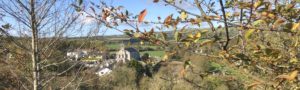
The featured photo above of Glenmore Village was published in the Irish Independent (25 Oct. 1938, p. 3). The caption: Nestling in the valley—the picturesque little village of Glenmore, on the road from Waterford to New Ross.
Special thanks to Pat Coady for sharing his newspaper clipping.
Dr. Kathleen Moore Walsh
Glenmore POW: Thomas Kieran Walsh (1917-1977), Part II

Last week we highlighted the early life and Glenmore kin of Thomas Kieran Walsh (1917-1977) a native of Ballinlammy, Glenmore. See our post of 11 November 2024. Today, we are going to feature Tom’s war years as a POW of the Japanese for 3.5 years. Most of the information regarding Tom’s service was graciously provided by Tom’s nephew Leo Walsh. Leo has written a wonderful tribute to his Uncle Tom, entitled Rough Justice (Dec. 2023).
Enlistment
When Tom arrived in London in 1936 the country was still in the depths of the depression which made jobs scarce. Additionally, King George V. died early in the year and his eldest son caused a constitutional crisis when he abdicated the throne in December 1936. Just two months earlier, on 13 October 1936, Tom enlisted as a labourer with the Royal Engineers. He passed his physical although he was 6 feet tall and only weighed 136 pounds (Walsh, p. 24). We were not able to find much information regarding Tom’s maternal grandfather, John Dooley (c.1839 -1889), and his military service. Thus, it is not known if Tom’s enlistment was influenced by a grandfather he never met.
Less than a year later Tom was a certified Search |Light Operator for the 54th Field Company. In early 1938 Tom was ordered to British Malaya (Walsh, p. 24). Tom arrived on St. Patrick’s Day 1938 and found the heat very oppressive. He was sent by train to Penang on the northwest coast (Walsh, p. 26-27). Tom marvelled at the lush green of the countryside, pineapple fields and what he would later learn were rice paddy fields (Walsh, p. 27)
The Fall of Singapore 1942
Although WWII was raging in Europe, Tom was engaged in a peacetime active duty while enjoying the colonial life. The military and civilians of Malay and Singapore knew that the Japanese were interested in Singapore, but they wrongly believed that the British army’s strength discouraged an attack (Walsh, p. 29).
On the 7th of December 1941, the Japanese attacked Pearl Harbor. The following day the Japanese attacked Malay. Tom was still in Penang, and his regiment were ordered to prepare to evacuate 600 miles south to defend Singapore. Preparations included destroying anything the enemy might find useful. Civilians also headed to Singapore believing it a safer place. At this early stage the Japanese were not taking prisoners instead executing anyone in their path (Walsh p. 30).
The battle for Singapore commenced 8 February 1942 and the city fell on 15 February. During the battle for Singapore war atrocities were committed such as the wanton execution of wounded British soldiers and the medical personnel at the Alexandra Medical Hospital (Walsh, p. 31). With the surrender of Singapore, 35,000 British soldiers became POW’s and in total 80,000 military and civilians including women and children were taken prisoner (Walsh, p. 35).
Life as a POW
Tom like the other 35,000 POW’s faced barbaric treatment. They were subjected to long periods without food or water, standing in the hot sun awaiting roll calls and orders. Eventually he was marched to a squalid River Valley Camp. On this march they were greeted by the impaled heads of the civilian Chinese victims of the Japanese army (Walsh, p. 36). Tom remained in the filthy River Valley Camp until December 1942.
Tom’s days were tedious and consisted of: tenko (roll call); work; rice; work; tenko; and sleep. Other than beating the prisoners the guards tended to ignore them. With up to 5,000 prisoners and one water tap prisoners used all their spare time queuing for water (Walsh, p. 38).
Changi Camp
In December 1942, Tom was transferred to Changi Camp which was on the mainland to work to repair bomb damaged towns. Discipline was much more severe. Before Tom arrived a POW tried to escape. He was summarily executed along with a few others who did not attempt to escape. All 20,000 POW’s at the camp were ordered into a square that could accommodate 1,000 men. Although only provided a small cup of water a day the British Officer in charge refused to sign a pledge against escaping. After several days POW’s were falling from dysentery and malaria. The Japanese Commander threatened to place 2,000 healthy POW’s in with the sick POW’s. Under duress the commanding British officer finally signed the pledge, and this led to harsher treatment by the Japanese guards (Walsh, p. 40).
Tom shared a 1 man cell with 5 or 6 others. He worked on the docks unloading ships which provided opportunities to acquire food and medicines. His worst job was burying the Chinese civilians that were bound in barbed wire, shot and dumped on the beach. The only day of rest was Sunday. It was at Changi that Tom first heard rumours that the Japanese were building a railway from Burma to Thailand (Walsh, p. 41).
Building the Burma to Thailand Railway
Tom was selected to join the Kanu Camp to build the railway. His transportation to the Camp was a closed railway car that was packed with POW’s only allowing them to stand. There was no water, food or sanitation. The following day they were provided with a small bowl of rice, a cup of water and the dead POW’s were dumped out of the car. Tom lost track of how long he was in the railway car (Walsh, p. 43). After arriving at the new railway Tom was marched 60 miles north to “Hell Fire Pass” a massive rock face along the river (Walsh, p. 44).
Camp Kanu was a living hell for Tom. Guards beat prisoners with wire whips or canes, not just to discipline, but also to push them to exhaustion and death. Not only did the POWs work long days, they were forced to work in the dark. The lanterns used attracted insects that spread malaria among the POW’s.
Guards were free to act in any way they wished with POW’s being beaten to death for being too slow or not bowing low enough etc. Often the heads of the victims would be impaled on poles in the camp to serve as a warning to others. Food was minimal and contaminated. The POW’s before setting off for work would gather firewood and whatever food they could find in the jungle near the camp like bananas and yams (Walsh, p. 50).
POW’s starved to death and died from cholera, dysentery, malaria and infections. Malaria and dysentery were Tom’s constant companions, but he avoided cholera because he was vaccinated for it when he enlisted. Tom’s uniform had fallen apart and he wore a “Jap Happy” loin cloth. In some ways Tom felt cleaner because there were less places for the lice to hide. He was also barefoot and knew that cuts from the sharp rock fragments could cut his feet and lead to an infection and death (Walsh, p. 51). At one point Tom collapsed from malaria and the guards didn’t even waste a bullet. They walked off and left him. A native came out of the jungle and nursed him for a few days. Her act of kindness restored his faith in humanity (Walsh, p. 52). At Hell Fire Pass over 700 POW’s died (Walsh, p. 54).
Camp Hintok
Tom walked a couple of miles and rejoined his crew. In September 1943 he was moved to Hintok where he remained until the Death Railway was completed in October 1943. He was unofficially promoted to Lance Corporal. This camp had a large fence around it, not to keep the POW’s in but to keep tigers out of the camp. “Tom had survived and beaten the odds despite slaving through mud and virgin jungle across deep gorges and mountainous country, sweltering heat and cold weather, torrential rains, paltry nutrition, and no shoes or access to medical supplies” (Walsh, p. 53).
Camp Tarsao
In January 1944 Tom was transferred to a hospital camp 15 kilometres south. He remained there until June 1944. While he was there in February 1944 Tom was officially declared missing by the army and his father William Walsh (1892-1971) was formally notified by the British Army. In the report that Tom made after the War (Medical Report of Repatriated POWs) he was in a bad way when he got to Camp Tarsao with an abscess on his right buttock (Walsh, p. 57). Over 806 POW’s are buried in 3 cemeteries of the camp (Walsh, p. 58). Infections without medicines and sanitary conditions were a death sentence, yet somehow Tom survived.
The Last Two Camps
In June 1944, Tom was moved to a relatively new camp called Tamuang, a former tobacco plantation. To reach it Tom travelled on the railway he helped to build with misgivings. He knew that it was weak in spots due to poor construction. Compared to previous camps Tamuang was well laid out and clean. The Japanese army was in retreat and a lot of wounded Japanese soldiers were abandoned there for the POW’s to take care of them (Walsh, p. 59).
In December 1944, Tom was assigned to a labour group that carried war supplies and rations to nearby Japanese troops. Tom would carry on his back sacks of rice weighing 120 pounds. He carried the sack for over a mile and pass it to the next man. Beatings were common and Allied aircraft bombed the area leading to more injuries and deaths (Walsh, p. 61).
Tom was transferred to his last camp, Nakom Hyok, in April 1945. Tom and others were put to work digging trenches and tunnels into the hills surrounding the camp for storing supplies and aviation fuel for the Japanese defence (Walsh, p. 62).
End of the War

The end of the war came quickly after nuclear weapons were used on two Japanese cities in August 1945. After 3.5 years as a POW, Tom was 28.5 years old and free. The 15th of August the Japanese Emperor announced the country was surrendering and it became official on 2 September 1945. Shortly thereafter Tom was on a ship heading back to England. He landed at Liverpool on 12 October 1945. Tom had a medical which noted he needed dental care. He was found not to need hospitalisation or specialist care. The Medical Officer noted that he was “somewhat subdued” (Walsh, p. 64).
Back to Ballinlammy, Glenmore
Tom was placed on leave until the end of November 1945. He went home to Glenmore to see his parents and family. Just the year before his family was told he was missing and presumed dead. One can only imagine their relief when he returned home. Tom decided to return to London and make it his home. He left the army and eventually in 1948 he landed a job at Ronson as a technical supervisor and remained with that company.
Civilian Life

While a POW Tom’s pay accumulated. He had over £400. In 1948 he met a petite and beautiful woman named Daphne Jarvis ( c. 1922-2007). They married in 1953 and bought a house in Chessington, Surrey, on Hook Road (Walsh, p. 65). Tom never spoke about his experiences as a POW to anyone but Daphne. Daphne spoke about the scars Tom carried on his neck from beatings etc. Tom died at 59 years of age in 1977. He is buried in Glenmore. His beloved wife Daphne died in 2007 at the age of 85. What is interesting is the fact that even 32 years after the end of the war no mention of his military service or his internment as a Japanese POW was in his obituary in the Munster Express.
Obituary
Munster Express, Fri. 25 Feb. 1977, p. 12
Died in England—Mr. Thomas Kieran Walsh, Chessington, Surrey, Who has died in Epsom, do. was son of the late William and Mrs. Bridget Walsh, Ballinlammy, Glenmore, whence he emigrated forty years ago. He had been on the staff of Ronson Products Ltd., Leatherhead, Surrey, since 1948, and for the past 15 years had been Assistant Manager of the Engraving Department. His demise at the early age of 59 is deeply regretted. He spent his holidays in Ireland every year with his wife at the home of his brother in Ballinlammy.
He was husband of Mrs. Daphne Walsh, Chessington; brother of Jack Walsh, Ballyeden, Rosbercon; Patrick Walsh, Airmount Slieverue; Bill Walsh, Poleberry, Waterford; Joe Walsh, Ballinlammy, Glenmore and uncle of Kevin, Noel and Carmel Walsh, Ballyeden; Leo Walsh, Dublin; Patrick, Edward and Thomas Walsh, Airmount, Slieverue; Mrs. Breda Dalton, Birmingham Bill Walsh, Poleberry; Gerard, Brendan and Vera Walsh, Ballinlammy, and Bernadette Walsh, University College, Galway. He was also son-in-law of Mrs. Daisy Jarvis, London Road, Kingston-on-Thames, Surry. The remains left Dublin Airport on Tuesday of last week for Glenmore Parish Church, and interment took place in the adjoining cemetery on Wednesday morning after Requiem Mass. Rev. T. Heneberry, C.C., Glenmore, was celebrant and also officiated at the graveside, assisted by Very Rev. J. O’Shea, P.P., do. The large attendance included many relatives, friends and sympathisers from South Kilkenny and from Surrey.
Please send any corrections or additional information to glenmore.historygmail.com.
Dr. Kathleen Moore Walsh
The featured photo above is Thomas Kieran Walsh from the front cover of Rough Justice. The photo of Thomas Kieran Walsh after his release and looking haunted is from page 74 of Rough Justice. The wedding photo of Thomas Kieran Walsh and Daphne Walsh née Jarvis is from page 68 of Rough Justice.
Glenmore POW: Thomas Kieran Walsh (1917-1977) of Ballinlammy
Today, we are going to feature the early life and family of a native of Ballinlammy, Glenmore, Thomas Kieran Walsh (1917-1977). His nephew, Leo Walsh wrote a book called “Rough Justice” (Dec. 2023) “which is an account of how a simple mistake led to a near death sentence for Uncle Tom on the Burma-Siam railway.” (p. 7.) Thomas Kieran Walsh (1917-1977) was a WWII prisoner of war held by the Japanese. In our next post we will highlight his military service, internment and life after the war. Ironically, another man with Glenmore connections, also named Thomas Walsh (1911-1945) was a Japanese POW in Burma. See our post of 25 July 2020. Both men survived their internments.
Thomas Kieran Walsh, Tom, as he was called, was born 11 July 1917. He was the eldest child of William Walsh (1892-1971) and his wife, Bridget Dooley (1884-1958). Walsh is a common name in Glenmore and this family was nick-named the “Game Keeper Walsh’s” because William worked part time as a game keeper (Walsh, p. 14) around Davidstown, Ballinlammy, and Ballinclare. The farmers in the area clubbed together to create “a preserve” to stop people from hunting, and they hired William Walsh (1892-1971) as their gamekeeper.
Parents
William Walsh (1892-1971) of Jamestown, Glenmore married Bridget Dooley (1884-1958) of Ballylammy (sic) on 9 October 1916 at Glenmore. William was the son of Thomas Walsh (labourer) and Bridget was the daughter of John Dooley (labourer). According to the civil records William Walsh was born 1 September 1892 at Jamestown to Thomas Walsh (c. 1856-1893) (labourer) and his wife Mary Roche. According to the Glenmore baptismal records he was born 23 August 1892 and baptized the following day.

Bridget Walsh née Dooley (1884-1958) was born 11 October 1884 at Ballinlammy the daughter of John Dooley (labourer) and his wife Anne Kennedy. Per the death register Brigid Walsh née Dooley died in 1958 of a cerebral thrombosis, her husband, William Walsh, was present when she died at home in Ballinlammy.
Siblings of Thomas Kieran Walsh
In his book, Leo Walsh noted there were five brothers and two unnamed siblings who died in infancy. The five brothers were Tom, Jack, Patrick, Bill and Joe (p. 13). From the Dooley Glenmore headstone were found the names of the children who died in infancy, Mary and Edward Walsh.
Mary Walsh (9 Nov. 1919-4 March 1924) died on 4 March 1924 at the age of 4. Her death cert noted that she was delicate from birth. Her father William Walsh was present at her death in Ballylammy (sic). Edward Walsh (c. 1924-22 July 1928) died on 22 July 1928 aged 4, of suspected sunstroke. His father William Walsh was present at his death in Ballinlammy.
Glenmore Ancestors: Walsh, Dooley, Roche and Kennedy
Paternal Grandparents
Thomas Kieran Walsh’s paternal grandparents were Thomas Walsh (c. 1856-1893) and his wife Mary Roche (b. 1856 ). Thomas Walsh, aged 26, of Haggard and Mary Roche, of Jamestown, were married at Glenmore on 21 January 1886. Thomas was a labourer and son of Edmund Walsh. Mary Roche was a 29 year old servant and the daughter of William Roche (labourer). Known children born to this union include: [1] Mary Walsh (b. 2 Nov. 1886); [2] Ellen Walsh (b. 19 Feb. 1888); [3] Hannah Walsh (b. 9 March 1889); [4] Edward Walsh (29 Dec. 1890); and [5] William Walsh (b. 23 August 1892). The father, Thomas Walsh (c. 1856-1893) died a year after William’s birth leaving his wife of 7 years with five young children.
A newer headstone in Glenmore recites that Thomas Walsh died in 1894 at the age of 38. According to the death register a Thomas Walsh died on 22 October 1893 of bronchitis at Haggard, Glenmore. He was 32 years of age and his father Edmond Walsh was present at his death.
Mary Walsh née Roche (1856- ?) was baptized at Forristalstown on 9 July 1856 the daughter of William Roche and his wife Mary Murphy. Two years later her brother Patrick Roche was born at Jamestown. Today, there are still Roches in Jamestown.
Maternal Grandparents
Thomas Kieran Walsh’s maternal grandparents were John Dooley (c.1839 -1889) and his wife Anne Kennedy (c. 1843-1913). The couple were married at Glenmore on 7 February 1881. John was the son of Michael Dooley (labourer) and Anne was the daughter of William Kennedy (mason). At the time of the wedding both fathers were deceased, and John’s profession was “pensioner.” The couple were only married 8 years before his death.
Anne Dooley née Kennedy died, widowed, aged 70, on 2 January 1913 at Ballinlammy. Her son Michael Moore (?) was present at her death. John Dooley died on the 28th of December 1889 at Ballinlammy. He was 50 years of age, and his profession was listed as “Army Pensioner.” It was noted he died of natural causes “probably heart disease.” His widow, Anne Dooley was present at his death.
From the Dooley Glenmore Headstone in addition to Bridget Walsh née Dooley (1884 -1958) there were at least two other children of John Dooley and his wife Anne Dooley née Kennedy: Patrick Dooley (c. 1882- 1956) died 9 October 1956, aged 74; William Dooley (?-1963) died 10 March 1963, aged 63?, in Santa Barbara California.
In the 1911 Census Anne Dooley was aged 68 and farming in Ballinlammy. Her son William was aged 24 and working as an agricultural labourer and her daughter Bridget was 26. We believe that William Walsh married into the Dooley holding in Ballinlammy.
Tough Times in Ballinlammy
Leo Walsh described the cottage where Thomas Kieran Walsh was raised in Ballinlammy as isolated with no running water, no electricity and no sanitation. The cottage had a thatched roof that was leaky and it was upgraded to a slate roof. There were no ceilings, just the rafters and at night stars could be seen. The floors were concrete with no luxuries such as carpeting or a rug. There were no windows just window openings fitted with removeable wooden panels to help keep the cold out. The front door was called a half door. The bottom could be closed to keep out animals while the top half could be opened to let in light and air (Walsh, p. 14-15).
As was the custom of the time the family kept a cow, some goats, chickens and a pig. The cows and goats provided milk and cream and a pig was slaughtered every year with some meat being kept back for the family to consume. Although they produced eggs they were not usually consumed. Only at Easter they would each be given a boiled egg (Walsh, p. 15). It appears that most of what was produced on the small holding was sold.
Their father William Walsh (1892-1971) worked elsewhere as a farm labourer and thought his sons would also become farm labourers. Their mother Bridget Walsh née Dooley (1884-1958) recognised her children’s intellectual potential and encouraged them to do well in school. The school they attended was a good few miles away. After doing their chores they would walk to school in bare feet in warm weather.
“The Walsh boys were a humble bunch without an aggressive bone in their bodies, but their frugal and challenging up-bringing may have given Tom the fortitude and skills necessary to walk away alive from the jungles of Thailand, after three and a half years of imprisonment as a POW. He was born to survive” (Walsh, p. 16).
The Sugar Beet Factory Opportunity & Disappointment
Early in the 1930’s Tom went to a vocational school and earned a trade certificate. He applied for 1 of 3 apprenticeships offered by the newly nationalised sugar beet factories. The whole world was impacted by the Great Depression and jobs were scarce. Tom was awarded one of the five-year apprenticeships to train to become an electrician. Tom was assigned to the Tuam factory. He worked 9 hour days and earned a quarter of what electricians made. In his second year, in 1935, he bought a bicycle for 5 shillings.
Unfortunately, the bicycle had been stolen, and Tom’s protests of innocence were ignored by the arresting officer and the judge who found him guilty. The verdict was published in the local newspaper and Tom’s apprenticeship was terminated. Mortified he decided to go to London rather than return home (Walsh, p. 20-21). In 1936, at the age of 19 Tom said goodbye to his apprehensive family and sailed from Rosslare to Fishguard (Walsh, p. 21).
Please send any corrections, additional information or photos to glenmore.history@gmail.com.
Dr. Kathleen Moore Walsh
Special thanks to Leo Walsh for writing “Rough Justice” and to Martin Gahan for sharing his copy of the excellent book. The photos are from the book. The featured photo of Thomas Kieran Walsh in uniform is from the front cover. The photo of his mother Bridget Walsh née Dooley is from page 18.
From Danny’s Files: Glenmore Parish Death Records 1975

In a blue binder Danny Dowling (1927-2021) kept a copy of the Glenmore parish burial records from 1927-2013. While it was initially thought that the records would provide information as to when most deaths occurred in a given year, unfortunately, the records are not as complete as the parish records for baptisms and marriages. Today, we publish the parish burial records for 1975. See our previous post of 23 September 2024 for information regarding available on-line records and 1974 parish death records.
Glenmore Deaths 1975
Sixteen deaths are recorded in the 1975 parish records. For the most part the only information recorded is the deceased’s name, age, and date of death as well as the date of burial. All other information below was been found in newspaper obituaries, census records, Danny’s notes or from asking local residents. If an obituary of a deceased was already on our Glenmore surname pages an abridged obituary is provided below with a link to the surname page.
Average Age at Death
Of the sixteen deaths recorded two were young boys tragically killed in a farmhouse fire. Excluding the two boys 9 men died and 5 women. The average age for the 9 men was 66.6, while the average age for the 5 women was 65.4. In most developed countries 50 years ago the life expectancy for women was greater than that for men. However, this is one year in isolation. This list also contains another set of brothers who died within a few months of each other.
Married Glenmore People Lived Longer
The other interesting fact concerns the marital status of the deceased. Excluding the children, information was found for 8 of the men. Five had been married and 3 never married. The average age of death for the married men was 72.8 and for the never married men 62.3. Information was found for all 5 women. The average age of death for the 2 married women was 69. The average age of death for the three women who never married was 53.
The Glenmore List
[1] Thomas Walsh, aged 47, died 1 March 1975.
Munster Express, Fri. 14 March 1975, p. 20. The death occurred in Ardkeen Hospital, Waterford of Mr. Thomas Walsh (c. 1928-1975) of Davidstown, Glenmore at the comparatively early age of 46. A well-known figure in farming circles, he was the husband of Mrs. Maureen Walsh, who is a member of the Hartley family Half-way House, Co. Waterford; father of Eleanore, Edmund and Marie. The full obituary can be found on our W Surname page.
[2] Michael Tobin, aged 49, died 12 March 1975, Mullinaharigle [no further information could be located]
[3] Rev. M. Brennan, aged 80, died 23 March 1975.
Rev. Michael Brennan was the Parish Priest of Glenmore in 1975. He lived in the Parochial House on Priest Lane, Robinstown, Glenmore and kept greyhounds. He also hunted pheasants. A nice, humble, gentleman. He was only in Glenmore for a short time, but was missed when he died. Shortly before his death he was asked to say a few words at a Creamery Dance. He said that the creameries were set up in hard times by people who did not have much and were stretched. He hoped that they now were getting the benefit of the business they created.
[4] Patrick Jones, aged 78, died 9 April 1975.
Patrick Jones (1897-1975) was born 29 January 1897 at Moulerstown the son of George Jones (c. 1866-1945) and his wife Bridget Murphy (c. 1869-1945). Patrick Jones married Alice Dunne (c.1890-1967) and was the father of Seamus (c. 1932-2016) and Pakie (c. 1932-1006) Jones. The family lived in Glenmore Village near Eily Heffernan’s shop and in 1961 Patrick’s profession was listed as a road worker in Danny Dowling’s list of residents. See our post of 25 April 2021 regarding the “Gallant Glenmore Brothers.”
[5] Ellen Purcell, aged 54, died 6 June 1975.
Kilkenny People, Fri. 20 June 1975, p. 10. Miss E. Purcell—the death took place in the Auxiliary Hospital, Kilkenny, of Miss Ellen Purcell (53) [c. 1921-1975] Moulerstown, Glenmore. A well-known and respected inhabitant of the district, she had been unwell for some time past. She was sister of Mrs. Margaret Greene (c. 1918 -2013) Moulerstown, and the late Mrs. M. Maher, Derrylackey, Ballyhale. Interment took place at Glenmore after Mass celebrated by Rev. P. Madigan, C.C., do.
Luckily her older sister Margaret was born on 22 December 1919, and we were able to obtain information from Margaret’s birth registration. Their father was Peter Purcell (farmer) of Moulerstown, Glenmore. Their mother was Anne Purcell née Long.
[6] Mrs. Mary Dunphy, aged 92, died 18 June 1975
Munster Express, Fri. 27 June 1975, 6. Mrs. Mary Dunphy (c. 1883-1975), Ballyfacey Upper Glenmore, died at her residence at the age of 92 one of the oldest inhabitants of the parish. She was the last surviving member of the Gorey family, Ballyconnacht, Tullogher, and had been residing in Ballyfacey since her marriage over sixty years ago. Her husband, the late Michael Dunphy (c. 1881-1941) died in 1941, and she was the mother of Richard Dunphy, Miss Nora Dunphy, Ballyfacey; the late Eily Dunpphy, do: mother-in-law of Mrs. Eileen Dunphy, and grandmother of Mary, Noreen, Michael, Seamus, Richard, Billy, and twin boys, John and Patrick Dunphy. She was also sister of the late Ellie and Annie Gorey, Ballyconnacht, and the late Mrs. Bridie Walsh, do, and aunt of Denis Walsh, do. and Mrs. Stasia Ryan, do. The remains were removed to Glenmore Parish Church on Thursday evening, and interment took place in the adjoining cemetery on Friday morning after Requiem Mass. Celebrant was Rev. William Dalton, Chaplain, Holy Faith Convent, Killester, Dublin (a native of Ballinaraha, Mullinavat) relative of deceased, who also officiated at the graveside, assisted by Very Rev. J. O’Shea, P.P., Glenmore.
[7] Mary Forristal, aged 52, died 19 July 1975.
Munster Express, Fri. 18 July 1975, p. 5. Death of Miss M. Forristal (c. 1923-175) The death took place in St. Canice’s Hospital, Kilkenny, on Thursday last of Miss Mary Forristal, Robinstown, Glenmore, at the age of 52. Deceased, who had been out of her health for some time past, was in her youth, a shop assistant at McKeon’s, South Street, New Ross, for some years.
She was sister of Messrs. Michael, John and Martin Forristal, Robinstown; Sister M. Bernadette, Sacred Heart of Mary Convent, Montebello, California; Sr. Paschal of the same order Tarrytown, New York; Mrs. Nancy O’Brien, Robinstown; Mrs. Catherine Phelan, Ballyveria, Glenmore; and aunt of Francis O’Brien, Robinstown. The remains were removed to St.. James Parish Church, Glenmore, on Friday evening, and burial took place in the adjoining cemetery on Saturday morning after Requiem Mass. Celebrant was Rev. Madigan, C.C., Glenmore, and the final prayers at the graveside were recited by Very Rev. J. O’Shea, P.P. do. See our post of 13 May 2020 regarding the tragic death of her father Martin Forristal (1879-1931) when she was about eight years old.
[8] Richard Cody, aged 55, died 7 Sept. 1975.
Munster Express, Fri. 19 Sept. 1975, p. 20. Richard Cody (c. 1921-1975) of Ballycroney, Glenmore died at Ardkeen Hospital, Waterford, following a brief illness, at the age of 54. Deceased, who well known in farming circles in the district, was unmarried, and brother of Messrs. John, Walter, and Michael Cody of Ballycroney. The remains were removed to Glenmore Parish Church, and burial took place in the adjoining cemetery following Requiem Mass celebrated by Rev.. Thomas Heneberry, C.C., Glenmore, who also officiated at the graveside.
Their father was Michael Cody (c. 1878-1947) who married their mother Bridget Aylward of Ballyfacey at Glenmore on 4 February 1920. Michael was a farmer and the son of Otho Cody (farmer) of Ballycroney. Bridget was the daughter of John Aylward (farmer) of Ballyfacey. The witnesses to the wedding were James Cody of Ballycroney and Maggie Aylward of Ballyfacey.
[9] Andrew Heffernan, aged 82, died 7 Sept. 1975
Munster Express, Fri. 19 Spt. 1975, p. 20. Death of Mr. A. Heffernan—Mr. Andrew (Andy) Heffernan (1893 -1975) who died suddenly at his daughter’s residence, Rochestown, Glenmore, was a native of Aylwardstown, Glenmore, and a well known figure in farming and sporting circles in the parish. He was captain for some years of the Glenmore team which won a record of nine county senior championships between 1915 and 1924, all in succession with the exception of 1920, when Coolagh were awarded the title as Glenmore took the field after the appointed time.
He also played with Kilkenny in the Leinster Senior Championships in 1915, 1920 and 1922, with a number of colleagues of the Glenmore team. When he was married in 1919, to the former Miss Bridget Roche, of Rathinure Glenmore, he was presented with a Testimonial by the local football club in appreciation for his services and leadership which were an inspiration to the players and club members.
Aged 82, he was husband of Mrs. Bridget Heffernan, and father of Messrs. Mick Hefernan, Maypark, Waterford; Jimmy Heffernan, Ballyneale, Tullogher (former Kilkenny All-Ireland hurlers); Paddy Heffernan, Rockenham, Ferryban; John Hefernan, Aylwardstown; William Heffernan, Newcastle Road, Galway; Peter Heffernan, London; Mrs. Mary Aylward, Rochestown; Mrs. Nellie Doherty, Ballinlammy; and Mrs. Biddy Myles, London.
He was brother of Mr. Nicholas Heffernan, London; Mr. Stephen Heffernan, Chicaggo, and is also survived by over 50 grandchildren. Interment took place at Glenmore on Tuesday of last week after Requiem Mass celebrated by Rev. T. Heneberry, C.C., Glenmore, who also officiated at the graveside, assisted by Very Rev. Delaney, Adm. Tullogher; Rev. Richard Phelan, Castletown, Laois, and Rev. Paul Fitzgerald, Director of Social Services, Kilkenny, and Rev. P. Dalton, C.C. Ferrybank.
The large attendance, both at the removal of the remains and burial, included representatives f Kilkenny County Board GAA, Kilkenny Souther Board, Glenmore Hurling and Football Club, Mount Sion and Tullogher GAA Clubs, Clover Meats Ltd., Ferrybank, a number o surviving members o the old Glenmore and Kilkenny Football teams, as well as many relatives, friends, and sympathisers from Countiies Kilkenny, Waterford and Wexford. His six sons acted as pall bearers. Funeral arrangements were by T. Power and Sons Ferrybank.
Andy was the son of Michael Heffernan (c. 1847-1924) of Aylwardstown and his wife Bridget Kennedy (c. 1854-1947) of Rathinure. Interestingly Andy married his sister Alice Roche’s (née Heffernan) sister-in-law Bridget Roche.
[10] Gerard Kehoe, aged 11, died 1 Oct. 1975 and
[11] Richard Kehoe, aged 7 ½, died 1 Oct. 1975
Munster Express, Fri. 3 Oct. 1975, p. 1—Two young brothers, Gerard and Richard Kehoe lost their lives when fire swept through their home shortly before midnight. They got trapped on a landing in the two-storey old mansion type farmhouse [Mount Ida] at Rochestown, and their badly charred bodies were later found on the ground floor by firemen, both having been thrown down when part of the ceiling collapsed.
Gerard and Richard were the sons of John Kehoe (c. 1916-1991) and Peggy Kehoe née Aylward (c. 1935-2023) of Rochestown. Peggy was Paddy “the Barrister” Walsh’s granddaughter. Peggy’s photo and obituary is available on RIP.ie.
[12] Michael Cody, aged 79, died 29 Oct. 1975.
Munster Express, Fri. 7 Nov. 1975, p. 6 of Weatherstown. Michael Cody’s (c. 1896-1975) full obituary is on our C Glenmore family page.
A former well-known footballer, with his brothers Martin and Paddy won a number of senior County championships with his parish during the period from 1915 to 1924, when with the one exception in 1920, Glenmore took all the titles. He was married to Anne Cody (c. 1909-1989 née Woods) who was a native of Ballymartin, Tullogher and father of Messrs Paddy and Donal Cody, Weatherstown; Michael Cody, Athlone, Co. Westmeath; Nicholas Cody, Ballyveria, Glennmore; and Mrs. Mary Dowling, Tara, Co. Meath.
Michael Cody (1896-1975) was born on 1 April 1896 at Weatherstown to Patrick Cody and his wife Mary Knox. One elderly Glenmore resident today stated that Michael Cody sang in the Glenmore Choir for years until he was an old man.
[13] Catherine Murphy, aged 76, died 2 Nov. 1975
Catherine “Kate” Murphy née Irish (1891-1975) of Davidstown, Glenmore died at Rosario Nursing Home. Her obituary lists her age as 84. She was widow of William Murphy of Davidstown who died in 1954 and mother of Edward Murphy of Davidstown.
Catherine was born 14 August 1891 at Ballinlammy, Glenmore, the daughter of James Irish and his wife Mary Heneberry. It is believed (from Danny Dowling (1927-2021) that James Irish bought the farm where Michael Walsh poisoned two bailiffs. See our post of 6 October 2024. Catherine’s complete obituary can be read on our M Glenmore surname page.
[14] John Cody, aged 52, died 12 Nov. 1975.
Munster Express, Fri. 21 Nov. 1975, p. 19. Death of Mr. J. Cody—Mr. John Cody (c. 1923-1975) Ballycroney, Glenmore, who has died in St. Canice’s Hospital Kilkenny, was a member of a well-known farming Families. Deceased, who has been out of his health for some time past, was brother of Messrs Walter and Michael of Ballycroney, and the late Richard Cody, do, who died last September. The remains were removed to Glenmore Parish Church on Thursday evening last, and burial took place in the adjoining cemetery on Friday morning after Requiem Mass. Celebrant was Rev. T. Heneberry, C.C. Glenmore, who also officiated at the graveside.
[15] Mary Moran, aged 53, died 7 Dec. 1975
Mary Moran proved impossible to locate in newspaper searches etc. The Moran headstone in cemetery attached to St. James provides that Mary may have been called Bridget Moran (4 Nov. 1916—6 Dec. 1975).
Mary/Bridget was the daughter of Hubert Moran (25 April 1886-10 May 1951) and his wife Mary Kate Moran née Irish (15 Aug. 1888-12 Dec. 1935). It is believed that Mary/Bridget resided and worked on a farm in Co. Waterford.
[16] Nicholas Mernagh, aged 78, died 9 Dec. 1975.
Munster Express, Fri.19 Dec. 1975, p. 19—Death of Mr. N. Mernagh—the death occurred at Arkeen Hospital, Waterford, of Mr Nicholas Mernagh (c. 1897-1975), Jamestown, Glenmore. Deceased, who was a well-known and esteemed personality in the district and was husband of Mrs. Margaret Mernagh, do., and father of Mrs. Johanna Doyle and Mrs. Bridie Murphy. He is also survived by a number of grandchildren and other relatives. The remains were removed to St. James’s Parish Church, Glenmore on Wednesday evening of last week an interment took place in the adjoining cemetery on Thursday morning after Requiem Mass. Celebrant was Rev. T. Heneberry, C.C., Glenmore who also recited the prayers at the graveside.
Nicholas Mernagh was born in Wexford. His father, John (Jack) Mernagh (c. 1855-1911) worked for the railway and moved his family to Ballyverneen, Glenmore circa 1906. The 1911 Census reveals that Jack was 53 years of age and had been married to Mary (aged 42) for 26 years. They were both born in Wexford and were the parents of 16 children, but only 12 of the children were alive in 1911. The ten children living with them in 1911 included: Patrick, aged 23; John, aged 21; James, aged 19; Stephen, aged 17; Bartholomew, aged 13; Thomas, aged 10; Adain, aged 8; Nicholas, aged 6; Mary, aged 5 and Lizzie, aged 3. All the children except Mary and Lizzie were born in Wexford. The 1911 census records that there were 12 members of this family living in a three room house owned by the Dublin and South East Railway.
Nicholas married Margaret Mackey (c. 1905-1978) of Weatherstown, Glenmore.
Please send any corrections, additional information or photos to glenmore.history@gmail.com.
Dr. Kathleen Moore Walsh
From Danny’s Files: 1977 Glenmore Clippings

During the 7 decades that Danny Dowling (1927-2021) collected information on Glenmore he often tore or cut newspapers articles out of local newspapers. Some of these articles were placed in files that were then deposited in one of his several filing cabinets. The file marked Parochial House contained articles regarding the sale of the property in 1977, but there were several articles in the file that were not related including a newspaper photo of the Glenmore Under 12 School Hurling Team.
Sale of the Glenmore Parochial House
In September 1977 the work was almost complete on the new priest’s house next to St. James’s Church. Prior to this time the parish priests lived in a two-storey house on Priest’s Lane in Robinstown, Glenmore. Below is an advertisement for the sale of this four bedroom house on Priest’s Lane. The featured photo above was from the sales advertisement.

P.N. O’Gorman Ltd. of New Ross announced the “important sale” of the “Glenmore Parochial House with out-offices and approximately 2 acres. The property which is situated midway between Waterford and New Ross, and convenient to the main road, held in Fee Simple. P.L.V. £11.50. Consists of: attractive two-storey residence, containing porch, pantry and scullery, two bedrooms (16’ x 14’), bedroom (12’ x 10’ 6”), small bedroom (10’ 6”x 6’9”), bathroom and toilet, oil fired central heating, ESB lighting.”
“The out-offices, comprise of two stables, cow house, fuel house, garage, small hay shed, etc. The above holding is one of the most attractive properties to come on the market in this area for a number of years, ideally situated, and convenient to Church and schools. Viewing: only by appointment with Auctioneers” (New Ross Standard, Friday 30 September 1977, p. 20).
Eight Acres Sold to Glenmore GAA
It was reported in the Kilkenny People in 1977 that Glenmore GAA purchased eight acres of parochial land for £8,000 which they hoped to develop into hurling and football pitches (Kilkenny People, Fri. 28 Oct. 1977, p. 21). The land purchased was part of the Priest Lane holding. No pitches were built on this land. This land was traded to Neddy O’Connor, of Graiguenakill for lands in Graiguenakill where a pitch was built.
Completion of New Glenmore Parochial House
The new Parochial House at Glenmore, which is adjacent to the Parish Church, was i late October 1977, now nearing completion. It was reported that it would be ready for occupation in the near future. The contactor was Mr. John Kennedy, Slieverue, who deserved to be complimented on the excellent job he did on the new building, “which replaces the old Parochial House at Robinstown, recently sold” (Munster Express, Fri. 28 Oct. 1977, p. 22).
Sale Details
The Parochial House at Glenmore together with 2 acres of land, was sold by public auction to Mr. Pat Walsh, Jamestown, Glenmore, for £19,000. Bidding opened at £15,000, and continued between Mr. Walsh and Mr. Kelly, Solicitor, New Ross, acting for a client, until a figure of £19,000 was reached, at which it was knocked down to the former, who is a haulage contractor with the firm of Bellferry, Waterford. The sale was conducted by Messrs. P. N. O’Gorman Ltd. auctioneers, New Ross (Munster Express, Fri. 28 Oct. 1977, p. 22).
Glenmore Priest Applied for Public Dance Hall License
In addition to the parish being in the news over the building of a new Parochial House, and the sale of the old one, Glenmore’s Parish Priest,
“the Very Rev. Joseph O’Shea, … made application under the Public Dance Halls Act 1936 to the New Ross District Court for a public Dancing License for premises known as the Parochial Hall, situated in Glenmore” (New Ross Standard, Fri. 26 August 1977, p. 16). This Parochial Hall was the old National School which closed in 1958. It too was sold and is currently in a terrible state with the partial collapse of its roof.
Glenmore Karate Club
In the summer of 1977, the New Ross Standard, stated that “Glenmore is an unlikely place for a Karate Club, but one does exist there, has 24 members who have already made their mark in competition and are now preparing for the All Ireland championships which will be held at the Mansion House, Dublin, in September. The club is affiliated to the Shotakan Karate Club of Ireland.” The only person named in the article from Glenmore was Monica Walsh (the daughter of Bill Walsh (1912-1985). See our post of 27 Feb. 2022.) (New Ross Standard, Fri. 1 July 1977, p. 23).
Were you a member of the Glenmore Karate Club? Do you have any photos of members?
Glenmore Blood Donor Honoured
Danny’s sister-in-law, Mrs. Mary Dowling (née Grace) (1919-2010), of Forritalstown, Glenmore received a “Silver Pelican” for donating blood (New Ross Standard, Fri. 22 April 1977, p. 1).
The Glenmore Police Blotter
Dismissed on the merits were summons against John Foran, Aylwardstown, Glenmore, who had no insurance and no driving license when stopped at Shanbogh on 14th May 1977. He was also summoned for failing to produce the documents and these summonses were also dismissed. Defendant said he called four times to the Garda Station in Glenmore to produce the documents and no one was present (New Ross Standard, Fri. 1 July 1977, p. 10).
Other Glenmore residents were not as fortunate. Margaret Walsh, Ballybrahee, Glenmore was fine £5 in each case for not having tax or insurance on a tractor driven by a juvenile Fines totalling £15 were imposed on Michael Green, Jamestown, Glenmore, who had no tax, no tax displayed and no front or rear marks on a tractor.. (New Ross Standard, Fri. 16 Dec. 1977, p. 17).
Denis Cotterell, Alwardstown, Glenmore was fined £5 and Kathleen Dolan, Glenmore was fined £10 for parking offences (New Ross Standard, Fri. 1 July 1977, p. 10). (See our post of 28 Nov. 2021 regarding Kathleen’s husband silversmith Pat Dolan.)
Glenmore Photos

Glenmore Under 12 School Team
“Glenmore under 12 Schools Team, Co. League and Championship winners. The team was managed and trained by Mr. Michael “Mick” Lynch, N.T. [Mick Lynch (c. 1938-2021].
Front Row (l to r) Dick Murphy; David Power; Jimmy Hartley; Paschal Hennessy; John Boyle, Sean Fitzgerald and Vincent O’Connor.
Centre Row (l to r) Declan Cass; Michael Freyne; Martin Freyne, (Captain of Championship team); Michael Phelan, Pat Barron (Captain of League Team); Willy O’Connor; Richard O’Connor.
Back Row (l to r) Raymond Cass; Eamon Walsh; Thomas Mullins; Francis Kirwan; Michae Duggan; Pat Dowling and Gerard Cass. (Photo by Joe McGrath).” (Munster Express, Fri. 12 Aug. 1977, p. 18).
Dancer Mary Hennessy, of Glenmore

Mary Hennessy, Glenmore and Mary McDonald who took part in the Mulcahy-Bible dancing competitions in the Ardree during the August Bank holiday (Munster Express, Fri. 12 August 1977, p. 15).
Please send any corrections or further information or photos to glenmore.history@gmail.com.
Dr. Kathleen Moore Walsh
From Danny’s Files: Glenmore Parish Burial Records

Anyone attempting to trace family members in Irish records knows that there are difficulties. The only two publicly available on-line census are from 1901 and 1911 as provided by the National Archives.
The General Register Office is responsible for maintaining birth, marriage and death records. Publicly available birth, marriage and death records are found on the IrishGenealogy.ie free website. This website is the work of the National Archives and IrishGeneology.ie. Currently the historic records of births, marriages and deaths on the website cover: births 1864 to 1923; marriages 1845 to 1948 and deaths 1871 to 1973. The website continues to add to the records it indexes and makes freely available.
Prior to this website people tracing their families before the internet had to visit the area libraries, visit National Archives or write letters requesting information. When online resources became available there was often a fee attached and not very helpful if you did not know which townland your ancestory came from. Many people hunted out Village Historians like Danny Dowling (1927-2021). Danny collected information from Glenmore residents for over 7 decades, recorded his own list of residents in 1961 and obtained copies of the Glenmore Parish records. In fact, when work began to digitalize the Glenmore records Danny was asked to help correct transcription mistakes because he was so familiar with the families of Glenmore.
In a blue binder Danny kept the Glenmore parish burial records from 1927-2013. While it was initially thought that the records would provide information as to when most deaths occurred in a given year, unfortunately, the records are not as complete as the parish records for baptisms and marriages. Today, we are going to publish the parish burial records for 1934 and 1974 and in square brackets provide additional information obtained from other sources.
1934 Glenmore Burial Records
In 1934, 10 Glenmore burials are recorded.
[1] Michael Rigby, died 10 January 1934, aged 93. [The death register lists his age as 82, he was a farmer, in Ballyveria, Glenmore, a widower and died of “senile decay.” His son Daniel Rigby was present when he died.]
[2] John Walsh, died 2 March 1934, aged 68. [The death register reveals that he was a widower of Busherstown, Glenmore, and worked as a labourer. He died of broncho pneumonia and his sister Johanna Walsh was present when he died.]
[3] Margaret Doherty, died 26 March 1934, aged 69 (buried Shambo). [Per the death register Margaret Doherty, of Milltown, Glenmore was 67 when she died of asphyxiation from a toxic goitre.]
[4] William Walsh, died 17 April 1934, aged 82. [ Wm. Walsh, of Busherstown, Glenmore, was listed in the death register as an 81 year old, married, farmer when he died of “senile decay” in 1934. His daughter Hannah Walsh was present at his death.]
[5] Thomas Reid, died 19 April 1934, aged 56 (buried Mullinavat). [Thomas Reid was listed as 53 years of age in the death register. He was living in Busherstown, Glenmore, working as a labourer. Thomas was a bachelor. He died of septicaemia (blood poisoning) in the New Ross hospital after 2 days.]
[6] John Fitzgerald, died 25 April 1934, aged 95. [John Fitzgerald died at Knockbrack, Glenmore. He was a widower, farmer. He died of “senile decay” and his nephew John Fitzgerald was present at his death.]
[7] Stone? Roche, died 26 April, 1934 aged 68.
[8] Mrs. Neill, died 30 April 1934, aged 75. [Julia Neill, widow of Weatherstown, Glenmore died of broncho pneumonia. Her nephew Thomas Connolly was present when she died].
[9] Ellie Brennan, daughter of Mr. and Mrs. John Brennan died 1 December 1934, aged 15. [The child died of acute eczema that covered her entire body. The secondary cause of death was nephritis. She was ill 12 days.]
[10] Mrs. Power died at the age of 85. Her date of death is blank. [We could find no woman named Power who died locally in 1934 and was 85 years of age.]
While searching for a Roche who died in April 1934 we came across Richard Roche, of Scartnamore, Glenmore, who died the 17th of November 1934. He was a bachelor, aged 68, farmer. He died “probably of heat stroke.” John Connolly was present at his death in Scartnamore.
While searching Glenmore headstones we found that James Walsh of Ballybrahee, Glenmore died 5 October 1934, aged 43. [James J.K. Walsh (1891-1934) was married to Lizzie J.K. née Heffernan (1884-1955). The couple operated a shop and dance hall in the Village. See our post of 22 December 2020 for further details of the family. ]
1974 Glenmore Burial Records
In 1974, 14 Glenmore burials are recorded.
[1] Catherine Forristal died 25 March 1974, aged 82. [Per Glenmore headstones Catherine Forristal was the widow of Patrick Forristal (c. 1897-1969) of Ballyverneen, Glenmore. Catherine’s maiden name was Phelan of Coolnaleen, Glenmore. Their daughter Peggy married Denis O’Dwyer (c.1929- 2000).]
[2] Michael Delahunty died 30th April 1974, aged 70. [It is believed that this was Mick Delahunty was a native of Rochestown and worked for May Roche of Scarte, Glenmore. Mick was a jolly, bachelor.]
[3] Patrick Walsh, died 2 April, 1974, aged 52. [According to his obit in the Kilkenny People he was from Ballybrahee, Glenmore, married to Peggy Fitzgerald and the couple had five children: Martin, Bernard, Teresa, Breda and Imelda (Fri. 19 April 1974, p. 10).]
[4] James Walsh, died 23 April 1974, aged 79.
[5] Catherine Barry, died 28 May 1974, aged 78. [Per the Glenmore headstone Catherine née Culleton was married to Thomas Barry (c. 1895-1981) of Carrigcloney, Glenmore.]
[6] John Forristal, died 11 August 1974, aged 87. [Per the Glenmore headstones John was a bachelor. He was the son of Laurence & Bridget née Kirwan Forristal.]
[7] Elizabeth Fitzgerald, died 25 August 1974, aged 74. [Per the Glenmore headstones Elizabth was the widow of James Fitzgerald (c. 1889 -1963) of Flemingstown, Glenmore. Elizabeth’s maiden name was Burke].
[8] Brigid Doherty, died 4 September 1974, aged 84. [Per the Glenmore headstones Bridget née Freyne was 78 when she died. She was the widow of William Doherty (c. 1891-1968) of Ballinlammy, Glenmore.]
[9] Michael Murphy, died 4th September 1974, aged 45. [Michael Joseph Murphy was a native of Rochestown, Glenmore and started Murphy’s Motor. He was a husband and father of a young family when he was tragically killed in a car crash. See our post of 27 June 2020 regarding Michael’s runaway tractor in Glenmore Village.]
[10] John Fitzgerald, died 26 September 1974, aged 78. [Per the Glenmore headstones John was from Busherstown, Glenmore the son of John Fitzgerald (c. 1852-1922) and his wife Ellen Sullivan (c.1861-1937). John’s (c. 1896 -1974) wife was Hanna Stasia Cody (c. 1909 -1943).]
[11] Mrs. Bridget Kirwan, died 24 November 1974, aged 56. [Per the Glenmore headstones Bridget’s maiden name was O’Connor and she was a native of Ballyfacey, Glenmore. She married John Kirwan (c. 1902-1993) of Gaulstown, Glenmore. Bridget died of breast cancer.]
[12] John Doherty, died 28 November 1974, aged 81. [Per his obit in the Munster Express, John was a native of Davidstown and a prominant footballer as a young man. He married Bridget Wall, of Davidstown , and the couple had 10 children. Jack, as he was known, was the Director of Clover Meats for 36 years until he retired (Fri. 6 Dec. 1974, p. 6).]
[13] Richard Kehoe, died 15December 1974, aged 61. [Dick Kehoe, of Rathinure, Glenmore, was married to Mary Doherty, of Ballinlammy, Glenmore.]
While searching the Glenmore headstones we located three others that were not listed in the parish burial records.
Edward Fitzgerald, a native of Rathinure, Glenmore, who died in Southport, England, on 19 January 1974, aged 86.
Bridget Power née Mackey died on 4 March 1974 in Southport, England. She was the widow of John Power (c. 1884-1965) of Ballycroney, Glenmore.
Darragh Shine, of Glenmore Village, was just 3 years of age when he was struck and tragically killed by a car on 3 July 1974.
Alice Power née Curran died 20 July 1974 aged 93. Prior to her marriage to Walter Power (c.1888-1961) of Jamestown, Alice was a National School teacher in Glenmore.
Darren James Phelan, of Ballyfacey, Glenmore died in infancy on 18 December 1974.
Please send any corrections or additional information to glenmore.history@gmail.com. Some information and obituaries may be found on our Glenmore Family Surname pages or the obituary page.
Dr. Kathleen Moore Walsh