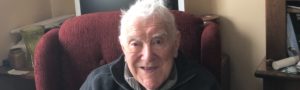


Whether you are climbing your family tree or interested in social history, local place names or folklore we welcome you to Glenmore-History.com and hope that you enjoy your visit.
L A T E S T P O S T S

From Danny’s Files: The Early Public Transport Through Glenmore
-
Founder of Glenmore History’s Anniversary
-
An Unusual Glenmore Grave: The Brereton Family
-
The Plight of Richard Fitzgerald (1793-c. 1860) of Aylwardstown, Glenmore
-
The 1882 Contested Application for a Glenmore Pub
-
From Danny’s Files: Rev. Fr. John Fitzpatrick (c. 1758-1835) P.P. of Slieverue-Glenmore
-
The Tragic Death of John Millea (1870-1935) of Treanaree, Slieverue
-
Family Tree Workshop 2026 Photos & Forms
-
More Glenmore Photos: From the Eamon Jones Collection
-
Family Tree Workshop & Upcoming Lecture


The Amazing Doctor Powell (c. 1861-1939)

A couple of years ago when Danny Dowling was discussing the Glenmore cemetery (adjoining St. James’s Catholic Church) he identified a famous family buried in the cemetery. The Amazing Doctor Powell, who travelled around Ireland with his circus, and his immediate family are buried in Glenmore. Danny related that the family retuned for at least two generations to bury their dead in the family plot. Danny explained that the only connection the family had with Glenmore was that Doctor Powell’s circus often played Glenmore in the early years of the twentieth century and on one occasion his wife died unexpectantly while they were camped in the field behind Power’s house in the Village. The small house was later removed when Mikey Power built a new house in the field about where Mrs. Powell died. Although Danny was too young to remember having seen Doctor Powell he related that older people around Glenmore spoke about Doctor Powell for years. Today, we are going to highlight the Amazing Doctor Powell, who teamed up with his son-in-law Edward Fossett, and started what would become the Fossett Circus.
The family grave is at the rear of the cemetery on the east side. A large Celtic Cross marks the grave and is flanked by two smaller markers. The inscription provides;
Pray for the soul of George B. Lowe (Doctor Powell)
Who died 26th Dec. 1939 aged 78 years,
And his wife Margaret Bond Lowe who died 15th July 1919, Aged 43 years.
Also their beloved daughter Mona Fossett who died 7th June 1946, aged 41 years,
And her husband Edward Fossett died 7th Sept. 1951, aged 53 years
At the bottom of the stone it states that the monument was erected by Mona Fossett and family. The small stone on the left side of the large Celtic Cross: In loving memory of Johnny Fossett ? [Date is not legible] The small stone on the right side: In loving memory of Susie Fossett wife of Robert of Fossett’s Circus Who Died 16th May 1987, And her husband Bobby Fossett (Bobo The Clown) Died 18th July 2002 aged 77 yrs.

The Amazing Doctor Powell (c. 1861-1939)
Notwithstanding the dates and names provided on the family headstone it was very difficult to locate records to verify the information. For example, the death certificate for Doctor Powell provides that his name was William Powell and he died at his residence on the Quay, in New Ross on 26 December 1939. On the death register his profession is listed as labourer, he was a widower and aged 78. More problematic is his wife, Margaret Bond. No death certificate was found for her in 1919, however in a local newspaper it was reported on 16 April 1921 that Mrs. Frank Powell, wife of the well-known entertainer, Dr. Frank Powell “died recently at Glenmore” (Munster Express, 16 April 1921, p. 6). Given the fact that the headstone was placed and inscribed sometime after Doctor Powell died in late 1939 (and before Mona died in 1946) it is more likely that the correct year of Margaret’s death is 1921 as reflected in the 1921 newspaper.
Various accounts concerning Doctor Powell’s early life have been published. According to his headstone his name at birth was George B. Lowe. Lowe was born in a single story cottage in what is now the entrance to Elm Court in Fair Street, Mallow, Co. Cork, in the 1850’s. In the 1870’s he eloped with Mary Aherne. The newlyweds went to the U.S. where “he took up various jobs before opportunity knocked with an offer of a position with the Buffalo Bill Rodeo Show which travelled all over the States at that time. Lowe adopted the title The Amazing Doctor Powell and performed many rodeo acts, which won him great fame. While on tour in England some years later the troupe performed for Queen Victoria at the Royal Variety Performance Show.” Powell left the troupe and returned to Ireland where he formed his own circus. (Eugene Cosgrove, Irish Independent, 11 July 2020). Other accounts published in 1940 shortly after he died provided that he toured with P.T. Barnum and was on stage with Buffalo Bill (New Ross Standard, Fri, 5 Jan. 1940; Irish Press, 28 Dec. 1939, p. 10). Given the breadth of his skills (listed below) it seems more likely that he toured with P.T. Barnum rather than with a Wild West show.
The Amazing Doctor Powell had one known child, Mona Fossett née Lowe. According to Mona’s death certificate she died on the 8th of June 1946 at the Portobello private nursing home in Rathmines. At the time of her death she was 50 years of age and married. According to the family headstone she was 41 when she died. Based on the conflicting information Mona may have been born between 1896 and 1903. According to Mona, her mother was Margaret Lowe née Bond. If Margaret was 43 years of age when she died she was born around 1877 making her about 16 years younger than her husband. If it is true that the Amazing Doctor Powell married Mary Aherne in the 1870’s it is assumed that Mary died or the couple divorced. Interestingly another purported wife is found in an article published at the time of his death and provides, “During the War of Independence his caustic comments from the ring to audiences about the conduct of the Black and Tans brought him under their notice and his home at Rosslare was burned down. His wife (formerly Miss Heron, of Rathmore) died from the shock” (“Death of Noted Figure in Circus World,” Irish Press, 28 Dec. 1939, p. 10).
No information was found on the Amazing Doctor Powell in the United States in the late 19th century. The first newspaper account in Ireland located regarding the Amazing Doctor Powell was found in the Carlow Sentinel where the newspaper was reporting on local court cases. “Dr Powell, the eminent public entertainer, verified that on the night of the 4th December he was proceeding to give an entertainment at a Schoolhouse in the Ridge district,” (16 Jan. 1915, p. 4). Dr. Powell was the victim of a larceny (a rug was stolen while he was performing). In the court case he used the name Frank Powell.
According to the Fossett Circus webpage Edward Fossett (c. 1896 -1951) the grandson of circus proprietor Sir Robert Fossett moved to Ireland in 1918 and joined the Powell & Clarke circus where he met Mona. In the 1870’s there was a circus in England operating as Powell and Clarke, and later the name was used by the Amazing Doctor Powell and Edward Fossett. It is unlikely that Doctor Powell had anything more than a “stage show” in 1918, but it is not clear when he began using Powell & Clarke. An outline of the development of the Fossett Circus is available at https://www.fossettscircus.com/our-story/ . In any event, Mona and Edward married sometime around 1922-1924 although no record of the marriage was located. The couple had six children and the smaller two markers in the Glenmore cemetery record that two of the sons are buried there, Johnny and Robert (Bobo the Clown) Fossett.
The Circus (1915-1940)
Tom Walsh (1908-1992) related to his son, Peter Walsh, of Rathinure, Glenmore, that the Amazing Doctor Powell was very well received in the area and everyone turned out for his shows. However, Doctor Power had a show interrupted in Big Wood. As part of his act Doctor Powell was answering questions from the audience and couldn’t be stumped until someone asked Doctor Powell who pushed Bridge Ryan into the briars. Everyone was enjoying themselves when suddenly an angry farmer and his comrades rode Doctor Powell’s horses into the tent. Someone had put Doctor Powell’s horses in a field of hay seed. A row commenced and one of the men with the show named O’Connor could box and he put up a good fight until he was hit in the head and knocked out. On another occasion when the Amazing Doctor Powell, had a show in Glenmore, Michael Cody, of Weatherstown, Glenmore, was teasing Mona and O’Connor said, “If you don’t leave Mona alone I’ll spill your blood.” Tom Walsh mistakenly believed that Mona was married to O’Connor, but newspapers throughout the 1920’s and 1930’s refer to a Shaun O’Connor as performing with Powell, and later with the Powell and Clarke Circus as the “original Mrs. Casey” (Irish Press, Thurs. 23 Dec. 1937, p. 13).

After Mona and Edward Fossett married the show or circus was known by several different names. However, it appears evident that Edward Fossett was ready, willing and able to expand Doctor Powell’s original stage show. In June 1925 Powell advertised for circus performers (The Era, Sat. 13 June 1925, p. 2) and the following year “John” Fossett” presented his grand circus to Belfast. The company advertised that it had recently performed at the Royal Agricultural Hall in London. A review stated that “the three Fossett Brothers gave a wonderful riding exhibition and a circus riding school competition was announced. Other acts commented upon were C. Beckett and Partner in the breakaway ladder and Mr. Madison and his educated mule Jenny (Belfast Newsletter, Fri. 5 March 1926, p. 9). The riding school “was the cause of plenty of fun. A safety apparatus which prevented falls, was erected on the stage…” and a number of young people entered the competition and the audience acted as judges. With semi-finals and a final held at the end of the shows (Belfast Newsletter, Tues. 9 March 1926, p. 10) it ensured that patrons returned. At the end of March 1926, the “Fossett Stage Circus” was playing twice nightly at 7 & 9 at the Olympia Late Empire Theatre, and the all star cast included “the Fossett Brothers, May Pilling, Lolo and May trio, horses, ponies, mules and clowns” (Evening Herald, Mon. 29 March 1926, p. 4). In May 1927 the Fossett Circus visited Mullinavat (Munster Express, Fri. 20 May 1927, p. 5).
In the summer of 1929, the Powell & Clark’s A1 Circus was touring in Northern Ireland. “The management of this clever exhibition knows what the public wants…with some fine continental acts” including jugglers, contortionists; Bikela, a splendid trick and comedy cyclist from the London Hippodrome; Athlonas, a troupe of clever athletes; Teddie Fossett, one of the finest circus riders and Doctor Frank Powell the renowned conjuror and ventriloquist; Spider the clown, Eugene the singing fool; Jack Athlease, the champion weight lifter; Wallace the African lion; the Mermaid and 25 beautiful circus horses. (Belfast Telegraph—Thur. 18 July 1929, p. 10). In 1930 it was called the Fossett, Powell and Clarke Circus and featured the Lyton troupe of extraordinary cyclists from winter gardens Berlin. Not only would the troupe play a game of football on bicycles local footballers, using their own bicycles, were invited to compete with the troupe (Kerryman, Sat. 6 June 1931, p. 6).
By 1932, the circus was called the Fossett’s Berlin Tower Circus with many novel and interesting features including exotic animals such as lions, bears, monkeys and the Lynton troupe that played football matches on bicycles (Evening Echo, Sat. 25 June 1932, p. 8). In other places it was advertised as the Fossett’s Circus and Menagerie. It was noted that the transport comprised 28 vans and 55 horses (Drogheda Independent, Sat. 30 July 1932, p. 12). On the front page of the same newspaper the circus was referred to as the Fossett & Heckenberg Berlin Tower Circus & Menagerie. All artists were guaranteed new to Ireland and some of the acts included Captain Pernmane with a troupe of performing teddy bears; a cage of forest bred lions; the Rosalie troupe of lady dancers, clowns and Carmos the wonderful circus band. Admission 3/6, 2/4, 1/6 and 1/3. School children were 6/d at the matinee only.
From the newspapers it appears that in the winter the family performed in traditional stage or variety shows and even showed “talkies” across rural Ireland (Irish Press, Sat. 15 Jan. 1938, p. 15). In the summer they took the circus from town to town. In March 1937 a weekly column was published in the Irish Press newspaper called “Stage” written by “Contorto” to cover show business adverts, news and publicity items. At Christmas of that year the great Heckenberg Berlin Tower Circus via its proprietors Edward Fossett and Sons sent out season’s greetings to patrons, friends and associates. Shaun O’Connor also sent out greeting to all friends on tour with Fossett & Sons Winter Productions. (Irish Press, Thurs. 23 Dec. 1937, p. 13).
By the spring of 1939 the Heckenberg Circus performers included: Chung Lin Sen, the Oriental Illusionist, Morton and his canine wonders; the great Aonele Troupe, sensational rope act; Bukeiko, the Human Pin Cushion; Nica, the elephant; Johnny Quinn, extempore clown; Miss Ella Hannaford Troupe wire and ladder act; Arens and Prince, balancing on a walking cane; the Midnight Jugglers; The Toynox Duo, eccentric comedians; Mick and Mouse, ponies presented by Master Bobbie Fossett; Carton’s Liberty Horses; Flying Westow and Partner, perch act; Performing lions; Los-Fu Mandchu, the fire eater; Bumpa the kicking mule; The Fossett Troupe of Equestrians; Rinso and Co. comedy act… and the Santa Cruz Mexican Swing Band (Irish Press, Fri. 7 April 1939, p. 16).
The addition of exotic performing animals in the 1930’s created risks and injuries. In August 1932, one of the performing “teddy bears” jumped off its chair during a Drogheda performance and grabbed young 8 year old Robert Fossett. Although newspapers alleged that Edward Fossett was in charge of the bears at the time of the “mauling” he denied he was in the tent when it happened (Irish Independent, 17 Aug. 1932, p. 8). Circus performers rushed forward to grab the bear’s chain to pull it away from the child. There was uproar in the audience with women and children screaming. The injured child was rushed to Drogheda Cottage Hospital (Fermanagh Herald, Sat. 13 Aug. 1932, p. 10) where he received stitches and remained for several days.
The following year, Edward Fossett as proprietor of the traveling circus was fined 20s. at Cookstown for cruelty to animals. The Ulster Society for the Prevention of Cruelty to animals brought a case because the 55 square foot cage was deemed to small for the lion. Fossett appealed the magistrate’s decision and he won the appeal (Belfast Newsletter, Sat. 28 Oct. 1933, p. 4). In 1937, in Kells, a lioness reached through the cage bars as the circus was settting up and scratched a boy on the back. The father of the child sued Edward Fossett for £300 although the wounds did not require stitches and the treating doctor said there was no permanent damage done. The court heard the case in 1938 and found Fossett negligent and awarded the child £92 10s with cost and expenses. (Dogheda Independent, Sat. 12 Nov. 1938, p. 10). When the court inquired where Mr. Heckenberg was Edward Fossett testified that he was Heckenberg. Doctor Powell was not named in the case, so it appears that he had no business interest in the circus by 1938.

It isn’t known when Doctor Powell retired to New Ross and stopped traveling with the circus. One newspaper noted that Mona sent her children to school in New Ross (New Ross Standard, Fri. 14 June 1946, p. 8). Perhaps Doctor Powell chose New Ross to retire to be near his grandchildren. In 1934, a newspaper ad appeared “Will Teddy Fossett and Dr. Powell, travelling as Heckenberg’s Berlin Tower Zoo and circus, communicate with Fry, Queenstown” (Irish Press, Sat. 26 May 1934, p. 15). It appears that Doctor Powell was active up to 1935 at least during the summer season. In addition to being a ventriloquist, Doctor Powell was described as a great ringmaster, was an all around performer he was a noted sharp shooter, sword swallower and could play no less than twelve instruments (New Ross Standard, Fri, 5 Jan. 1940). It seems likely that so long as his health held Doctor Powell would be able to continue to be a useful part of the circus.
If anyone has any different or further information or stories concerning the Amazing Doctor Powell please send it to glenmore.history@gmail.com.
Dr Kathleen Moore Walsh
The featured photo is a Fossett Circus poster that depicts the Amazing Doctor Powell’s grandson, Robert Fossett as BoBo the Clown.
For further reading:
For another Irishman who went to the U.S. and joined a circus, see, Johnny Patterson, clown and songwriter, https://www.clarelibrary.ie/eolas/coclare/music/johnny_patterson_bradshaw2.htm
Koehl, Dan (2020). Fossett Brothers Circus (Fossetts Circus), Elephant Encyclopedia. Available online at https://www.elephant.se/location2.php?location_id=732. (archived at the Wayback machine)
Teenage Volunteers in the War of Independence: The Freyne Brothers of Kilcullen, Thomastown [Updated]

Three months after the Irish Civil War commenced the Kilkenny Moderator on 24 September 1921 reported on the meeting of the Kilkenny County Council. At this meeting a vote of honour was held for the gallant men of the Kilkenny brigade who fell in action, fighting for their country. It was stated that “their names [are] enshrined in our hearts and our memories, and they [are] indelibly inscribed on the honour roll of Ireland’s martyred dead…which future generations of the race would revere and bless…” Eight Kilkenny men were identified as having been killed in the War of Independence namely, Thomas Hennessey, Michael Dermody, Patrick Walsh, John Quinn, John Hartley, Nicholas Mullins, Sean Brett and Peter Freyne.” As Danny Dowling noted three of the eight men listed by the Kilkenny County Council were directly connected to Glenmore. Today, we are going to highlight the fallen Peter Freyne and his brother James Francis “Frank” Freyne who served as teenagers in E. Company, of the 2nd Battalion, of the Dublin Brigade of the Old I.R.A. during the War of Independence.
The Extended Family of the Freyne Brothers of Kilcullen, Thomastown
Peter and Frank Freyne were the eldest two children of John Freyne (1866-1936) and Ellen Freyne née Hanrahan (1874-1915).
Their father, John Freyne (1866-1936) was born on 19 March 1866 at Kilbride, Glenmore to James “Jim” Freyne and Bridget Freyne née Knox. John was the second youngest son. James “Jim” Freyne and Bridget Freyne née Knox were married on 23 September 1851 at Rosbercon. John Freyne’s eight siblings include: [1] Michael Freyne (1852-1925) married and farmed at Ballyfacey, Glenmore. [2] Andrew Freyne (b. 1854) emigrated to Australia; [3] James Freyne (1856-1937) married Jo Hennessey in 1900 and farmed at Kilbride, Glenmore; [4] Johanna Freyne (1857-1945) married Paul Fitzgerald (c. 1853-1923) of Knockbrack, Glenmore; [5] Thomas Freyne (1861-1932) became a priest; [6] Margaret Freyne (1863-1930) married Richard Cody (c. 1871-1906) of Carrigcloney, Glenmore; [7] Mary Freyne (c.1865-1921) married, in 1893, Patrick Brien of Brownsford, Tullogher; and [8] Patrick Freyne (1868-1925) became a priest.
Their mother, Ellen Freyne née Hanrahan was born on the 26th of November 1874, the daughter, of David Hanrahan (farmer) and Anastatia Hanrahan née Walsh of Blessington, Inistioge/Thomastown (recorded differently in different records). Ellen’s known siblings include: [1] Johanna Hanrahan (b. 1872) married James Farrell, of Ballyknock in 1905; [2] Margaret Hanrahan (b. 1871). A married farmer named David Hanrahan, of Blessington, died of TB on 8 November 1875 at the age of 55. A widow of a farmer, Anastatia Hanrahan, of Blessington, died at the age of 58 on the 22nd of April 1894. [It is assumed that these were the parents of Ellen Freyne née Hanrahan. If anyone can shed further light on Ellen’s parents please forward it and we will update.]
Their parents were married on 13 February 1901 at St. Saviour’s (Dominican) in Waterford city. The couple were married by Fr. Patrick Freyne, C.C. the groom’s brother who was assisted by another brother Fr. Thomas Freyne. The witnesses to the wedding were Margaret Freyne and Joseph Knox. “After a sumptuous breakfast in one of the leading hotels, the young, happy couple left en route for Dublin, where the honeymoon will be spent. Mr. Freyne was a great supporter of the G.A.A., and played many a hard-fought football match under the colours of the well-known ‘Green and Red’ in the good old days. The invincible Kilmacow boys ought to have many happy reminiscences of ‘Jack’ Freyne’” (Munster Express, Sat. 16 Feb. 1901, p. 5). After their wedding they settled on a 90 acres farm at Kilcullen and began their family.
Their family included at least eight children. Keeping with the rural custom of naming the eldest son after his paternal grandfather and the second son after his maternal grandfather etc. the family included: [1] James Francis “Frank” was the eldest born on 15 Feb. 1902. [2] Peter David Freyne was born 14 months later on the 23rd of April 1903. [3] Mary Francis Freyne (31 May 1904-1979); [4] John Freyne (b. 15 Nov. 1907); [5] Anastatia Freyne Dearlove (16 Aug. 1909-1993); [6] Thomas Freyne (b. 13 Aug. 1910); [7] Honor “Nora” Freyne (25 Feb. 1912-1981) [8] and Ellen Freyne (b. 3 Dec. 1913). Tragedy struck the family at Christmas time 1915 when Ellen Freyne died of cancer of the spine on the 23rd of December. She was 41 years of age.
Peter David Freyne (1903-1921)
In our last blog we noted that Peter Freyne, of Kilcullen, Thomastown was killed in action on 11 April 1921 during the morning attack on the London, North Western Railway Hotel, North Wall, Dublin. Peter was 12 days short of his 18th birthday. [Update: Some records indicate he was born on the 28th of May 1903 others indicate the 28th of April 1903. Strangely the pension documents did not require the family members to state the deceased volunteer’s date of birth.]
The pension file of Peter Freyne was opened in 1925 when his father, John Freyne, applied for a pension and was rejected because he was not dependent on Peter when Peter was killed in action. Decades later, his sister, Nora Freyne, sought a pension and was likewise rejected because she was only 9 years of age at the time of his death and wholly dependent on their father John. However, her application provides a few more facts concerning Peter, such as the fact that his middle name was David; he attended Rockwell College prior to joining the Irish Volunteers and had worked as a distillery employee. There is very little in the file to reflect what other actions Peter took part in prior to his death. The pension file of Peter Freyne is available at http://mspcsearch.militaryarchives.ie/docs/files//PDF_Pensions/R5/1D472%20Peter%20Freyne/1D472%20Peter%20Freyne.pdf . The file does provide that when interviewed in 1925 his father John noted that his eldest son James had been a commandant in the Irish Volunteers and was presently in prison on a charge of armed robbery.
From Bloody Sunday to the London, North Western Railway Hotel
James Hanrahan, Captain of the Inistioge, B Company of the 5th Battalion of the Kilkenny Brigade wrote a letter dated 28 March 1942 wherein he verified that “Francis” Freyne was an active member of his company from 1917-1919. “He was one of the party who relieved Private Aspel of his rifle while on leave, took part in all raids for arms and was in on the making of all ammunitions, bombs etc.” Frank was “transferred” to Dublin. In 1920 Frank was 18 and Peter was 17. Frank indicates in various letters he wrote that in 1920 he and Peter were both in Dublin and committed Irish Volunteers. They were both mobilized for Bloody Sunday in November 1920, but Peter had the only gun they had so Peter went out that morning. Frank wrote from Maryborough Prison (Portloise) on 4 November 1925, that when he and Peter left home in 1920 they had received passage to “go out to our people in New York” but decided to put their country first and remained in Dublin to take part in the fight.

The attack on the London North Western Railway Hotel, North Wall, Dublin is always referred to as the “Holyhead Hotel” job by Frank. In letters he wrote, contained in his own pension file, he noted that he participated in the job with his brother and Denis O’Brien, the ex-Commandant, was slightly wounded in the attack. A contemporary newspaper report provides that at Peter Freyne’s inquest, held at the King George V. Hospital, Peter was shot in the chin by a member of the R.I.C. acting “in the execution of his duty.” A witness stated that Peter Freyne had thrown one bomb and had another in his hand as he ran toward Crown Forces and was shot. It was reported that his father, John Freyne, identified his body and stated to authorities that he did not know his son’s occupation as he had not seen his son for a year (Londonderry Sentinel, Sat. 4 June 1921). The photo to the right is courtesy of the National Library of Ireland. The photo was taken in the aftermath of the attack on the hotel and shows joking “Black & Tans” surveying the damage on their quarters. Written on the mount of the photo, “Tans glad to have escaped the bombs thrown at their headquarters in Dublin.” For further information concerning the photo, see NLI Ref.: HOGW 117. For general information on the Hotel see, http://builtdublin.com/london-and-north-western-hotel-north-wall-quay-dublin-1/ .
[UPDATE: On 11 April 2021 the East Wall History Group released an excellent short video regarding the attack and hotel available at, https://www.youtube.com/watch?v=OHhMGVKRl-s .

The Thomastown Cumann na mBan had a special Mass said on the first anniversary of Peter’s death, attended by the local Irish Republican Volunteers (Kilkenny Moderator, Sat. 5 Aug. 1921).* Notwithstanding the lofty sentiments expressed in 1922 at the Kilkenny County Council meeting, the family with the help of the local press ensured that Peter’s name and death were recalled. When Frank returned to Ireland in 1935 to marry Bridget Holden of Dysart, Thomastown. The wedding announcement in the New Ross Standard provided that “The bridegroom, who holds as important position in New York, is a brother of the late Mr, Peter Freyne, who was killed by British forces in the attack on the North Wall Hotel, Dublin, in 1921. Both were prominent in the Anglo-Irish war” (Fri 16 Aug. 1935, p. 12). When John Freyne died in 1936 the only one of his children mentioned in his obituary was “…Commandant Peter Freyne who was shot dead by British military in the attack on the North Wall Hotel in 1921”(New Ross Standard, Fri. 24 April 1936). When Mary Frances Freyne earned a Masters’ Degree in 1938 from Columbia University (New York) a newspaper announcement recited that “She is a sister of the late Mr. Peter Freyne, N.C.0., 2nd Batt., Dublin Brigade, who was killed by British military at the L.N.W.R. Hotel, North Wall, Dublin,” however it was wrongly reported that his death was “during the attack on the Custom House, in May, 1921, when he was only 18 years” (New Ross Standard, Fri. 24 June 1938). Some 73 years after Peter’s death, when his sister Anastatia’s death was announced in a local newspaper, it was noted that “her brother, Mr. Peter Freyne, was one of those killed by Crown forces during the fight for freedom” (New Ross Standard, Thurs. 22 April 1993, p. 23).
James Francis “Frank” Freyne (1902-1974)
After his brother Peter was killed Frank was not able to attend the funeral. On the 25th of May, Frank was mobilized for the ill-fated “Custom House” job and was captured. He told the Crown Forces that his name was George Lewis. He was imprisoned in Arbour Hill and Kilmainham until the 8th of December 1921 when a General Amnesty was agreed. The Custom House Commemoration Group host a blog and posted an interesting article regarding Frank at https://www.customhousecommemoration.com/2020/08/04/no-country-for-james-frankie-freyne-custom-house-burning/
After the General Amnesty, Frank joined the National Army in either February or March 1922. He enlisted at Beggars Bush Barracks. In his pension file he recorded that he was attached to the Transport Department for a few weeks then he was sent to Kilkenny as a Commandant.
During his command in Kilkenny the Kilkenny Moderator (Sat. 2 Sept. 1922, p. 4) published the following Proclamation signed by Frank:
PROCLAMATION. NOTICE is hereby given, that all Permits for Motor Vehicles in this Area, comprising the City and County of Kilkenny, are cancelled as from September. In future Permits to use such Vehicles will only be issued to those who hold Motor Tax Receipts and Drivers’ Licence from the Secretary Kilkenny County Council. Cars must also be fitted with Registration Numbers on front and rear. Signed, FRANK FREYNE, O.C. Kilkenny Brigade.
Frank was demobilised on the 9th of November 1923 at the age of 21. In 1925 Frank applied for a Certificate of Military Service. The application was signed on 21 November 1925 while he was in Maryborough (Portlaoise) Prison under his Christian name James. Minister Hughes when he received Frank’s application rejected it without sending it to the Board of Assessors. From the records in his pension file Frank after his conviction wrote to the Minister to reconsider his criminal case for armed robbery. The Minister after conferring with Garda Siochana granted Frank a conditional release although his conviction still stood. He served two years. The two fellow ex-Volunteers involved in the incident, Swaney and Kilcoyne both got pensions with no difficulty in 1925. It is not clear from the pension file why Frank refused to put forward a defence at his trial other than it is suggested he had some mis-guided loyalty to his two companions. From a legal standpoint, based on the information provided in the pension file, there was no reason to provide a conditional release to Frank. The whole episode as reflected in the pension file does not ring true.
On 3 June 1929 Frank emigrated to the United States. He joined his sister, Mary Francis who had emigrated in 1922, and was employed as a school teacher. Although Frank and Peter, in 1920 had the opportunity to go out to their people in New York, when Mary Francis went in 1922, she went to Tarrytown, New York where local born Mother Butler had established Marymount College https://glenmore-history.com/the-very-rev-mother-marie-gerard-phelan-1872-1960/. Given their large extended family it may be the case that they were related to one of the nuns at Tarrytown.

After Frank arrived in the U.S. he wasted no time and applied to become a US citizen on 24 October 1929. In his naturalisation papers he was described as being 5 feet 8 ½ inches in height, and weighed 158 pounds. He had blue eyes and brown hair. He lived at 417 W. 121st and was employed as a clerical worker. He reported on the 1930 Census that he was working as an accountant at a grocery. The photo at the right was attached to Frank’s citizen application and reflects how he used his Christian name on offical U.S. documents. Unfortunately the photo appears to have been smeared by carbon paper used at that time to provide duplicate copies of documennts.
In 1935, Frank returned to Ireland and married Brigid Holden, of Dysart, Thomastown. Brigid was born on the 14th of July 1905. Excerpts from the wedding announcement provide that the wedding took place at Thomastown parish church on Wednesday of ex-Commandant Francis Freyne, son of Mr. John Freyne and the late Mrs. Freyne Kilcullen, Thomastown, and Miss Bridie Holden, second daughter of Mr. James Holden and the late Mrs. Holden, Dysart, Thomastown. Mr. Thomas Freyne brother of the bride-groom was best man, and Miss Josephine Holden, sister of the bride, was bridesmaid (New Ross Standard, Fri 16 Aug. 1935, p. 12).
In 1935, Frank again sought recognition for his service. It is not apparent from the pension file why he decided to commence what would become a long struggle. Perhaps while in Ireland for his wedding he found that the political atmosphere had improved toward him. Hughes was now the Minister and he conferred with the Attorney General who ruled that if Frank had applied for recognition for his service on the proper form in 1925 the Minister, at that time, was “bound” to send it to the Board of Assessors. The difficulty was that the Board had completed their work before 1930. The file provides that in September 1935 Frank received a letter wherein it was stated, “should the executive Council approve the reconstitution of the Board of Assessors [the Minister] considers it desirable that the matter should not be published in the Iris Oifigiul.” Thus, Frank began to write to men he had served under and with. His pension file contains correspondence from Oscar Traynor, William Byrne, James Hanrahan and Denis O’Brien.
In one letter Frank noted that “Mr. Dan Breen was instrumental in getting the present minister to act favourably in this matter in 1935.” The correspondence provides that Frank, and presumably Peter’s, Dublin address was 4 St. Joseph Terrace, Fairview on the north side of Dublin off of the Malahide Road. William Byrne in a letter dated 23 February 1942 verified that Frank participated in the following actions as well as other emergency requirements of the brigade/battalion:
(1) Raid on Dublin Docklands in 1920 for 17 pound shells for brigade.
(2) Attack on Military at Newcomen bridge 1920.
(3) Raid on British and Irish SS sheds for boycotted goods in 1921.
(4) Attack on auxiliaries L & NW Hotel, North Wall where his brother was killed in 1921.
(5) Attack on city of Dublin S.P. Co premises where a large consignment of motors, tyres n lubes for Tans were destroyed 1921.
(6) Attack on the Custom House when it was burned in 1921.
In April 1942 after 7 years of renewed effort to have his service recognised Frank was issued a Certificate recognising 5.3 years of service with the rank of commandant. He was awarded a pension of £80 per annum from the 1st of October 1934. The pension file for James Francis “Frank” Freyne is available at http://mspcsearch.militaryarchives.ie/docs/files//PDF_Pensions/R1/1924A1JamesFrancisFreyne/W1924A1JAMESFRANCISFREYNE.pdf One of the more interesting aspects of the file is the fact that Frank made reference in his correspondence with the Irish authorities that his address was often changing and he wanted correspondence sent to an address associated with his profession. Cenus records do not reflect that he moved house often. Perhaps the statements in his file concerning his home address reflect that he continued to “look over his shoulder.”
During his quest for recognition of his service Frank continued working and attending college eventually he became a Certified Public Accountant. In the 1940 Census he recorded that he was 35 years of age, had attended college in the past year, had two years completed and worked as an accountant for a chain store and earned $2400 per year. The U.S entered WWII on 7 December 1941 and Frank was required to register for the draft. On his 1942 draft form Frank noted that he lived at 155 W. 162nd St., Bronx, New York. He worked at the Peat Marwich Mitchell Co. and suffered from Marie Strumpell disease. Today, the disease is called Ankylosing Spondylitis and is an inflammatory rheumatic disease which mainly affects the hips.
On the 11th of June 1945 Frank’s wife Brigid died at the age of 40. The couple had two young children Francis G. Freyne was 7 and Maureen H. Freyne was 3 (New Ross Standard, Fri. 22 June 1945). Frank married his second wife, Agnes F. Cummings on 26 June 1948 at Holy Spirit Catholic Church in the Bronx. On 18 November 1949 the couple had a son they named Peter David Freyne after Frank’s brother. Frank continued to receive the pension for his service until his death on 27 December 1974. His widow Agnes F. Freyne née Cummings continued to receive a widow’s pension until her death on 26 October 1988.
The Namesake–Peter David Freyne (1949-2009)

Peter David Freyne became a political columnist in Vermont. Thanks to a column he wrote when the movie Michael Collins was released we have some further details concerning Frank, his service, and the trip he took to Ireland with his children (available at https://www.sevendaysvt.com/vermont/portrait-of-an-assassin/Content?oid=2136076). As part of the column a photo is attached where Peter identifies the baby as himself with his parents. Given that Peter was born in late 1949 in New York, the clothing, the hairstyle, and moustache etc. are not consistent with 1950 New York. I wonder if the photo is in fact his father as a baby?
Update of 18 Feb. 2022. The Advocate (Sat. 31 Aug. 1957, p. 11) of New York published an article regarding Peter Freyne’s trip to Ireland in 1957. “Still Flying In—Sixty-three Irish-Americans arrived at Dublin Airport on a P.A.A. chartered flight from New York, and were met by the Lord Mayor, Mr. James Carroll, T.D. They are all members of the Irish Institute, Inc…The party ws led by Mr. Gerald M. Griffin, Attorney-at-Law, New York, who was born in Charlesville, Co. Cork…Another passenger was seven-year-old Peter David Freyne, who is travelling with his parents Mr. and Mrs. Frank Freyne, New York. Peter is named after his uncle, Peter David Freyhne, who was killed by the Black-and-Tans on April 11, 1921, when the Holyhead Hotel, North Wall, was attacked.”

Peter studied to be a foreign missionary and was a conscientious objector during the Vietnam war. He moved to Vermont in 1979 where he took up journalism. When he died in 2009 Bernie Sanders is reported to have said that he first met Peter Freyne in 1981. “[A]s a friend and occasional antagonist for over 25 years, I knew Peter to be brilliant, honest, courageous and unusually observant…In addition, he was prickly, annoying, and utterly relentless in getting the information that he wanted.” It sounds like the apple didn’t fall far from the tree.
For details concerning Peter David Freyne see, https://www.sevendaysvt.com/vermont/end-of-the-line/Content?oid=2136127 . Photo of Peter David Freyne (1949-2009) from obit in the Brattleboro Reformer, Thur. 8 Jan. 2009, p. 3.
Please send any corrections, omissions, additional information, photos etc. to glenmore.history@gmail.com.
Dr. Kathleen Moore Walsh
The photos of the London, North Western Railway Hotel, at the North Wall, London were taken on 11 April 1921 are Courtesy of the National Library of Ireland and are part of the Hogan Collection. Hogan, W. D. (111921). [Black and Tans at London and North Western Hotel in the aftermath of a raid]. Link to photos: http://catalogue.nli.ie/Search/Results?lookfor=North+wall+hotel&type=AllFields&view=list#recordvtls000279877
*Other commemoration ceremonies at Thomastown in the 1930’s included: (1) Easter Week Commemoration 1932 with address by Sean O’Mahony, ex-TD, Dublin (New Ross Standard, Fri. 1 April 1932); (2) Commemoration of 1935 with oration by Seumas Lennan, of Borris (New Ross Standard, Fri. 26 April 1935) [update added 11 April 2021].
One Hundred Years Ago: April 1921

British newspaper articles in April 1921 reflect how industrial strife in the post-World War I period seized the attention of the authorities. As Britain loosened control of the war industries wages were cut. When the coal mine owners in March 1921 announced more wage cuts it led to a strike and fear that the transport and rail workers would join in a “Great Strike.” On what has been dubbed Black Friday, the National Transport Union and the National Union of Railwaymen refused to join the striking coal miners. Although there was initial relief that that the Great Strike was averted, individual transport unions and workers refused to carry the coal. Against this backdrop of industrial strife, “outrages” in Ireland were reported with more frequency. In Dublin alone, in April, over 65 attacks on Crown forces were reported. By the end of the month the newspapers were commenting on the growing lists of wounded and killed police, auxiliaries, soldiers, “rebels” and civilians across Ireland.
Glenmore Labour Dispute
Glenmore, in the midst of the industrial strife in England and the War of Independence in Ireland, had its own labour dispute. The dispute was between the farm labourers and the farmers of the Glenmore district. After negotiations between the Transport Workers’ Union and the employing farmers a settlement was reached. Ploughmen were to be paid £1 a week with board and lodgings and general hands 18s. per week with board and lodgings (Kilkenny People, Sat. 23 April 1921, p. 6).
Glenmore Man Arrested
It was reported in the New Ross Standard (Fri. 1 April 1921, p. 5) that Mr. James Hanrahan, of Glenmore was arrested the previous week, brought to New Ross and afterwards taken to Inistioge. In the same newspaper, a few columns to the right it was reported that he was released from custody on Monday. The Munster Express (Sat. 2 April 1921, p. 6) provides a few more details including that he was arrested by auxiliary forces (Black and Tans) and that he was well known in sporting circles, and was a former all-Ireland representative on the Kilkenny football team. What isn’t reported in either newspaper is the fact that the Crown had James Hanrahan, the intelligence officer for the Glenmore Company of the old IRA, in custody and released him. For the list of members of the Glenmore Company see, https://glenmore-history.com/the-glenmore-company-of-the-old-ira/ .
Son of Glenmore Man Killed in Action
Last fall when Danny Dowling was discussing the War of Independence, he identified three men with direct Glenmore connections who were killed in action during the war. The first of the trio was Peter Freyne, Kilcullen, Thomastown. Peter Freyne was born on the 28th of May 1903, [Update: some records record that he was born on the 28th of April 1903] the son of John Freyne a native of Kilbride, Glenmore. In our next blog post we will provide more information regarding John Freyne and his two sons who fought in the War of Independence.

Very little information was published in April 1921 regarding the attack on the 11th on the London and North Western Railway Hotel, North Wall, Dublin where the Black and Tans were quartered. Peter Freyne (1903-1921) who was a Sergeant in Company E. of the 2nd Battalion of the Dublin Brigade was killed in the action. After his father, John Freyne, a widower, identified his body, he was brought to Thomastown for burial on the 14th of April (Munster Express, Sat. 16 April 1921, p. 4). Previous to the arrival of the train a crowd numbering several thousand knelt and recited the rosary. A large force of auxiliary police and the R.I.C. was present. The coffin was draped with the republican flag and covered with wreaths. The flag was seized by the Crown forces, who accompanied the funeral to the church, which they entered. On leaving the church the mourners were surrounded by the forces and searched. John Fleming, D.C., and John Gardiner were arrested the following morning (New Ross Standard, Fri. 22 April 1921, p. 6). In addition to the local clergy present Rev. Thomas Freyne, C.C. of Gathabawn and Rev. Patrick Freyne C.C. of Johnstown, uncles of the deceased (Kilkenny People, Sat. 23 April 1921, p. 6) and natives of Glenmore were present. There was subsequently much activity by Crown forces, and further arrests included: Michael Murphy, D.C., and Richard Doyle (New Ross Standard, Fri. 22 April 1921, p. 6).
Martial Law
In April there were fewer executions carried out by the Crown Authorities than in the previous month. In Cork, on the 28th of April, Patrick Sullivan, Maurice Moore, Patrick Ronayne and Thomas Mulachy were shot for levying war against the King. (Waterford News & Star, Fri. 29 April 1921, p. 6). In Dublin, Thomas Traynor, the father of ten children, the youngest being five months old, was executed by hanging on the 25th of April. Traynor was implicated in the shooting of Cadet Farrell in Dublin on the 15th of March.
The martial law requiring a military permit for the day time use of bicycles in Kilkenny caused widespread arrests and the seizure of bicycles. An official of the National Transport Union was walking his bicycle after alighting from a train in Kilkenny City and he was detained and his bicycle seized. Workers cycling home from New Ross, where there were no restrictions on the use of bicycles, were detained and their bicycles seized. The cases against Patrick Lee, Richard Maddock, Mary Fitzgerald and Patrick Murphy, of Ballyknock, Tullogher, for cycling without permits in county Kilkenny came before the military court of Kilkenny. The cases were dismissed and the bicycles returned to their owners (New Ross Standard, Fri. 29 April 1921, p. 5).
In New Ross, early in the month a military Proclamation was posted warning the public that anyone passing the police barrack between 10 p.m. and 6 a.m., new time, would be fired upon if they failed to halt and put up their hands immediately when required by the sentry (New Ross Standard, Fri. 8 April 1921, p. 8).
On the Sunday following the burial of Peter Freyne the auxiliaries surrounded the chapel in Hugginstown while Mass was being conducted. As the faithful left the church all the men and boys were lined up outside the wall on the street and searched. The search included removing their caps and examining the lining of coats. Some young men wearing Sinn Féin ties were compelled to remove their ties. The names of all men and boys were recorded. J. Aylward, R. Barron, D. Butler, and W. Lynch were detained for some time, but later Aylward and Barron were liberated. Butler and Lynch were conveyed away in the lorries. The forces also visited Hugginstown on the previous Tuesday evening several shots were discharged. “They had an exciting chase after two young men for nearly a mile, but failed to capture them. The Auxiliaries conducted themselves very well whilst Mass was being celebrated” (Munster Express, Sat. 23 April 1921, p. 6).
James Hoban, a farmer’s son, from Glendonnell, Mullinavat was shot through both legs on the 19th in broad daylight while transacting business at the pig fair in the village. He was shot by Crown forces with a single shot fired from a machine gun. The shot apparently came from an armoured car that had just arrived at the barracks. James Hoban died later that night of shock in the County and City Infirmary, Waterford (Munster Express, Sat. 23 April 1921, p. 6). James was born in 1897 and was the son of James Hoban and Ellen Hoban née Walsh.
Local I.R.A. Activities
As reported in March most of the local activities were designed to slow the movement of Crown forces and to keep Crown forces deployed outside of the major population centres. One I.R.A. activity that increased significantly was the seizure of mail. This was undertaken to stop communications to and between Crown officials and to intimidate civilians from reporting or informing on local men or activities.

In Waterford an army field kitchen vehicle was unloaded from one of the Clyde Shipping steamers. That night it was removed and dumped into the river Suir. It was salvaged a few days later and sent to its destination in County Wexford (New Ross Standard, Fri. 15 April 1921, p. 4). What route the army field kitchen vehicle took to County Wexford is not known, but it could not have been transported to County Wexford via the Waterford-New Ross road. As previously reported in our March blog two bridges on the Waterford to New Ross Road, in the townland of Ballyverneen, Glenmore, near Forristal’s Mill, were damaged in March. “The bridge on the New Ross-Waterford road, at the foot of Glenmore was blown up on Friday night [the 8th of April]. Previously the arch of the bridge had been destroyed a few weeks ago” (New Ross Standard, Fri. 15 April 1921, p. 4).
In terms of raids on mail it was alleged that early in the month John Harrison, a farmer, of Drumreilly, Co. Leitrim, wrote a letter to the authorities. When his letter was discovered during a mail raid he was executed by the I.R.A., and a note was left with his body labelling him an informer. The Belfast News-Letter (Mon. 2 May 1921, p. 5) reported that the “official details concerning the murder …of Mr. John Harrison of Drumreailly, County Leitrim, show that he was not only shot, but so chopped about with an axe that even the doctor who examined the remains fainted at the sight.” We were unable to find this “official detail” reflected in any other contemporary Irish newspaper.
In Wexford town on the 1st of April raiders consisting of five armed and masked men entered the post office at 7:20 a.m. and held up the staff who were sorting the mail. Initially it was reported that the staff thought it was an April Fool’s prank, “but on presenting of arms the seriousness of the situation became apparent. The R.I.C. correspondence was demanded, and having secured it the party left” (New Ross Standard, Fri. 8 April 1921, p. 8).
On the 4th of April the mail car between Waterford and Dunmore East was raided (New Ross Standard, Fri. 8 April 1921, p. 8). On the 5th of April a parcel from London arrived at the Waterford G.P.O. When the bags were being emptied for sorting two revolvers dropped out. The weapons were wrapped in paper, but no address could be deciphered (Waterford News & Star, Fri. 8 April 1921, p. 5). That evening the “up mail train” from Waterford and New Ross was boarded by mask men who seized three of four mail bags. (New Ross Standard, Fri, 8 April 1921, p. 8). The Waterford G.P.O. was raided by masked gunmen on the 15th of April and the mail was returned to the Post Office, marked “Censored by I.R.A.” (Munster Express, Sat. 23 April 1921, p. 6). On Sunday the 24th of April the Thomastown postman, Thomas Dack, was held up a short distance from the railway station by a party of masked men. Dack had just collected the morning mail from the 7:30 train from Kilkenny. He was blindfolded and his hands and feet were tied. The mail bags were taken. Dack extricated himself and reported the occurrence at the post office. About noon three of the mail bags were found untampered near the viaduct bridge, about 500 yards from the railway station. The remaining bags were not found (New Ross Standard, Fri. 29 April 1921, p. 5).
In addition to the increase in mail seizures, the Mullinavat R.I.C. Barracks was again attacked on Tuesday the 13th of April commencing at 12:30 a.m. The Official Report recites that the attack commenced with a considerable number of armed men armed with rifles and revolvers throwing explosives at the barracks. Police responded with rifles and revolver fire and grenades. “A section of the garrison which is numerically small, threw up Verey lights and signals for assistance.” All wires, telephone and telegraph, connecting Mullinavat with surrounding towns and villages were cut. Three large holes were made at the rear of the building from bombs. There were no reported injuries or deaths on either side although the Official Report believed that there were some losses among the “assailants.” The attack ended at about 2:30 a.m. when the attackers withdrew (New Ross Standard, Fri. 15 April 1921). The Waterford News & Star (Fri. 8 April 1921, p. 7) provided a few more details. “A thatched cottage opposite the barracks took fire during the melee, and was burned down. As a preliminary to the attack, the wires were cut (including some in the city of Waterford), and the bridge at Lough Cullen, near Mullinavat, was blown up…The roads converging on Mullinavat were, it is said, otherwise blockaded.”
Battle for Hearts, Minds and Intimidation
Both sides in the conflict put up posters and both sides tore down posters. The month commenced with a number of Belfast boycott posters being put up in New Ross and promptly taken own by the military (New Ross Standard, Fri. 1 April 1921, p. 5). The following week the New Ross military posted posters stating, “Home Rule is alright. But don’t build it on ruins. Stop the murder of policemen and soldiers.” Overnight the posters were cut down (New Ross Standard, Fri. 8 April 1921, p. 8). In Waterford it was reported that several prominent persons received type-written notices, signed “Anti-Murder.” The message read, “Sir or Madam—we have credible information that you employ or harbour assassins, the gentlemen who shoot in the back, fire from behind fences. If any of these commit any of their usual crimes in this city or vicinity, you or your house and business WILL GO UP.” The notices were mailed in Waterford city, and printed on paper bearing a “certain watermark” (Waterford News & Star, Fri. 8 April 1921, p. 5).
Newspaper Censorship
Most local newspapers were already under military censorship, but Mr. E. T. Keane, Editor of the Kilkenny People received notice that because he had reported on a meeting of the Board of Guardians, where a letter from Dáil Eireann was read, the newspaper was placed under military censorship (New Ross Standard, Fri. 15 April 1921, p. 4). Although no further details are provided it is believed that the letter was a demand for taxes raised from licenses etc. to be sent to Dáil Eireann rather than to Crown Officials. Mr. D. O’Carroll, J.P. resigned as clerk of the Law Guardian Board and Castlecomer Union stating he could not serve two masters (New Ross Standard, Fri. 8 April 1921, p. 8).
On the first of April four masked and armed men, in the middle of the night gained access to the residence of Michael Rockett (c. 1876-1966) of Slieverue. The men demanded in the name of the Irish Republic, the money that had been collected from neighbours for dog licences. When they were informed that the money had already been sent the men sternly demanded that the sum sent be paid to them or they would raid the house. After receiving €11 the men left (Munster Express, Sat. 9 April 1921, p. 5).
Notwithstanding the military censorship often interesting articles and advertisements are found in the censored newspapers. For example, the New Ross Standard (Fri. 15 April 1921, p. 4) published a column of old Irish which prior to the censorship was not generally translated. The following translation of the Irish joke that passed censorship is as follows:
TRANSLATION, THE ORPHAN– An Irishman was going to market one day, and when he was nearing the town, he heard the bell tolling. The first man he met was an Englishman. He did not know why the bell was tolling, and he asked the Englishman the reason. “Oh,” said the Englishman, “did you not hear that the devil is dead?” ” I did not,” said he. “Come here,” and with that he put his hand in his pocket and handed him a penny. “Why are you giving me the penny?” said the Englishman. “That is a custom our people have when the father dies we give alms to the orphans.”
Lastly, the following unusual advertisement appeared in the New Ross Standard on the first of April 1921. Was it an April Fool’s prank or a coded message to get past the military censorship?
Desperate Tragedy at Old Ross, Co. Wexford—During steam rolling operations outside the premises of L. T. Doyle, Universal Provider and Anti-Kodologist, Old Ross and Palace East. “High Prices ” were deliberately pushed under the wheels and crushed to atoms. After cremation the remains were despatched by aerial post to “The Torrid Zone ” from whence there is no return. Everything is now selling in above stores at bedrock prices, and there was no cessation of business during the mourning period, nor no whiskey at “The Wake.” The War Baby. High Prices Killed in Action at Old Ross, Co. Wexford, March 1921. No prayers, by request. (k475:5-4)
Dr. Kathleen Moore Walsh
The featured photo above is from the Irish column that appeared in the New Ross Stanard on 15 April 1921, p. 4. The English translation is above.
There is no known photo of the destroyed bridges on the old main Waterford to New Ross road. Below is a photo taken in 2020 of the bridge on the old main Waterford to New Ross road nearest to where Forristal’s mill stood in Graiguenakill. Danny Dowling noted that it was once a humped back bridge that allowed small vessels to carry grain up the pill to the mill.
[Clarification the publican that was raided in Slieverue in early April 1921 was Michael Rockett not Michael Stapleton who died later in April 1921. Apologies for the error.]

Ciss Dillon (1919-1997) of Rochestown, Glenmore & Her WWII Work [updated]

In the early decades of the twentieth century many young women went to England to seek employment and in many instances the employment or profession they pursued was nursing. Today, we are going to highlight Catherine Cecilia Dillon (1919-1997) who was known as Ciss Dillon. Although born and raised in Rochestown, Glenmore, in the 1930s she went to England to train as a nurse. Molly Walsh (1905-1937) also a native of Rochestown, Glenmore and her sister Nell Walsh also went to England to train as nurses. Molly was educated at the Mercy Convent in New Ross and graduated from the Queen Anne Nursing Training of London. (See, the obituary of Mary “Molly” Walsh née Walsh on the W family page.) However, unlike most of her peers, Ciss Dillon did not remain in England, or return to Ireland, she moved to France where she remained and worked during the Second World War.
The Dillon Family of Rochestown, Glenmore

Ciss Dillon was the eldest daughter of John Dillon (1891-1955) and Catherine “Kate” Dillon née Hawe (1896-1981).
John Dillon was born on the 9th of Feb. 1891, in New Ross, son of Michael Dillon, labourer and Kate Dillon née Fenlon. Michael Dillon married Catherine Fenlon on 16 Feb. 1885 at Templedagon, Wexford. The marriage records reveal that Michael Dillon, was from Ballynaberva, was employed as a labourer and was the son of Laurence Dillon, a farmer. The bride, Catherine Fenlon was from Ballygalvert, and she was employed as a servant. Her father was John Fenlon, who appears to have died prior to the wedding.
Catherine “Kate” Dillon née Hawe was born on the 28th of October 1896 at Rochestown, Glenmore. Kate was the only child of Patrick Hawe (1871-1933) and Mary Hawe née Merrigan (1856-1922) of Milltown, Glenmore. Patrick Hawe and Mary Merrigan were married at Glenmore on 30 October 1895. The parish records reveal that Patrick Hawe was baptized at Glenmore on the 16th of March 1871 and he was the son of Michael Hawe and Catherine Hawe née Malone of Rochestown. His wife, Mary Hawe, née Merrigan was the daughter of Michael Merrigan, a labourer and Mary Morrissey of Milltown. As reported in a previous blog post, Patrick Hawe drowned in the River Barron in August 1933. At the time of Patrick Hawe’s death he was a widower and resided with his daughter Kate Dillon née Hawe, her husband and children. See, https://glenmore-history.com/patrick-hawe-1871-1933-of-rochestown-glenmore-the-curse-of-the-river-barrow/.

When Ciss Dillon’s parents married on 2 August 1915 her father, John Dillon, was a 24 year old fisherman living in Carrigcloney, Glenmore. Her mother, Kate Hawe was 19 years of age and living with her parents in Rochestown, Glenmore. At the time of the wedding the groom’s father, Michael Dillon, was a platelayer for the railway and the bride’s father, Patrick Hawe, was recorded as fisherman. The witnesses to the wedding were Laurence Dillon and Mollie Murphy.
Ciss Dillon was one of seven children born to John Dillon and Kate Dillon née Hawe.
(1) Patrick Dillon (1916-2003) lived in Slieverue; (2) Michael Dillon (1917-1995) lived in Slieverue; (3) Catherine Cecilia “Ciss” Dillon (1 Sept. 1919-2 May 1997); (4) Laurence “Larry” Dillon (1921-2016) lived in Wolverhampton. (5) Mary “Maureen” Dillon (1924-2002) went to England to work. She married a local chap Michael O’Neil whose mother was Bridie O’Neil née Connolly. (6) Margaret “Peggy” Dillon (1927-1995) married a man named Haberlin, and lived in Ballinlaw, Slieverue and (7) John Dillon (1934-2001).
Nursing Training Before World War II
According to Barbara Mortimer, the author of Sisters: Heroic True-Life Stories From the Nurses of World War Two (2013), nursing as a profession in Britain began developing in the mid-19th century. Although it was one of the few professions open to respectable women it was a “pioneering career choice, but the job was accompanied by a stifling regime of disciple and service.” (p. 2) The first Nurse Registration Act was passed into law in 1919. This law established the statutory General Nursing Councils which began to organise the national education, training and regulation of nurses.
Leading up to the outbreak of war in 1939, there was a shortage of nurses. At this time there were no antibiotics and often the only course of treatment a doctor could order was rest and good nursing. As women had more choices regarding jobs, nursing was not an attractive career choice because of the way in which nurses were trained and hospitals were organised. In 1937 a committee was appointed to advise on improving recruitment. As is the case with most committees only an interim report was issued by the time war broke out.
In order to train as a nurse, a woman had to apply to a nursing school attached to a hospital where she worked as an apprentice in the wards. The best nursing schools had an organised Preliminary Training course (PTS) where she would be taught anatomy, physiology and hygiene and learn on the job skills including: bed making, damp dusting, scrubbing rubber mattress protectors called mackintoshes, filling hot water bottles, sluicing dirty linen and preparing special diets. Each student had a General Nursing Council booklet that listed the required skills and when the trainee nurses mastered a skill her book was signed by the sister tutor. At the end of this 3 year preliminary training the trainee nurse took her completed book to her final practical examination, where it was inspected (Mortimer, p. 2).
Nurses’ pay during the 3 year preliminary training was poor, the hours were long, the work hard and included exhausting domestic labour. During PTS in those years trainee nurses were entitled to a day off a month plus a half day every other Sunday. Once the PTS was completed there would be some formal lessons in a classroom, normally given by a doctor or a sister tutor. In all hospitals nursing skills were honed at the bedside where the student nurse was taught, supervise and “almost driven” by more senior nurses. Training usually took 4 years but often took 5 or more years if the trainee was ill or injured during the training period (Mortimer, p. 3).
Irish Nurses in War Torn France
Ciss Dillon told her daughter Bernie that she worked in hospitals in Nice, Lyon and Grenoble during the war. After the Nazi’s invasion in June 1940, France quickly fell and the Franco-German Armistice of July 1940 was signed. France was divided. The Nazi’s controlled the north of the country and the Free French nominally controlled the south under the Vichy government until 1944. It is not known when Ciss Dillon worked in each of the three cities, but Nice and Grenoble during the war were primarily under Italian control. Lyon was not too far from the town of Vichy and remained under the control of the Vichy government. As the war progressed Lyon became central to the French resistance. Ciss told her daughter Bernie that a plaque was placed on one of the hospital walls as a tribute to the three Irish nurses who worked there during the war. At one point Ciss fell ill while nursing in France and the local priest wrote to her worried family in Rochestown, Glenmore regarding her illness and recovery.

How or why Ciss went to France at such a dangerous time is not known. It is not known how much French Ciss could read or speak prior to moving to France. Another Glenmore woman who spent the war working in France was Sr. Eileen Roche, of Rathinure, Glenmore. Sr. Eileen was assigned to the Good Shepherd Convent in Angers, France. It may be the case that Ciss was recruited by a religious order to go to France to nurse. It may be the case that she was recruited by an international humanitarian organisation such as the Red Cross. There is a military record for a Catherine Dillon who served with the RAF during this time, but this does not appear to be Ciss Dillon, of Rochestown, Glenmore. One contemporary article in the Catholic Standard (12 Jan. 1945) provides information regarding the Irish nursing nuns of the Bon Secour Order. It was estimated that 150 to 200 of their Order in France were Irish. The Mother General sent a message to Dublin in 1945 and noted “None of our nuns has been killed, or has died, except from natural causes.” Convents, hospitals and clinics in many areas were obliterated but the nuns continued working from the ruins. In Lorient not a stone remained in place of the convent and clinic. In Aras, their hospital was destroyed during the First World War, rebuilt and “blown to bits” during the Second World War. Both sides respected the nuns and their work. It was reported that early in the conflict the retreating Allied armies brought the nuns south in lorries away from fighting and the Germans brought them back again in more lorries to resume their work. “Both sides honoured them.”
After the War
After the war Ciss Dillon returned to England and while working at the Glenside Hospital, a psychiatric hospital in Bristol, she met another employee, Robert Arthur Honeyfield (c. 1920-2015). Ciss and Bob were married in Bristol on 1st of November 1947. They raised a family and made almost yearly trips to Glenmore as reflected in the New Ross Standard. In 1988 it was reported, “FAMILY REUNION—Seven members of a family had a happy reunion last week. They are Bob Honeyfield, his wife Catherine; Maureen O’Neill and her son John and his wife Bernie, who are all home on holidays together from England. (New Ross Standard, 7 July 1988, p. 18)
Ciss Honeyfield née Dillon died on 2 May 1997. The following obituary appeared in the New Ross Standard (21 May 1997, p. 31).
DEATH OF CISS HONEYFIELD—The death took place recently after a brief illness in Bristol Hospital of Mrs. Ciss Honeyfield (nee Dillon). Funeral took place over the weekend and burial took place in Bristol Cemetery after Requiem Mass. Sincere Sympathy to her husband Bob Honeyfield, son Kevin, daughter Bernie, grandchildren, brothers Paddy Dillon Slieverue, John Dillon, Waterford, Larry Dillon, England, Sister Maureen O’Neill, sisters-in-law, son-in-law, daughters-in-law, nephews, nieces, relatives and friends. She was daughter of the late John and Katie Dillon, Rochestown, Glenmore. She was predeceased by her brother Mick Dillon, Airmount, Slieverue and her sister Peggie Haberlin. The late Ciss emigrated to England about 52 years ago but never forgot the homeland as she and her husband Bob and her son and daughter spent their annual holidays in Rochestown. Members of the family travelled to Bristol for the funeral Mass and burial.
Bob Honeyfield survived Ciss by 18 years and died at the age of 94 on the 18th of January 2015.
As we head toward the 80th anniversary of the end of the war it is hoped that the plaque on the wall of the unknown hospital, paying tribute to her and the other Irish nurses, still survives to bear witness to their toil to save lives. Ciss Dillon belonged to the selfless generation of Irish women who nursed in France during the war to save lives amidst shortages, chaos and danger.
Special thanks to Bernie Kefford née Honeyfield for sharing the family photos and information. The featured photo above is Ciss Dillon. It is believed that the photo was taken during her time in France.
Dr. Kathleen Moore Walsh
[The post was updated on 29 March 2021 with corrected and omitted dates.]
WWII Map By Eric Gaba (Sting – fr:Sting) for original blank mapRama for zones – Own workSource of data: NGDC World Data Bank II (public domain)Image:France map Lambert-93 with regions and departments-blank.svg, CC BY-SA 4.0, https://commons.wikimedia.org/w/index.php?curid=5285193
The Sad Farewell

On Friday the 19th of March, a fine spring morning, people began to gather in the Village of Glenmore to bid a final and sad farewell to a man who had called Glenmore his home for 94 years. As friends and neighbours met, absent were the customary hugs and handshakes. The scourge of COVID continues and impacted on the customary Glenmore funeral practices. Undaunted, behind the mandated face masks and imposed distances, the gathered began to remanence and share fond memories of the wonderful, colourful Danny. As the bell of St. James began to toll the hearse carrying the earthly remains of Daniel Dowling (1927-2021) left the house where he was born in the village and slowly climbed the hill to the church followed by his family and a large crowd of mourners on foot. Along the roadway friends and neighbours stood in respect. At the gates of St. James’s, the hearse stopped and the six pallbearers placed the wooden coffin on their shoulders and carried it to the church. With COVID restrictions only ten family members could attend the funeral Mass, but loudspeakers broadcast the service to the mourners outside and the internet allowed family and friends across the globe to hear and see it. I was struck that Danny would have commented upon and written a note or two concerning the restrictions and the resulting blending of the old funeral customs with the new technology.
I had the privlege of meeting Danny and Mollie Dowling thirty years ago this coming October. My first, of what would become hundreds of outings with Danny, was to Kilcolumb ruins and graveyard. As Danny led me to the oldest Kennedy headstone in the parish he said, “None die so well as the poor.” He went on to explain that the poor did not feature in history and did not have headstones etc. There is little doubt that Danny embraced the field of social history as it emerged as an academic field of study in the mid-twentieth century. It was an alternative to conventional history that focused on great civilizations, politics and wars. Although Danny had an interest in history in general, he was far more interested in learning and recording the lives of ordinary local men and women. With absolutely no training, and few examples to follow, Danny went about interviewing and recording information regarding the local areas, events, traditions and people. Ever evolving and learning, Danny in 2018 told me that he thought that family history was the more correct title for his type of work.

Whatever category that may be put on Danny’s work, when Danny began what was to become his life’s work, he started with a simple pen and paper. There were no computers, internet, copiers or mobile phones. Danny never obtained a drivers license and traveled to libraries, archives, institutions and individuals via public transportation. He hand copied records into notebooks. He corresponded with a large number of individuals and institutions within Ireland and abroad. Danny often spent long hours reading old newspapers on micro-film in various libraries in order to find information to a query he received. Danny enjoyed his retirement where he devoted himself full time to pursuing his work armed with his transportation pass. When public transportation wasn’t available Mollie, or others, drove him to his destination. He was also a well known and well liked visitor to bookshops and book fairs across the country where he searched for books for his extensive collection.
Danny often remarked that there is no person that does not have an interest in history. It may not be the history taught in school, but it might be a history of their family, their land, sport, fashion, music or horse racing. He exhibited an uncanny ability to draw information out of people who often did not believe that what they provided was worth recording. Danny “never met a stranger” and never missed an opportunity to gather local information and record it. Some of his interviews were conducted after funerals, on the bus into Waterford, in the pub, in nursing homes or on the street when he encountered an old acquaintance. Danny always carried a small notebook, or sheets of paper, and would jot down notes of what was said. It is fascinating to transcribe Danny’s notebooks and follow his lines of inquiry across the years.

In education the term “life long learner” is a commonly used phrase, but Danny is actually one of the few people I have known who was a life long learner. In 2019 when Danny asked me to help put his work into a book about Glenmore, I suggested a blog. Danny had never seen a blog, didn’t understand how it would work, but liked the idea of a “weekly” history article backed by a website with static pages for family and townland information etc. Although 92 years of age he caught on quickly, and after we went live he soon began to ask how many visitors and “hits” we had and where they originated. He marveled at the ability of people around the world to view his work and to hear that descendents of long gone emigrants were able to research their way back to Glenmore. He expressed delight when he learned something new about Glenmore uncovered this past year in old newspapers now available on-line. Of course none of this would have been possible without the support and care Danny received as his health declined. It was no small task for Danny’s son Pat, and daughter-in-law Orla, to keep Danny well and safe particularly after COVID struck the country, but they succeeded.

Lest anyone who never met Danny is given the impression that he was a stuffy scholar, Danny, in fact, possessed a wicked sense of humour, had an infectious school boy giggle and his smile would light up the room. Like many others I shall miss my old friend, and thank him for asking and allowing me to help bring his life’s work to the world.
Ní beidh a leithéad ann arís. (His like won’t be here again.)
Dr. Kathleen Moore Walsh
Danny Dowling (1927-2021): The End of an Era
A wonderful gentleman, historian, friend and founder of Glenmore-History.com has passed away at the age of 94 years.
Condolences may be left via the following link https://rip.ie/death-notice/danny-dowling-glenmore-kilkenny/453083
Deepest sympathy to Pat, Orla, Aoife, young Danny and all extended family members.
Ar dheis Dé go raibh sé agus.  (May he be at God's right hand.)
Go neirí on bóthar leis ar neamh. (May the road rise to meet him in heaven.)

Kathleen