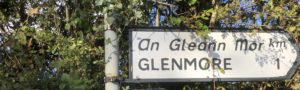


Whether you are climbing your family tree or interested in social history, local place names or folklore we welcome you to Glenmore-History.com and hope that you enjoy your visit.
L A T E S T P O S T S

From Danny’s Files: The Early Public Transport Through Glenmore
-
Founder of Glenmore History’s Anniversary
-
An Unusual Glenmore Grave: The Brereton Family
-
The Plight of Richard Fitzgerald (1793-c. 1860) of Aylwardstown, Glenmore
-
The 1882 Contested Application for a Glenmore Pub
-
From Danny’s Files: Rev. Fr. John Fitzpatrick (c. 1758-1835) P.P. of Slieverue-Glenmore
-
The Tragic Death of John Millea (1870-1935) of Treanaree, Slieverue
-
Family Tree Workshop 2026 Photos & Forms
-
More Glenmore Photos: From the Eamon Jones Collection
-
Family Tree Workshop & Upcoming Lecture


One Hundred Years Ago: June 1922

In keeping with previous reviews of local newspapers from 100 years ago, today we are going to feature local events and news from June 1922 including the General Election and a summary of a local article at the end of the month that informed local readers that a Civil War had commenced.
Glenmore in the News
“Boy’s Narrow Escape—When riding a young horse home from New Ross a boy named Irish from Glenmore had a narrow escape from being killed. Near the Pink Rock the animal reared up and fell backwards on the top of the rider pinning him to the ground. Part of the boy’s skull was fractured, and he was taken to New Ross hospital where he was surgically treated. He is progressing satisfactorily” (New Ross Standard, Fri. 23 June 1922, p. 4).
June 1922 marked the First Anniversary of the Coolbawn Ambush. A large gathering of people from different parts of the Co. Kilkenny, New Ross, Waterford and Carlow assembled at Coolbawn, Castlecomer, “where two brave IRA officers, Jack Hartley, Glenmore, and his cousin, Nicholas Mullins, lost their lives.” The proceedings were very impressive. An eloquent oration was delivered by the Rev. Father MacNamarra, C.C., and a touching address by Mr. Philip Lemmon, MCC, Brigade Registrar, New Ross. The Rosary was recited for the repose of the souls of the deceased. (New Ross Standard, Fri. 23 June 1922, p. 4). An Anniversary Office and High Mass was held at Glenmore on Monday the 26th for the late Sean Harley. The members of the Cuman na mBan and several of the IRA were present. The Rev. Father Holohan, P.P., presided and the celebrant was Rev. Father Bergin, C.C. (New Ross Standard, Fri. 30 June 1922, p. 5). For previous articles concerning Jack Hartley and Nicky Mullins see our previous post of 20 June 2021.
The Glenmore Creamery Co-op showed a reduction in the number of gallons of milk it received during 1921. In 1920, 568,496 gallons were received but only 465,804 were received in 1921. This was due to the creamery being forced to close by order of the British in June 1921. The newspaper went on to note that the 1921 reduction was not an indication of the lowering of milk production in the district. In 1921, 203,066 pounds of butter were made and the Creamery showed a profit available for distribution to shareholders of £672. The newspaper noted that the Glenmore Creamery came through “the troublous period” of the previous year very well (Munster Express, St. 17 June 1922, p. 6).
Sports
Glenmore played in the junior football championship. The opposing team was Curagh. The final was played at the Rower, “and after a good exhibition of football, Glenmore retired winner, the scores being Glenmore 6 points; Curagh, nil (Munster Express, Sat. 10 June 1922, p. 5).

Denis McDonald, of Tullogher, covered himself with glory on Sunday the 18th when he won three first places at the Leinster Championship Sports held in Croke Park. He threw the disc 113 feet 6 inches nearly 9 feet further than his nearest opponent. He hurled the 56 lbs. between legs without follow 25 feet, 4 inches, and cleared the bar with the 56 lbs. at the “magnificent height” of 13 feet, 10 inches. “At the Tailteann Games to be held in Dublin in August it was opined that “some of the premier honours are sure to be captured by the Tullogher boy” (New Ross Standard, Fri. 23 June 1922, p. 4). For a previous article regarding Glenmore weight thowing click here.
During the last week of June 1922, a large number of Irish Americans arrived in New Ross on a visit to their friends in the town and rural districts. They stated that a big number of people were coming across for the Tailteann Games in Dublin in August (New Ross Standard, Fri. 30 June 1922, p. 5).
Dublin & South Eastern Railway

During the month of June the newspapers carried several notices of special excursion trains and fares for events taking place. It appears that people were eager to get back to sport and other entertainments greatly curtailed during the War of Independence. A special excursion train ran from New Ross to Kilkenny for the Co. Kilkenny Feis held on Sunday the 25th of June 1922. Leaving New Ross at 11:15, a third class return fare to Waterford was 2 shillings while passengers joining the train at Glenmore at 11:27 paid 1 shilling. The train arrived in Waterford at 11:45 and departed for Kilkenny at noon arriving at Kilkenny at 1:10 p.m. The Waterford to Kilkenny return ticket was 4 shillings (New Ross Standard, Fri 23 June 1922, p. 1). A special excursion train was also arranged for the Diocesan Choir Festival held at Wexford on the 29th. A single fare was charged for the double journey from various stops including Glenmore. Glenmore residents also had the opportunity to travel via the excursion train to Dublin on the 29th with a first class ticket costing 20 shillings while a third class cost 11 shillings. On 2 July an excursion train was arranged for the Waterford Feis with the train leaving Glenmore at 11:50 with a ticket costing 1 shilling (New Ross Standard, Friday 23 June 1922, p. 1).
Local Farming & Fishing
In a few places near New Ross farmers intended to cut early meadowing at the end of the month. The salmon season was disappointing. With the exception of the first month of the salmon season the season was very poor (New Ross Standard, Fri. 23 June 1922, p. 4).
On the night of Thursday, the 15th a number of cattle were driven off the lands of Patrick Foskin, Deerpark, Mullinavat, and put on the lands of a farmer in Bigwood. The reason reported in the newspapers was that Foskin’s sons had taken an active interest in the Pro-Treaty or Free State side. The matter was referred to in condemnatory terms at both Masses in Mullinavat on the following Sunday (Munster Express, Sat. 24 June 1922, p. 6).
Law & Order
The total number of Officers and men of the RIC in Southern Ireland prior to disbandment was approximately 10,000 according to British Parliamentary Papers. No disbanded man was offered or accepted employment under the Provisional Free State Government. Of the 8,000 men disbanded, 5,200 left Ireland. Some of these men who left Ireland enlisted in Great Britain (3,200), and 300 men joined the Palestine Gendarmerie (Munster Express, Sat. 3 June 1922, p. 5).
On the 4th of June a number of Ex-RIC men were served with notice, purporting to come from the IRA, ordering them to leave Kilkenny within a specified time. In a number of cases the order was immediately complied with (Kilkenny Moderator, Sat. 10 June 1922, p. 5).
In the early hours on Wednesday the 7th of June, “a sensation was created in Mullinavat.” Previously some men were working in Mullinavat in the interest of the Treaty and were arrested. Consequently, Free State troops came down from Kilkenny and, at 2 a.m., rushed the Mullinavat barracks and made prisoners of all the occupants. The prisoners were then taken away in lorries. As a result of a conference in Kilkenny, the prisoners were set at liberty and returned to their quarters in Mullinavat (Munster Express, Sat. 10 June 1922, p. 5).
General Election
A General Election was scheduled for 16 June 1922. Prior to the election, the Labour Election Committee announced that reports from various places in Carlow-Kilkenny were encouraging. On Sunday, the 21st of May, large and enthusiastic meetings were held at Kilmacow, Mooncoin, Mullinavat and Glenmore in Co. Kilkenny (Nationalist & Leinster Times, Sat. 3 June 1922, p. 3). We know from information that Danny Dowling recorded that politicians generally spoke from the stage of the small building near the Village bridge and next to the Glen Bar. This building was removed when the houses were built behind the pub.
Just prior to the General Election it was reported that here were 34,297 voters on the County Kilkenny Register of voters. Voters in selected districts were recoded as: Glenmore 1,517; Kilmacow 2,229; Mullinavat 1,221, Thomastown 1,712 (Kilkenny Moderator, Sat. 10 June 1922, p. 5). One of the candidates D.J. Gorey, of Burnchurch House, ran as a Farmers’ Union candidate for a Carlow-Kilkenny seat. About 5:30 am on the 4th of June 8 or 9 armed men arrived at Burnchurch House. On hearing the men enter the yard Gorey went to his bedroom window and asked them their business. They asked him to come down to speak to the men, but Gorey declined. He said he would hear whatever they had to say from his window. The leader of the visitors told him to come down or he would have to bear the consequences. Gorey left the window and returned with shotgun which caused his visitors to leave the vicinity of the house. One of Gorey’s workmen was taken prisoner. The visitors subsequently returned to the house and opened fire. Gory had no ammunition in the house and barricaded the window. In the meantime, Mrs. Gorey slipped out of the house and went for help. When she returned with neighbouring farmers the visitors had left. The only damage was the bedroom window smashed by bullets (Munster Express, Sat. 10 June 1922, p. 6).
Ultimately Gorey was elected to one of the four Carlow-Kilkenny seats. Also elected was P. Gaffney (Labour), Alderman Cosgrove (Pro-Treaty), and Major General O’Sullivan (Pro-Treaty). The defeated candidates were both sitting members: E. Aylward (Anti-Treaty) and J. Lennon (Anti-Treaty) (Munster Express, Sat. 24 June 1922, p. 6).
The Waterford News & Star (Fri. 30 June 1922, p. 4) published an article stating that a special courier from Dublin reported that on the 28th “irregulars” or anti-treaty fighters seized various buildings in the centre and suburban areas of Dublin. One of the buildings seized was the Four Courts. Free State troops entered the Four Courts and took 33 Anti-Treaty forces prisoner. The streets were dangerous and no fewer than 11 civilians were killed, while 25 were wounded. Business was at a standstill. The Beggar’s Bush official bulletin that was released stated, “after considerable fighting during the course of yesterday evening our troops succeeded in dislodging the irregulars from the greater part of the Four Courts.” The fragile peace ended.
Please send any further information or corrections to glenmore.history@gmail.com. We would be interested in learning the first name of the Irish boy injured in June 1922 near the Pink Rock.
Special thanks to Jackie Walsh for sharing the featured c. 1924 photo of the Glenmore Creamery.
Dr. Kathleen Moore Walsh
Jamestown, Glenmore (1961)

Today, we are going to feature information that Danny Dowling (1927-2021) recorded regarding the residents of the townland of Jamestown, Glenmore around 1961.
O’Kelly’s Place Names
Although we usually provide some of the entry for various townlands as reflected in O’Kelly’s, The Place Names of the County of Kilkenny (1969, p. 102) below is the entire entry: “Jamestown, Baile Sheamoc, little James’s homestead. Area 293 acres. Ballyguirrim ruined church is here with its adjoining churchyard. There is a well north of the church called Tobar an tsagairt. Dan Dowling, a local historian who has made tape-recordings of cures, charms and folklore from old residents over a wide area states that it was a custom up to 50 years ago for passers-by to leave a stone at the two sceach bushes growing near the old main road to New Ross. Boithrin sean-Philib is the name of a laneway here. Field names are Drom gabhar, and the Robbers’ field“.
Last Native Irish Speaker in Glenmore
When Danny was about ten years old his family moved from Glenmore Village to the Dowling farm in Jamestown. We previously published an article regarding Danny’s colourful great-grandmother Biddy Neddy Cody (Bridget Dowling née Cody (1831-1916) or often referred to in newspapers as the Widow Dowling.
Jamestown is also the townland where Patrick Power (c. 1856-1942) the last native Irish speaker in the parish resided. The National Folklore Collection, housed at UCD has the recording of Pádraig de Paor, from Jamestown, Glenmore (archival reference NFC 323: 174-183). Patrick was 85 at the time of the recording. It is available to read online, most of the 9 pages are in Irish.
1961
In 1961, Danny recorded eleven families or households in the townland of Jamestown. With respect to Danny’s list of residents’ birthdates or birth years are provided for some of the older residents gleaned from available public records. For some time after drafting his notebook, Danny recorded the dates of death or simply recorded that a resident had died. The recorded information reveals that 46 people resided in Jamestown with the population of 28 males and 18 females. The largest family recorded was the Dowling family comprised of 9 persons and there were 2 households of a single person.
Recorded Residents
Males= 28
Females= 18
Eldest Recorded Resident= Michael Greene (1873-1962). In 1961 Michael was 88 years of age.
Recorded Work
Farmers= 3 ( 2 males; 1 female)
Farm/Agricultural Workers/Labourers= 12 (all males)
Labourers= 1 (male)
Creamery Worker = (male)
Bookkeeper = 1 (female)
JAMESTOWN’S RESIDENTS
[1] POWER
Power, John (10 Feb. 1893) Farm Labourer
[2] POWER
Power, Michael (2 Nov. 1905) Farm Labourer
Power, (no first name recorded) wife
[3] DOWLING
Dowling, Hannah (25 March 1903) Farmer
Dowling, Daniel (15 Feb. 1927) son, health inspector
Dowling, Michael, son, farm worker
Dowling, Bridget, daughter, bookkeeper
Dowling, Edward, son, farm worker
Dowling, Margaret, daughter (married 25 Oct. 1961)
Dowling, Patrick, son, farm worker
Dowling, John, son, farm worker
Dowling, Ellen, daughter
[4] GREENE
Greene, Patrick (18 May 1912) Farmer
Greene, Bridget (14 Aug. 1913) wife
Greene, Michael, son, farm worker
Greene, William, son
Greene, Patrick, son
Greene, Margaret, daughter
Greene, Bridget, daughter
Greene, Michael (12 March 1873) cousin, retired (died 16 March 1962)
[5] WALSH
Walsh, Thomas (5 June 1886) Farmer
Walsh, Catherine (24 Sept. 1898) wife
Walsh, John, son, farm worker
Walsh, Patrick, son, farm worker
Walsh, Mary, daughter
[6] MURPHY
Murphy, Michael, Labourer
Murphy, Bridget, wife
[7] POWER/MALONE
Power, Mary (10 March 1885)
Malone, Michael, son-in-law, farm worker
Malone, Margaret, daughter
Malone, Henry, grandson
[8] MERNAGH
Mernagh, Thomas, Creamery Worker
Mernagh, Catherine, wife
Mernagh, Mary, daughter
[9] MERNAGH
Mernagh, John (19 Dec. 1921) Farm Worker
Mernagh, Johanna, wife
Mernagh, Edward, son, farm worker
Mernagh, Patrick, son
Mernagh, Margaret, daughter
Mernagh, James, son
Mernagh, Liam, son
Mernagh, Kieran, son
[10] POWER
Power, Michael (12 Dec. 1882) Farm Labourer
[11] DOYLE
Doyle, Laurence
Doyle, Johanna, wife
Doyle, Nicholas, son
Please send any corrections or additional information to glenmore.history@gmail.com. The featured photo above is the entrance to Ballygurrim Graveyard of Jamestown. The photo was taken in June 2020.
Dr. Kathleen Moore Walsh
John L. Conn (1812-1893) of Mount Ida, Rochestown, Glenmore [Updated]

Bigamist John Lamley Conn (1812-1893)
Martin Forristal, of Ballinlammy, Glenmore wrote an excellent article entitled “Mount Ida” which may be found on our guest authors’ page by clicking here. In tracing the history of Mount Ida, Martin revealed that John L. Conn (1812-1893) of Mount Ida was a bigamist keeping his lawful wife in Glenmore and his mistress and children in Dublin.
While searching for other information we came across two articles involving John L. Conn. The first is from May 1859 and involves the attempted burglary of Mount Ida. The second article is from May 1883 and involves a criminal case brought against a Glenmore man named Patrick Walsh for intimidation. Both newspaper accounts provide an interesting glimpse into the state of criminal justice in Glenmore in the mid to late 19th century.
Attempted Burglary of Mount Ida, Glenmore
On Wednesday the 4th of May 1859 men attempted to burgle Mount Ida. The following account was found in the Waterford Mail (Tues. 10 May 1859).

Burglarious Attempt—We regret to hear that on Tuesday night, or rather Wednesday morning last, between the hours of 12 and one o’clock, a party of burglars attacked Mount Ida House, the residence of John L. Conn, Esq., situate at Rochestown, barony of Ida and county of Kilkenny. They forced the shutters of a window in the east wing of the building, and were in the act of breaking open a door, with an iron bar and a wooden bar acting as levers under it, when the noise was heard of one of the maid servants who slept in the apartment over it, and who ran up and called her master. Mr. Conn, with more courage than prudence, sallied out armed with a gun, but the scoundrels heard the opening of the lock and ran off, leaving their implements behind, and the night being very dark, Mr. Conn did not get a shot at them, they were, however, disappointed of their booty.
We are astonished to hear that there is no magistrate in the district, which contains at least 30 square miles, and that the nearest police station is several miles off, and we have no hesitation in saying that the government authorities incur a deep responsibility if this exceptional state of things be not at once rectified. We hear the constable of the nearest police station made an examination of the place the following evening.
This article indicates that in 1859 there was no police barracks in Glenmore Village.
Glenmore Intimitation Case
Nearly 25 years later, a former tenant of John L. Conn was charged and convicted of intimidation concerning the letting of his former 40 acre farm. The account of the trial appeared in the Waterford Standard (Sat. 19 May 1883, p. 3). Patrick Walsh in May 1883 was in the employment of Mr. Cody and was charged with intimidation under the provisions of the Prevention of Crimes Act.
It was alleged that on 3 May 1883 at Rathinure without legal authority, the defendant used intimidation toward Michael Roche, when he advised him through his cousin to abstain from doing what he had a legal right to do—namely, to become tenant of a certain farm on the estate of John Lamley Conn, of Mount Ida. A special petty sessions court was held at Kilmacow on 17 May before Mr. Bodkin R.M. (Resident Magistrate) and H. Thynne, R.M. Mr. Hartford, the Kilkenny Crown Solicitor, prosecuted, and the defendant had no legal representation.
The defendant, Patrick Walsh, and his brother John Walsh, had been in possession of a farm which was the property of John Lamley Conn. Their uncle had the farm before they took possession. They fell into arrears on the rent, but went to John Conn and came to an agreement that in consideration for a sum of money, they agreed to give up the land and not attempt to redeem it. At the time of the trial the farm had been idle for three years.
On the 5th of February 1883, Michael Roche sent a proposal to John Conn that he would rent the farm for £1 per acre. On 3 May 1883 about ten o’clock in the evening the police were on patrol at Glenmore. The police observed the defendant with his brother John Walsh and in the company of James Costello.
The police overheard the defendant speak to John Roche, a cousin of Michael Roche. It was alleged that in a lane of Rathinure, Patrick Walsh said, “That is my land; I had the land before Conn had it. What do I care about Conn, even if he has two bobbies [police] mind him—I will pull the trigger, for I will swing for any person who takes that land.” [At this time murder was a hanging offence. The defendant’s alleged use of the phrase “I will swing” was a threat to kill anyone who took the land.]
Witness 1: John Lamley Conn
The first witness called was John Lamley Conn who was summoned to appear. It appears from the newspaper account that he would not have attended except that he received a summons. Conn testified that he lived at Mount Ida and had some land in Rochestown. He owned the lands in Rochestown for about 40 years. He acquired them by purchase in the Court of Chancery.
Conn stated that he knew the defendant and his brother John Walsh, and the farm that they once occupied was about 40 acres. They fell in arrears and were given every facility to redeem the farm. They came to Conn and asked for money as good will. Conn gave them money in exchange for them voluntarily leaving the farm. Conn testified that he had not seen the defendant since he left the farm voluntarily.
Witness 2: Constable Williiam Broderick
The second witness was Constable William Broderick who testified that he and Sub-Constable Patrick Donohue were patrolling on 3 May 1883. While in Rathinure in a lane off the public road he heard Patrick Walsh say, “That is my land. I had that land before; what do I care if Conn has two bobbies minding him. What do I care about Conn?”
Constable Broderick then testified that he believed the defendant said, he would “pull his finger if any man would take the land.” He testified that the sub-constable said that he heard the defendant say that he would “pull the trigger.” He testified that the defendant said, “advise him, advise him—you know him; for I will swing for any man who takes that land.”
The constables jumped over the ditch into the lane and from John Roche obtained the names and addresses of all the men present. The defendant walked past the constables. When the constables caught up to the defendant the defendant was asked about the language he used concerning Conn. The defendant replied that “they would be all good friends yet.”
The defendant asked Constable Broderick concerning his character and the Constable responded that he only knew the defendant about 8 months, he knew nothing against the defendant and had heard nothing against him. Magistrate Thynne asked if the defendant was “worse of drink that night.” Constable Broderick replied that the defendant had drink taken, and he had been coming from the public house, but he could have been justified in summoning him for drunkenness.
Witness 3: Sub-Constable Donohoe
Sub-constable Donohoe was called and sworn and stated that he did not want to correct the information provided by Constable Broderick. At this point the Magistrates wanted Mr. Hartford to examine Mr. Roche. Mr. Hartford refused and Magistrate Bodkin said that they would examine the man themselves. Mr. Hartford replied, “If you do, you must do it on your own responsibility—I am here on behalf of the Crown.” The defendant then called John Roche, but did not ask him any questions. The Magistrates began to ask Roche questions who merely testified that the defendant told him to tell his cousin, Michael Roche, not to take the land.
At this point from the newspaper account the magistrates appear to have lost patience with the defendant. He had a list of witnesses, but then stated he had no questions for them. The defendant was asked, “Who is John Fitzgerald?” The defendant replied, “He is the man I worked with for the last two years; he is the only man I worked with since I left the farm.”
Mr. Cody then testified, “This man is now in my employment, and I never heard anything against him.” When asked if the defendant drank much, Cody replied that he did not. However, when he did drink “he does not be very steady.” The Magistrates then began to quiz Cody on whether he wanted the land in question. Cody replied that he did not; he had enough land of his own.
The Magistrates
Prior to 1898 defendants could not testify on their own behalf. In this case the Magistrates asked the defendant if he had every been convicted. Thus, while not considered competent to testify concerning what occurred the defendant was considered competent to incriminate himself. The defendant responded, “It was for being drunk; drink is my failing; I was convicted of being drunk 11 years ago.”
Magistrate Bodkin: “You are accused of a very serious offence, which has been very clearly proved against you. The constable says you were not so drunk as not to know what you were about. However, he has taken upon himself to give you a good character so long as he has known you. That has had an influence on our mind, and, therefore, we will let you off with two months’ imprisonment at hard labour.”
Some of our readers might recall that Magistrate Bodkin was present at the Ballyfacey Eviction Riots of August 1885 and was told by Fr. Neary that his wife would be going to bed a widow if he persisted. For our article concerning the Ballyfacey Evictions click here.
Unfortunately, without first names or townlands it is difficult to determine who was the employer, Mr. Cody. Even with first names it is difficult to identify the persons in the newspaper account of the intimidation trial with common names like Walsh and Roche and without townlands or ages. If anyone can provide further information concerning any of these local men please post below or email glenmore.history@gmail.com.
[Update: Ann FItzgerald was able to identify the two Walsh brothers. John Walsh (1835) and Patrick Walsh (1837) were born in Rathpatrick, Slieverue to Nicholas Walsh and Judith Magrath. We were able to locate baptismal records for other children including: Jeremiah Walsh (1833); James Walsh (1840); William Walsh (1843) and Anne Walsh (1847). Patrick Walsh (1837) never married. John Walsh (1835) married Margaret Fitzgerald, of Aylwardstown, on 16 Feb. 1870. Margaret was the daughter of Richard FItzgerald. Two of John & Margaret’s sons emigrated to New York and married two Hanrahan sisters from Glenmore Village.]
Dr. Kathleen Moore Walsh
From Danny’s Glenmore Photo Album 3.0 [updated]

The photo featured today was taken about 1970 by Danny Dowling (1927-2021) of Glenmore Village, outside the then parish hall (the old boy’s school) just inside the wall. Two of the depicted men at the back have been identified. Back row: the on the far left is Eamonn Jones, of the Village, and the man on the far right is Michael Hoynes, of Ballybrahee, Glenmore.
If you can identify any of the other people in this photo please post below or email glenmore.history@gmail.com. As people are identified we shall update this page as we do with other photographs. Thank you for your assistance.
[Update 24 May 2022, 19:32–Since the post went up this morning a number of readers have helped identify some of the people in the photo.]
Back Row, Left to Right: [1] Eamonn Jones, the Village; [2] –?–; [3] –?–; [4] –?–; [5] Mickey Fitzgerald, of Moulerstown; [6] Johnny Mackey, of Ballycroney; [7] Pat Dowling, of Cappagh; [8] Michael Hoynes, of Ballybrahee.
[Update 28 May 2022–Thanks to several readers we believe the people in the photo include: (back row left to right) [1] Eamonn Jones, the Village; [2] Paddy Mackey; [3] Mike Whelan, Ballywairy; [4] Mick Murphy, of Jamestown; [5] Micky Fitzgerald, of Moulerstown; [6] Johnny Mackey; [7] Pat Dowling Cappagh; [8] Michael Hoynes of Ballybrahe. (front left to right) Packie Morrissey ? and the child on the left is believed to be a nephew of Eamonn Jones. The little boy in front of Pat Dowling is Danny’s son Pat Dowling.]
From Danny’s Files: The 1837 Killing of Michael Phelan of Rochestown, Mullinavat

In Danny Dowling’s files an article was found which was copied from the Waterford Mail (Sat. 15 June 1839, p. 2). It provides that Laurence Foley, who brutally murdered his landlord, Pat. Phelan, of Rochestown, County Kilkenny in October 1837 evaded arrest for two years. Foley was arrested in County Tipperary and identified by the mother of the deceased. According to the Ballyshannon Herald (Fri. 21 June 1839, p. 3) Foley was arrested by Chief Constable Roney and Head Constable Mason. This is an interesting pre-Famine case because no motive was revealed for the killing although the newspapers at the time drew attention to the fact that the victim was a landlord of the defendant Foley. However, it appears that the victim had a modest holding.
Unfortunately, the Waterford Mail published the wrong name of the man killed, and from the information presented it was not clear which Rochestown in Kilkenny was the home of the victim. The victim was identified as Patt Phelan, Michael Phelan and sometimes Whelan in the newspapers. Knowing that trial accounts often are the more reliable of newspaper information we located reference to the trial of Laurence Foley in the Freeman’s Journal (Wed. 24 July 1839, p. 1). Baron Foster arrived from Clonmel for the Kilkenny Assizes the previous day and opened the Kilkenny Commission in the County Court at 10 a.m. Baron Foster addressed the Grand Jury and stated that he was happy to be able to congratulate them on the state of the court calendar. There were sixteen defendants for trial. He said that it was gratifying to find that agrarian outrages had ceased in County Kilkenny. However, he regretted that of the few cases to be heard there were four homicides. The totality of the report on the Laurence Foley case in this particular newspaper was that he was indicted for the manslaughter of Michael Whelan (sic) and found guilty.
Luckily, the Kilkenny Moderator (Sat. 27 July 1839, p. 20) provided details concerning the case that arose with the slaying of Michael Phelan (sic) near Mullinavat on the 3rd of October 1837. From this article and a review of Griffith’s Valuation we were able to determine that the victim lived in Rochestown, Mullinavat rather than Rochestown, Glenmore. The article provided the names of the jurors that heard the case: Richard Lalor, John Power, Edward Hunt, Edward S. Delaney, John Brenan, Anthony Nugent, James Butler, Emmanuel Fitzpatrick, Nicholas Cahill, Robert Walshe, Daniel Lalor, and Daniel Phelan.
The first witness to give evidence was John Phelan, a brother of the victim. John Phelan testified that the defendant, Laurence Foley, struck his brother Michael two years previously at Moonvoor, near Mullinavat. He had seen the defendant at the Mullinavat fair that day, and the defendant walked part of the way home with John and his brother, the victim. The brothers stopped at Patt Browne’s house on their way home to enquire about shoes that Browne was making for the victim. Soon after they went into Browne’s house the defendant Foley came to the door with a stone in his hand. Browne saw the defendant and as Browne went to push him out of the house the defendant dropped the stone. He then “caught up” a spade. With the help of the brothers, Browne pushed the defendant out of his house. The brothers then pushed the defendant outside the yard and “desired him to go home.” They turned to go back into Browne’s house and the defendant took up a stone and threw it at the victim, Michael Phelan, who was knocked down. John Phelan turned and saw defendant at the yard wall after throwing the stone. He heard one blow. The stone hit his brother in the back of the head. John immediately collared the defendant and tripped him up. When his brother did not rise he called out “murder.” He let go of the defendant and ran to his brother, but his brother could not stand. The victim lived till the following day. He did not see anyone other than the defendant near his brother when his brother was struck.
John Phelan testified that the defendant had taken “a sup” that night, and had been in the Police barracks that evening before he struck the victim. There had been no previous quarrel and he could not say why the defendant struck his brother. After striking the victim the defendant ran away, and the defendant left the place where he had been living. John Phelan admitted that he struck the defendant when he had him collared.
To questioning by the Judge, John Phelan stated that the defendant was not very drunk that night as he was well able to walk and talk when he came to the door with the stone in his hand. John Phelan could not say whether the defendant said anything. Prior to the attack the three men walked about a quarter of a mile together. The defendant called Browne a Whitefoot. John Phelan stated that Browne was a cousin of the Phelan brothers. He admitted they were all in dread of the defendant Foley because he was a bad character. The defendant was their tenant for some ground.
Patrick Browne then testified that he was working in his shop on the evening when the Phelan brothers came in to look for a pair of shoes. They were with him a few minutes when he heard shouting on the street. The defendant came and called the boys out to fight. Browne wanted to keep the defendant out, but the defendant managed to enter his door. Browne wanted the defendant to go home. While Browne was pushing the defendant out of the door a stone dropped from his hand. The defendant then seized a spade, but they shoved him out. The defendant then said to Browne, “You have my two landlords with you—to the devil with them—I’ll have my revenge.” He heard the cry of “murder” soon after, but when he heard it a second time he ran out and saw Michael Phelan nearly dead. He did not see the defendant then or later in the neighbourhood after that occurrence, nor since until the present assizes.
Doctor A. Cuilinan proved the nature of the wound which, he said, caused the death of the deceased. The Judge shortly “recapitulated the evidence” and the Jury, in a few moments returned a verdict of Guilty of Manslaughter. Foley was sentenced to transportation for 7 years.
The Kilmainham Prison Register provides that Laurence Foley, prisoner number 2405, was sentenced to 7 years for manslaughter by Baron Foster on 20 July 1839 at Kilkenny. The New South Wales, Australia, Convict Indents, 1788-1842 reveals that Laurence Foley, of Kilkenny, arrived in Australia on 8 October 1839 aboard the Nautilus although this appears to be too quick a sailing time even if the ship left immediately following the trial. Perhaps the 8 October 1839 date reflects the date the ship sailed from Ireland? The records reveal that Foley was 30 years of age, 5 feet 6 inches tall and had hazel eyes, brown hair and a fresh complexion.
Three Rochestown townlands were located in Kilkenny. In the Griffith’s Valuation: Tithe Applotment Books there were no Phelan/Whelan in Rochestown, civil parish of Kilcolumb, Glenmore. Likewise, there were no Phelan/Whelan in Roachestown, civil parish of Rathkieran of Mooncoin (1833). Rochestown in the civil parish of Ballylarkin in 1827 had a Thomas Whelan who held 14 acres. It appears that Ballylarkin was originally in the Catholic Parish of Kilmacow but was transferred to Mullinavat Parish in the early 1840’s about the time Glenmore became a parish distinct from Slieverue.
In searching for Michael and John Phelan, utilizing the possibility that Thomas was their father, we located a John Phelan baptised on 16 June 1811 in Templeorum the son of Thomas Phelan and Catherine Crowly with an address of Kilonerry. Michael Phelan was baptized on 26 December 1807. Unfortunately, we cannot be certain that this is the correct family, and we were unable to locate a baptismal record for Laurence Foley.
Please send any additional information or corrections to glenmore.history@gmail.com.
The featured sketch above is from the New York Public Library, Digital Collection, The Miriam and Ira D. Wallach Division of Art, Prints and Photographs: Picture CollectionShelf locator: PC IMM. “London : printed and published at the Office, 198 Strand, in the Parish of St. Clement Danes, in the county of Middlesex, by William Little, 198, Strand, aforesaid. Saturday, June 19, 1852.”Source note: Illustrated London news. (London : Illustrated London News and Sketch Ltd., 1842-).
Dr. Kathleen Moore Walsh
Weatherstown’s Crafter: Jo Doyle née Mernagh (1932-2021)

Today, we are going to feature the craft work of the late Jo Doyle née Mernagh of Weatherstown, Glenmore. Danny Dowling once described Jo as the woman who could turn her hand to anything. Jo was equally adept at weilding an angle grinder as a crochet hook.
Jo Doyle née Mernagh was born and raised in a thatched cottage in Weatherstown, Glenmore. Jo attended the Robinstown National School for girls and after completing it she began a succession of jobs that ultimately took her to England. While living and working in England she met her future husband, Larry Doyle, a native of Wexford. Soon after the couple married in 1957 they moved to Glenmore and updated the cottage where Jo was born and reared. Until she retired Jo worked for local farmers, fished for eels with Larry in the Barrow, reupholstered furniture, fitted wallpaper, knitted sweaters, and worked as a seamstress. She sewed, repaired and altered clothing and made Irish dancing costumes etc.

When Jo retired she turned to arts and crafts that she now had the time to pursue. Jo never drove, so Larry with his usual good humour drove her to various agricultural shows in Wexford, the Kilkenny show and the Piltown Show. They both enjoyed meeting old friends at the shows, and while awaiting the judges’ verdict for her craft work Jo would join Larry to view the animals on display and cheer for Glenmore horses in the show rings. A couple of typical show results for Jo were found in the New Ross Standard. For example, the New Ross Standard (Wed. 18 Aug 2002, p. 10) reported on the winners of the various classes or competitions held at the 55th Adamstown Show in 2002. Jo took six 1st places in Craft and Needlework including: Machine Sewn Garment; Embroidered Table Cloth; Patchwork; Soft Toy; and Cushion. Jo also won two 3rd places in Hand Knitted Garment and a handmade household article. Jo took a 1st in baking for a homemade novelty cake and a 2nd in the flower section for a Miniature Arrangement. Two years later, Jo at the 57th Adamstown Show took seven 1st place ribbons, one 2nd place and one 3rd. The firsts included: Best Machine Sewn Garment; Best Hand Knitted Garment; Best Patchwork; Best Soft Toy; Best Handmade ornament, Best Miniature Flower Arrangement and Best Small Flower Arrangement. Her second place was for the Best Household Article and her third was for Best Embroidered Tablecloth. (New Ross Standard, Wed. 7 July 2004, p. 24).

Jo also began to paint in oils and watercolour. She delved into mosaics, rug making, stencilling, counted cross stitch, quilting, and revived long forgotten crafts such as what she called silver paper pictures which were popular when she was a girl. Her favourite craft work were soft toys and dolls. She named each doll and animal that she made. Jo was awarded over 140 ribbons or certificates for her entries at the shows. However, her proudest award was a Brannra awarded in 1998 for her proficiency in soft toys.
Thanks to Jo’s daughter Pat we have several photographs below of a few examples of Jo’s extraordinary work to share today.
Please send any additions or corrections to glenmore.history@gmail.com.
The featured photo above is a view from Jo’s front gate looking over the fields.
Dr. Kathleen Moore Walsh


