

Whether you are climbing your family tree or interested in social history, local place names or folklore we welcome you to Glenmore-History.com and hope that you enjoy your visit.
L A T E S T P O S T S

From Danny’s Files: The Early Public Transport Through Glenmore
-
Founder of Glenmore History’s Anniversary
-
An Unusual Glenmore Grave: The Brereton Family
-
The Plight of Richard Fitzgerald (1793-c. 1860) of Aylwardstown, Glenmore
-
The 1882 Contested Application for a Glenmore Pub
-
From Danny’s Files: Rev. Fr. John Fitzpatrick (c. 1758-1835) P.P. of Slieverue-Glenmore
-
The Tragic Death of John Millea (1870-1935) of Treanaree, Slieverue
-
Family Tree Workshop 2026 Photos & Forms
-
More Glenmore Photos: From the Eamon Jones Collection
-
Family Tree Workshop & Upcoming Lecture


Danny Dowling: 1991 Kilcolumb Church Ruins
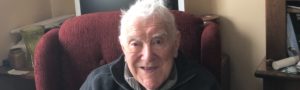
Last month I was able to go home and had a couple of old VHS tapes digitalized. One tape contained video from a 1991 trip to Glenmore when I met Danny Dowling (1927-2021). It also contained footage of Danny giving a little tour of the ruins of Kilcolumb Church, the oldest Kennedy headstone in the parish, and the famous “headache stone.” Danny also provided a brief history of Kilcolumb Church and its patron Saint. Also featured in the video is my future husband’s father, Tom Walsh (1908-1992) a native of Davidstown, Glenmore and late of Rathinure, Glenmore and my future sister-in-law Elsie Walsh.
This is our first you tube video, so fingers crossed, click here.
Dr. Kathleen Moore Walsh
One Hundred Years Ago: August 1922

As the month of August 1922 unfolded the local newspapers seemed to have settled on names for the two warring sides. The troops of the pro-treaty, Free State were generally referred to as the Irish Army or National troops, and the troops of the anti-treaty Republicans were generally referred to as Irregulars. Glenmore did not feature in any local newspapers in August 1922, so today we will highlight various local events our ancestors read about in local newspapers. In August 1922, Waterford City was under the control of the Irish Army which continued to push south and west to capture other cities and towns. As the Irish Army advanced the Irregulars relied more on guerilla activities, honed during the War of Independence, such as blocking roads, destroying bridges, laying ambushes and disrupting communications. Although the National Troops during the month appeared to have driven the Irregulars out of various districts, towns and cities the Irregulars continued to operate in these areas. Notwithstanding the strife events such as the Tramore Races proceeded although the railway link to Tramore was not operating due to the activities of the Irregulars.
Disruption of Communications
A notice was posted on the 2nd of August in the window of the Waterford GPO advising the public that the arrival of mails was uncertain. Telegram communication was open via Dublin for Great Britain and the greater portion of Ireland. Waterford was in communication with Kilkenny, Abbeyleix, New Ross, Wexford, Passage East, Dunmore and Tramore. Telegrams could not be accepted for Counties Cork and Kerry, Limerick and district, places round Waterford, Carrick-on-Suir, Clonmel, Cahir, Tipperary, Dungarvan, Fermoy, and Kilmacthomas (Munster Express, Sat. 5 Aug. 1922, p. 6).
The Palace railway bridge was blown up on the night of the 31st of July. A train went up from New Ross to bring down the passengers and mails from the down mail train on Tuesday the 1st of August, and during the day the trains proceeded to the broken bridge and passengers transferred at the bridge. When the down mail was unable to proceed to Waterford on Tuesday morning news agents in Waterford, accompanied by a number of newsboys, drove to New Ross, and on to Palace to get the newspapers (New Ross Standard, Fri. 4 Aug. 1922, p. 5).
As the Irish army pushed west toward Carrrick-on-Suir arrests were made in Mullinavat in the course of a search. Roving bans of Irregulars had been operating in the district blocking and trenching roads and cutting the railway communications between Waterford and Kilkenny. A bridge on this line was blown up at the end of July. The damage was more extensive than at any previous time. The line remained closed for several days. The mails from Dublin coming over this line on Saturday had not reached Waterford by Friday (New Ross Standard, Fri. 4 Aug. 1922, p. 3).
Cost of the Siege of Waterford
It was noted at a meeting of the Waterford No. 2 District Council, chaired by R. Delahunty, that losses sustained prior to and during the recent armed conflict in Waterford totalled over £25,000 in claims submitted by the clerk to the Council (New Ross Standard, Fri. 4 Aug. 1922, p. 3).
In addition to property loss people injured during the siege of Waterford continued to die in August. For example, John Doyle, aged 22, a member of the Irregular forces, died on the 10th of August from injuries he sustained during the siege at the GPO (Waterford News & Star, Fri. 11 Aug. 1922, p. 4). See our previous blog of 17 July 2022, regarding the Siege of Waterford.
The National Troops continued to arrest suspected Irregulars in Waterford City, and on Monday the 13th of August “a large batch of prisoners arrived in Kilkenny by train from Waterford.” They had a strong military escort and were marched from the railway station to Kilkenny prison (Kilkenny Moderator, Sat. 19 Aug. 1922, p. 8). On the same day, Daniel McDonald, Tullogher, the well known weight thrower, and P. Fleming, the Swan, escaped from Kilkenny Prison at 1:30 a.m. on Monday the 13th. The circumstances of McDonald’s arrest and escape were not disclosed (Kilkenny Moderator, Sat. 19 Aug. 1922, p. 4).
Carrick-on-Suir & Dungarvan

On Thursday the 10th of August in an official bulletin from the Irish Army it was reported that troops occupied Carrick-on-Suir. On the way to Carrick-on-Suir, Comdt. McCarthy’s forces cleared Callan, Mullinahone, Nine Mile House, Kilmogany and Winegap of Irregulars. The Irregulars in Carrick-on-Suir, estimated at about 300 crossed the river and retreated. They blew up the bridges as they retreated. One of the bridges, the John Dillon Bridge was built in the 1880’s and named after a prominent member of the old Irish Parliamentary Party. Its erection cost several thousand pounds. The other bridge dated back to the 14th century, and was regarded by the inhabitants as one of the town’s historic landmarks. Efforts by the townspeople to save the old bridge, that had been spared by Cromwell, fell on deaf ears. De Valera arrived in town and remained for a few days before the town was abandoned by Irregular forces (Munster Express, Sat. 12 Aug. 1922, p. 4).
Also, on the 10th a gentleman who arrived in Waterford from Dungarvan stated that the Irregulars cleared out of Dungarvan on the evening of the 8th. The barracks were destroyed. Some Cork Irregulars, who constituted the major portion of the garrison, left the town by two trains which they seized at the Dungarvan railway station. They travelled in the direction of Cork, and when they had passed through Capoquin another party of Irregulars arrived in the town by motor and blew up the rail and road bridges (Waterford News & Star, Fri. 11 Aug. 1922, p. 7).
Although the Irish Army had reported that it had cleared Mullinahone, an 18-year-old Free State Volunteer was shot in the head and killed while he was visiting his uncle’s home in Mullinahone on the 19th of August. An Irregular named Patrick Egan “rushed into the house and shot him through the head at point blank range. Egan was about to fire a second time when a lady intervened.” Egan was the leader of the Irregulars of the area. Volunteer Grace was with the Mullinahone Company of Volunteers (Munster Express, Sat. 26 Aug. 1922, p. 6).
Another young man was fatally shot during a raid on a pub owned by Mrs. Maria Dowling of Blackmill Street, Kilkenny. National troops were carrying out a number of raids in the vicinity of the Kilkenny City prison. While passing Mrs. Dowling’s premises at about 1 a.m. they heard activity in the pub. The troops surrounded the building and after about ten minutes the door was opened to their knocking. Eleven young men were arrested. Shots were fired to frighten the young men who were trying to escape. Samuel Oakes, aged 17, was later discovered in the garden. He had been shot in the head and died in the pub’s kitchen (Dublin Evening Telegraph, Tues. 1 Aug. 1922, 5).
Fatal Ambush Near Mullinavat
A party of eleven National troops traveling by lorry from Carrick-on-Suir to Waterford with supplies were ambushed about a mile and a half on the Carrick side of Mullinavat on the 16th. Trees had been felled and were blocking the road. When the troops reached the obstruction Irregular forces opened fire on the lorry. The Irregulars repeatedly called upon the National troops to surrender, but they refused. When the Irregulars attempted to rush the lorry “they were beaten back.” Eventually more National troops arrived from Waterford and Kilkenny. John O’Keefe, a married Waterford man, and the father of six children was shot dead. He was a civilian traveling with the troops from Carrick back to Waterford. The newspaper noted that he was the brother of James O’Keefe, manager of the Waterford offices of the “Independent” newspapers. Volunteer Hogan of the National forces was wounded in the leg and arm (Waterford News & Star, Fri. 18 Aug. 1922, p. 5). Before the end of the month a public subscription fund was opened to aid the widow and six children of the late John O’Keefe (Munster Express, Sat. 26 Aug. 1922, p. 6).
The Kilkenny Moderator reported that the National troops from Kilkenny succeeded in capturing five of the Irregulars, all from Thomastown and district. The captured five included: James Mullins, Thomastown (brother of the late Nicholas Mullins, shot and killed by British forces at Coolbawn, Castlecomer, last year); James Bookle, Brownsbarn; Thomas Bourke, the Rower; ___ Hennessy, Kilmurry; and __ Whelan. At the time they were arrested they were in possession of five rifles, about twenty bombs, and large quantity of ammunition. It was also stated that the group had been involved in two other local ambushes (Kilkenny Moderator, Sat. 19 Aug. 1922, p. 4).
“Time for Silence Gone”
August saw the death of Arthur Griffith, the founder of Sinn Féin, followed by the killing of Michael Collins in an ambush on the 22nd near Bandon, Co. Cork. In a New Ross Standard editorial, it was stated “In the hour of her greatest trial Ireland has lost the man whose services she most needs. The death of Arthur Griffith was a heavy blow, but the nation consoled itself that Michael Collins was left to guide the destiny of the new Ireland. Michael Collins is dead, his fellow countrymen having struck the blow that two years ago might have earned forty thousand pounds for an agent of England…” (Munster Express, Sat. 26 Aug. 1922, p. 6).
One local killing in August caused the Bishop of Waterford to speak out. On the 15th Lt. Comdt. Eamon O’Brien responded to an alarm raised by two young girls around midnight regarding a fire. He rushed into Barrack street and was shot and killed by a waiting sniper. He was 21 years of age. The Bishop, Most Rev. Dr. Hackett, in the week following the killing, in the Waterford Cathedral, announceed that the time for silence was gone. He condemned the killing particularly as the victim had no time to prepare for meeting his Maker. He stated that the present Irish government was established by the will of the people. To the persons who participated in the killing he stated, “You cannot maintain that because you think a thing is right that it is” (Munster Express, Sat. 26 August 1922, p. 2).
Local Criminality
It is difficult to know whether certain crimes reported in the local newspapers were associated with the Civil War or were the result of criminals taking advantage of the unrest. For example, on the 2nd of August between 11:30 and midnight shots were fired in new Ross. They came from Jones’ Hill, Mary Street and Rosbercon. The firing lasted about ten minutes (New Ross Standard, Fri. 4 Aug. 1922, p. 5). The following week one of the carters employed by Cherry’s Brewery, New Ross, was held up on the Enniscorthy-New Ross road. Thirteen pounds were taken during the robbery (New Ross Standard, Fri. 11 Aug. 1922, p. 8).
In the early hours of the 12th the bonded store known as Hutchinson’s, The Quay, New Ross was entered and seven cases of spirits, comprised of whiskey and brandy were taken. The locks of the store had been wrenched off. The military guard stopped two men who were carrying boxes at the time and questioned the men. The men stated that they were moving drink for their employer who was a publican. They were released, but later returned and one of the men “tendered a bottle of whiskey to the guard asking him to join them in a drink.” In the morning when the military learned the bond store had been burgled, they went to the house of brothers Edward and Arthur O’Connor of Mary Street, New Ross and recovered three unbroken cases. Also arrested were John O’Neill, Chapel Lane and Patrick Doyle of Lady Lane. On Sundar the O’Connor’s were allowed out on bail. The value of the drink not recovered was valued at £40 to £50 including the duty (New Ross Standard, Fri. 18 Aug. 1922, p. 5). Before the end of the month the four men were on trial before the New Ross magistrates. It was held that there was not enough evidence to convict the O’Connor brothers. O’Neill and Doyle were convicted. O’Neil was sentence to 6 months and Doyle to one month. The magistrates made a point of noting that the sentences were without hard labour (New Ross Standard, Fri, 25 Aug. 1922, p. 8).
Dr. M. Walsh, New Ross, while returning from a distant call in county Kilkenny was held up about nine miles from his home by armed men (New Ross Standard, Fri. 4 Aug. 1922, p. 5), and masked men held up the mail train on the Waterford and New Ross line near Slieverue on the 16th. In addition to stealing the mail the men took tobacco and cycle parts (New Ross Standard, Fri, 18 Aug. 1922, p. 5).
Local Life Went On
Notwithstanding the strife, trenched roads, destroyed bridges and violence, local people attempted to get on with their lives. Mrs. M’Kee was appointed midwife of the Mullinavat dispensary district at a salary of £45 per annum (New Ross Standard, Fri. 4 Aug. 1922, p. 3). The monthly Thomastown fair was held on the 2nd of August. There was a large supply of cattle and sheep offered for sale and a fair attendance of buyers. It was noted that prices were better than the previous fair and a large number of cattle and sheep changed hands. Cattle in good condition were sought. Fat sheep and lambs also found a ready sale. Although there was a large supply of young pigs, there was little demand for them. Pigs that did sell were £5 18s. per cwt (per 100 weight which actually was 112 pounds in weight) (New Ross Standard, Fri. 4 Aug. 1922, p. 3). The New Ross Fair was held on the 9th and it was described as dull. There was a large supply of stock, and prices in general were down. For some classes of cattle, the prices were down a couple of pounds per head (New Ross Standard, Fri. 11 Aug. 1922, p. 5).
It was announced that the delayed New Ross Agricultural Show would be held on Wednesday the 13th of September and entries poured in (Munster Express, Sat. 26 Aug. 1922, p. 5). Although there was no train service for Tramore, due to the tracks being damaged by the Irregulars, the Tramore Races were held. Ironically while it was published that the unrest caused the demise of tourism in Ireland the Cook’s office in Dublin reported that their offices were crowded and a brisk business was done. The travel agency was busy arranging holidays for Irish citizens outside of Ireland (Munster Express, Sat. 12 Aug. 1922, p. 6).
Please send any corrections or additional information to glenmore.history@gmil.com.
The featured photo above is Lt. Comdt. Eamon O’Brien (c. 1901-1922) (Freeman’s Journal, Thur. 24 Aug. 1922, p. 3).
Dr. Kathleen Moore Walsh
Moulerstown or Ballyvoulera, Glenmore (1961) [Updated]

Today, we are going to feature information that Danny Dowling recorded regarding the residents of the townland of Moulerstown or Ballyvoulera around 1961. The Irish for the townland of Ballyvoulera, according to Kelly’s, The Place Names of the County of Kilkenny (1969, p. 109) is Baile Bholaerigh or Bowler’s homestead. The townland is comprised of 323 acres and it is in the old civil parish or DED of Kilcoan. Kelly makes no mention of Moulerstown.
In the 1833 Griffith’s Valuation Applotment Records the townland is spelled as Moulerstown and Mowlerstown. The landlord is listed as Mr. John Doyle, of Graiguenamanagh, and it is noted that there were no leases. However, there is a list of six residents and the land they farmed including: James Butler (4 acres of first class land); Richard Walsh (118 acres of second class land); James Rigby (73 acres of third class land); Patrick Fitzgerald (19 acres of fourth class land); Laurence Rigby (32 acres of fifth class land) and Thomas Grace (listed but no further details). Unfortunately, Danny is not available to explain why there were no leases. It is assumed that the listed farmers worked directly for the landlord.
Danny Dowling, in 1961 recorded five families or households in Moulerstown. Birthdates or birth years are provided for some of the older residents gleaned from available public records. For some time after drafting his notebook, Danny recorded the dates of death or simply recorded that a resident had died. The recorded information reveals that in 1961, 25 people resided in Moulerstown with the population comprised of 19 males and 6 females. The Butler family was the largest family with seven members in the household. There were no households recorded of a single person living alone.
Recorded Residents
Males= 19
Females= 6
Eldest Recorded Resident= John Fitzgerald (18 March 1881- 5 Feb.1970). According to the Diary kept by James Aylward of Ballyhobuck, Glenmore and copied by Danny Dowling [DD Notebook 2] John Fitzgerald, of Moulerstown and Molly Fitzgerald, of Knockbrack, were married on Sunday the 1st of July 1906. In searching for John’s date of death we came across a number of articles after 1961 concerning John’s success at various horse shows. For example in 1968 at the age of 87 John won two classes at the Inistioge Horse Show. Class 1—The Royal Dublin Society; Premiums for Suitable (non Thoroughbred) Mares 7 years and younger and Class 2—Prize for Colt Foal. (Munster Express, Fri. 31 May 1968, p. 14). A copy of John’s obituary has been added to our family pages and may be accessed by clicking here.
Recorded Work
Farmers = 4 (all males)
Farm Workers = 8 (all males)
Creamery Workers = 1 (male)
Factory Workers (meat) = 1 (male)
Machine Fitter = 1 (male)
MOULERSTOWN RESIDENTS
[1] FITZGERALD
Fitzgerald, John (18 March 1881) Farmer
Fitzgerald, Paul (b. 1915) son, creamery worker
Fitzgerald, Luke (b. 1916) son, farm worker
Fitzgerald, John, son, farm worker
Fitzgerald, Michael, son, factory worker (meat)
Fitzgerald, Thomas, son, farm worker

[2] RYAN
Ryan, Patrick (18 Aug. 1896) Farm Worker [died 21 Oct. 1968]
Ryan, Johanna (14 March 1906) wife [died 9 Jan. 1971]
Ryan, John, son, machine fitter
[3] GREENE
Greene, Thomas (b. 1917) Farmer
Greene, Margaret (b. 1919) wife
Greene, Thomas, son
Purcell, Ellen, sister-in-law
[4] DOHERTY
Doherty, Michael (22 Sept, 1881) Farmer (died 18 March 1964)
Doherty, Kat (sic) (11 Feb. 1898) wife
Doherty, Edward, son, farm worker
Doherty, Richard, son, farm worker
Doherty, John, farm worker
[5] BUTLER
Butler, Martin (25 May 1903) Farmer
Butler, Johanna (1 May 1913) wife
Butler, James, son, farm worker
Butler, Edward, son
Butler, Francis, son
Butler, Martin, son
Butler, Bridget, daughter
During our newspaper search we came across another interesting article. As previously highlighted at the end of December 1961 Telefís Éireann began broadcasting. Michael Doherty, of Moulerstown, Glenmore was hired as a member of the technical staff of the fledgling television station. It was noted that Michael was “a former pupil of New Ross Technical School, he served his apprenticeship with Mr. P.J. Maddock, Electrical Contractor, Mary St., New Ross. He subsequently went to England, and was on the maintenance staff of Messrs. Henry Ford Ltd. He was later on the technical staff of the BBC. He secured the position with Telefís Éireann as a result of a competitive examination, gaining first place from twelve candidates.” (New Ross Standard, 9 March 1962, p. 16).
Please send any corrections or further information to glenmore.history@gmail.com.
The featured photo above is John Fitzgerald, of Moulerstown, Glenmore with his mare “Kilt” at the Piltown Show in September 1961. The mare won 2nd and 3rd prizes as well as a Premium (Munster Express, Fri. 15 Sept. 1961, p. 3).
Update 4 Nov. 2022–Special thanks to Jackie Walsh for sharing the photo of her grandparents Pat & Hannie Ryan.
Dr. Kathleen Moore Walsh
The Glenmore I.C.F. Cycling Club

This week we are recognising the 50th anniversary of Pat Walsh`s participation in the Tour of Ireland race held in August 1972. Pat, formerly of Jamestown, and now in Robinstown, is the only Glenmore man to take part in the Tour of Ireland, we believe. In a recent chat with Pat, he recalled every stage, from Dublin to Athlone, to Galway onto Fermoy, to Dungarvan onto Arklow and finishing in the Phoenix Park. Pat, being an amateur cyclist, finished 16th place overall. The race was won by Liam Horner from Dublin. Pat was cycling against the top Irish riders and cyclists from Europe as well. The McQuaid brothers were some of Irelands’ finest at the time and Pat McQuaid went on to be the president of the UCI (Union Cycliste Internationale), the worlds governing body for cycling. .
Pat was a member of the Glenmore Cycling Club in the 1960`s and 70`s which was part of the ICF body. The club was formed by Bill Walsh, of Cappagh, Pat Roche, of Haggard and Paulie Fitzgerald of Moulerstown. Pat Walsh recalled other club members of that time including: John Hennessy, of Graiguenakill; John Hennessy, of Busherstown; Robbie Hennessy, of Graiguenakill; Patsy and James Kirwan, of Gaulstown; Pat Power, of Forristalstown; John Joe Murphy, of Ballinlammy; Noel and Kevin Walsh, of Ballyedeen (Tullogher); Pat Greene, of Jamestown; Pat Power, of Snowhill (Slieverue); Gus Malone, of Milepost (Slieveruue); and Tommy Grennan, of Ballyreddy (Tullogher).
Competitive Cycling
For generations, the bicycle has been a part of all our lives. Used for work, commuting and for pleasure. The bicycle has evolved since its inception way back in 1817 by a man called Karl von Drais. Since this first creation, others have had a cut at putting their stamp on it. In the 1860`s French inventors, Pierre and Ernest Michaux created prototypes with pedals attached to the front wheels. These machines were the first to be called bicycles, but also called boneshakers for their rough ride. The penny farthing was created by James Starley and these oversized front wheeled machines were all the craze in the 1870`s and 1880`s. The name has been noted to have been derived from the comparison between the penny and farthing coins at the time. They were made from all steel with a rubber tyre. Starley’s nephew, John Kemp Starley is credited for inventing what was known as the safety bicycle which had two same size wheels and a chain drive. Brakes and tyres followed shortly after. The pneumatic tyre invention was credited to John Boyd Dunlop, who developed it in Ireland in 1888. Robert Thompson, of England patented the pneumatic tyre 43 years earlier. Both men were not aware of the others work. For the earliest cyclists in Glenmore see our post of 29 December 2019.
Cycling for sport seemed to have first started in Ireland in the 1860`s. The Dungarvan Ramblers Cycling Club, is recognised as the first official club set up and records show that they had a trophy race in 1869. Governance for the sport was set up in the 1870`s in the form of the Irish Champion Bicycle Club (ICBC). This was an all-island body as Ireland was then part of the United Kingdom. Since the formation of the Free State in 1922, two governing bodies had control of Irish cycling in a 26 and 32 county set up. The ICF was the 26 county body and NCF was the body for the 32 county set up. The two groups amalgamated in 1987 and are now known as Cycling Ireland. During the time of the two separate bodies, they both had their national road race. The ICF had the Tour of Ireland and the NCA had the Ras Tailteann.
The Tour of Ireland–13th-20th August 1972

The Raleigh Dunlop Tour of Ireland bicycle race in 1972 attracted 120 riders from eleven regional teams representing six countries. Teams from France and the United States competed, and it was noted that the American team that participated were racing in France as preparation for the Olympics. The tour started on Sunday the 13th of August 1972 and consisted of eight days or stages totalling 738 miles. Day 1—Dublin to Athlone (96 miles); Day 2—Athlone to Salthill, Galway (75 miles) with an evening time trial held over a 4.5 mile circuit; Day 3—Around Connemara finishing back at Salthill (96 miles); Day 4—Salthill to Limerick (89 miles); Day 5—Limerick to Fermoy (92 miles); Day 6—Fermoy to Dungarvan (94 miles); Day 7—Dungarvan to Arklow (95 miles) and Day 8—a 60 mile dash from Arklow to Dublin, followed by a final 18 lap race around the two miles circuit of Dublin’s Phoenix Park (Liverpool Echo, Sat. 12 Aug. 1972, p. 20).
Glenmore Racers and Races
A number of newspaper reports obtained from the early 70`s detail events run by the Glenmore ICF Cycling Club. The best known of the Glenmore races was the Senior McCalmount Cup which was presented to the winner of the 70 mile road race that commenced at the Scow Bridge, on the Main Road in Ballinaraha. It followed a route past Dan Whelan’s at the Pink Rock, up to Ballycurran, on to Ballyfacey, down to Ballinclare and back to Ballinaraha. Several laps of this route were required to complete 70 miles. In 1970 a Junior race was held the same day consisting of 28 miles duration, and a Beginner’s Race was held. Unfortunately no details concerning the Beginner’s Race were provided in the newspapers. Most of the honours in 1970 went to representatives of the Dublin Wheelers’ Cycling Club. The Glenmore races attracted “a big attendance of spectators.” (Munster Express, Fri. 12 June 1970, p. 38).

In 1971, the Glenmore Club held two race dates. On 3 April 1971 two 50 K. races were held, a senior and a junior open cycle race. The senior race went from Glenmore to Mooncoin and back, and the junior covered the same distance and went from Glenmore to Ferrybank and back. All leading cyclists from Leinster and Munster competed, including representatives from the home club. (Kilkenny People, Fri. 2 April 1971, p. 10). The Cork Weekly Examiner (Thur. 8 April 1971.p. 9) proudly announced, “The 50 K road race, under I.C.F. rules, promoted by the Glenmore Cycling Club, was won by Ballincollig (Cork) rider Donal Crowley, who won by a wheel in front of Pat Hegarty of Fermoy, after local rider Pat Greene was caught with just 200 yards to go.”
In late May the second race date was held in 1971. The results were published in the Waterford News and Star, (Fri. 4 June 1971, p. 13) as follows:
Beginners Race: 1st P. Kirwan, Glenmore C.C.; 2nd J.J. Murphy, do.; 3rd C. Bryrne, Dublin Wheelers.
Unplaced Locals—1st P. Kennedy, Glenmore C.C.; 2nd P. Power, do; 3rd Gus Malone, do.
Junior—1st J. Kelly, Carrick Wheelers Road Club; 2nd T. Ryder, Eagle C.C.; 3rd D. Crowley, Ballincollig C.C.
Senior Race—McCallfont (sic) Cup; 1st T. Colbert, Tailteann C.C.; 2nd S. Lally, Obelisk Wheelers; 3rd T. Ryan, Carrick Wheelers Road Club; 4th J. Keenan, Orwell Wheelers; 5th P. Schweppes, Tailteann C.C.; 6th N. Harte, C.D.R.C.
2nd CATEGORY—1st J. Foley, Dublin Wheelers; 2nd P. Fitton, Ballincollig C.C.
Members of the Glenmore club often competed in racing events across the southeast. At the Avonree Festival in Callan it was noted that competitors from the southern area of the county won first, second, and third places in the five mile road race for ordinary bicycles. Fifteen competitors took part in the race, and according to the newspaper account all three places were won by Glenmore Club members. Mick Murphy, of Glenmore came in First; Second Place was won by Dermot Campion, do; and third went to Tommy Grennan, of Tullogher, (Munster Express, Fri. 19 June 1970, p. 37). The Irish Examiner (Thur. 8 July 1971, p. 13) reported in 1971 that “Pat Greene, the 22 year old …was in fine form at the Ballyduff Upper annual open sports day on Sunday where he completed a double in the one mile and three mile cycle events. In the mile scratch Greene scored easily from Peter Hegarty (Fermoy). In the three mile open handicap he came home in similar style over his clubmate Pat Walsh.”
In addition to road races track cycling was also popular. Pat Walsh explained that the tracks at that time were held on grass and laps of the track were done on fixed gear bikes. An article from the New Ross Standard from 24 August 1968 gave a report from a sports event in Gorey which included both athletics and track cycling. Pat Walsh raced in the 2 mile track cycle event and was beaten into second place by Liam Horner from Dublin. Horner went on to represent Ireland in the Olympics held that year in Mexico. The Rathgormac Cup was another track event, which seems to have only run for one year around 1970. Pat raced and won that cup on that occasion. Enquiries made to former cyclists from that area, confirm that the event took place for only one year. No explanation was provided as to why it did not continue.
Some Supporters
Lastly, we came across information concerning the annual Club raffle held on 21 December 1971. It provides the names of a lot of local people from fifty years ago as well as the prizes from that era. The following supporters won the following prizes:
1st Prize—£15 Dick O’Shea of Scart;
2nd Prize—£10, James Tobin of Mullinavat;
3rd Prize—£5 Triona Mackey of Glenmore;
4th Prize—bottle of whiskey, Michael Coady of Carrigcloney;
5th Prize—Sweep ticket, Patrick O’Connor;
6th Prize—bottle of wine, Thomas Hartley, Ballinclare;
7th Prize—100 cigarettes, Alice Forristal, Slieverue;
[The 8th prize and winner are missing from the newspaper article.]
9th Prize—box of chocs, Jim McBride of Robinstown. (Waterford News & Star, Fri. 24 Dec. 1971, p. 5).
Thanks to Pat Walsh for his excellent recollections and explanations. The feature photo above is Pat Walsh taken by Danny Dowling at one of the Glenmore race days around 1970.
Pat Dowling
Please send any additional information or corrections to glenmore.history@gmail.com.
Ballyveria, Glenmore (1961)

Today, we are going to feature information that Danny Dowling recorded regarding the residents of the townland of Ballyveria around 1961. The most common spelling of this townland locally, as reflected on head stones, is Ballyveria. However, the older records reflect a number of spellings including Ballywairy. The Irish for this townland, according to Kelly’s, The Place Names of the County of Kilkenny (1969, p. 109) is Ballyvaire, Baile Mhaire, or Maire’s homestead. This townland is comprised of 483 acres. Interestingly this is one of the shortest entries by Kelly, and the information above is the total information provided by Kelly concerning this townland.
In the 1830 Griffith’s Valuation Applotment Records the townland was referred to as Ballyveraea and had 3 listed landlords (George Caulfield, Esq.; Mary Anne Tighe, widow; and Hariet (sic) Cuffe) and 12 tenants: Michael Ribby (24 acres); Sylvester Shelley (17 acres); Robert Ryan (30 acres); William Donovan (31 acres); Martin Malone (32 acres); Laurence Carroll and Walter Power (63 acres); John Donovan (34 acres); Richard Grace (34 acres); John Deneefe (30 acres); John Walsh (9 acres); and Daniel Byrne (4 acres). In July 2021 we posted three articles concernings a murder that took place in 1841 involving residents of Ballyveria: (1) The Murder of Michael Ribby (Rigby) of Ballyveria; (2) Murder trial of Patrick Donovan of Ballyveria and
(3) The Sentencing and Execution of Patrick Donovan.
Danny Dowling in 1961 recorded 8 families or households in Ballyveria. Birthdates or birth years are provided for some of the older residents gleaned from available public records. For some time after drafting his notebook, Danny recorded the dates of death or simply recorded that a resident had died or left the townland. The recorded information reveals that in 1961, 36 people resided in Ballyveria with the population comprised of 17 males and 19 females. The Long family was the largest family with eight members in the household. There was one household recorded of a single person living alone (Michael Boyle).
Recorded Residents
Males= 17
Females= 19
Eldest Recorded Resident= Mary Phelan (1883-1963) née Hennessy. According to Mary’s obituary she was for many years a teacher in the Ballyfacey School. A copy of her obituary has been added to the family pages and may be accessed by clicking here.
Recorded Work
Farmers = 4 (4 males)
Farm Labourer/Worker = 3 (3 males)
Council Worker = 1 (male)
Housemaid = 1 (female)
Creamery Butter Maker = 1 (male)
Motor Mechanic =1 (male)
Road Worker = 1 (male)
BALLYNERIA RESIDENTS
[1] RIGBY
Rigby, Daniel (25 Dec. 1885) Farmer
Rigby, Catherine (1 April 1910) wife
Rigby, Michael, son, farm worker
Rigby, Anastatia (9 March 1893) sister
[2] MURPHY
Murphy, Patrick (22 Nov. 1897) Farmer
Murphy, Ellen, wife
Murphy, Thomas, son
Murphy, Matthew, son
Murphy, Patrick Michael, son
Murphy, Anastatia (1918) sister
[3] LONG
Long, James (13 Feb. 1912) Council Worker
Long, Margaret (12 Aug. 1913) wife
Long, Walter, son, road worker
Long, William, son, farm labourer
Long, Kathleen, daughter, housemaid
Long, Margaret, daughter
Long, Breda, daughter
Long, Theresa, daughter
[4] BOYLE
Boyle, Michael (10 Sept. 1886) Farmer
[5] PHELAN
Phelan, John (15 Sept. 1920) Farmer
Phelan, Mary (4 March 1883) mother
[6] YOUNG
Young, Richard (26 Sept. 1906) Farm Worker
Young, Johanna, wife
Young, Johanna, daughter
Young, Richard, son
Young, Seamus?, son
Young, Margaret, daughter
Young, Patricia, daughter
[7] O’CONNOR
O’Connor, Luke (1918) Creamery Butter Maker
O’Connor, Ellen, wife
O’Connor, Brigid, daughter
O’Connor, Mary, daughter
O’Connor, Kathleen, daughter
O’Connor, George?, son
[8] DWYER
Dwyer, Margaret (4 July 1909)
Dwyer, Michael (9 April 1940) son, motor mechanic(Moved to England)
The featured photo above is Captain W.A. Ringrose winning the International Jumping Competition (Pembroke Stakes) at the Dublin Horse Show in August 1961 riding Lochan Easpaig. [According to my resident expert, this horse was bred in Mullinavat.]
[Updated 19 Aug. 2022: Munster Express, Fri. 7 May 1965, p. 16
Famed Jumper—The outstanding jumper, Loch Ann Easpaig, bred in Mullinavat, and later sold to the Irish Army, added to his already high reputation as prize winner at various international contests when he won the Grand Prix de la Ville at Nice, Southern France, on Thursday of last week, with a faultless round, and followed this up by winning the Nice International Horse Show event on Sunday last. The rider on both occasions was Commdt. Wm. A. Ringrose, and in the latter competition, Loch An Easpaig was the only entrant with two clear rounds over fourteen fences.]
Please send any corrections or additional information to glenmore.history@gmail.com.
Dr. Kathleen Moore Walsh
From Danny’s Files: Glenmore’s Threshing Agreement 1907

Last week found in Danny Dowling’s voluminous files, was the following article, which was published in the Wexford People in 1907. This article highlights an agreement reached in Glenmore concerning the prohibition of intoxicating drink at “threshings, harvestings and hay making.”
The Workmen’s Compensaton Act 1906
The article provides that farmers were now liable for injuries to employees under the recently enacted Employers’ Liability Act (1906). We believe that the correct 1906 Act was the Workmen’s Compensation Act. Previously, in 1880 injured employees were given the right to seek their medical costs due to work related injuries. Although injured employees were given the right to sue their employer for their medical bills the burden of the case remained on the employee. The Workmen’s Compensation Act 1897 replaced the 1880 Act and allowed employees to merely show that they were injured on the job. However, the 1897 Act only covered blue collar, industrial workers. The 1897 Act was replaced and the categories of protected workers was expanded under the Workmen’s Compensation Act 1906. The 1906 Act made insurance mandatory on employers, thus introducing a social insurance scheme. The 1906 Act went into effect on 1 July 1907 and included agricultural workers as well as domestic servants for the first time.
Notwithstanding the legislation and the Wexford People article, while attempting to locate other articles regarding the Glenmore Threshing Agreement, we found an article in the New Ross Standard that squarely placed the Glenmore Threshing Agreement at the feet of Father Thomas Phelan, P.P. of Glenmore. Excerpts from the New Ross Standard are below.
The Wexford People Article
A NEW MOVEMENT IN GLENMORE. SPLENDIDLY INITIATED. We have just heard of the successful initiation on last Sunday, in the important parish of Glenmore, beautifully situated on the banks of our own dear Barrow, of a movement combining the farmers and labourers of the parish in their own interest, in doing away with the custom of giving intoxicating drink at threshings, harvestings and hay-making.
That the movement gives good hopes for success is evident from the fact that on the invitation of the clergy over eighty farmers came forward and signed the following resolution:—”We promise and agree that for the future we shall not give nor accept any kind of intoxicating drink at hay-making, harvesting, and threshings, and that we shall not allow our sons or servants to help at any place where intoxicating drink will be distributed.”
The signing of this resolution by the farmers of a parish is indeed a very healthy sign that they realise the dangers attending their work when drink is distributed, and the increased risk of accidents to workmen, for which they are now liable. Abuses were many in the past. Frequently it was our sad duty to report during each autumn accidents resulting in temporary or permanent injury to workmen, the loss of valuable lives, the consuming by fire of haggards of corn and hay, and the destruction of valuable machinery.
Under the Employers Liability Act every farmer is now liable in law for every accident to his workmen whilst in his employment, and we are not at all surprised to find that the intelligent farmers of Glenmore, under the guidance of their priests, have given the new condition of things full and earnest consideration, and have set themselves to reduce the danger and risks. For the benefit of employers generally it will be useful to point out that if a workman is killed as the result of an accident in his employment the employer is liable for three years’ wages, which Parliament has decided must be not less than £l5O nor more than £300; but if the accident result in temporary or permanent disablement then the employer is legally bound to pay his workman half wages for the whole time of his disablement. These are the main outlines of the recent Act of Parliament. and farmers who wish to study their position should procure a copy of the Act, or, better still, obtain guidance by some barrister. (Wexford People, Sat. 24 Aug. 1907, p. 5)
The New Ross Standard Article
“Mission at Glenmore”—On Sunday evening two priests of the Redemptorist Order, Father Burke and Father M’Hugh, closed a fortnight’s mission in Glenmore. “It was a grand and glorious success from the opening to the close. Old parishioners who have been blessed by many a mission proclaim this to be the most successful of all. It was favoured with delightful weather, an important factor in country missions…Today many parishes might envy the peace and happiness which reign supreme in Glenmore.”

“The temperance movement, initiated a few months previously by the priests of the parish for the abolition of the abominable custom of giving out drink on the occasions of threshings, was steeped home and completed by the invincible eloquence of the missionaries. No true son of St. Patrick, no Irishman possessing a spark of Christianity or love of fatherland, could withstand Father Burke’s seething denunciations of this ruinous custom. Every householder of the parish, no matter what his occupation or social standing has signed, without one single exception, a pledge drawn up Father Phelan, P.P.”
The pledge simply state that “neither to give nor to accept any intoxicating drinks on the occasions of threshings or hay-making, and not to allow either their sons or servants to help in any place where such drink is given.” “The farmers of Glenmore have led the way. May all Ireland follow.”
It also was reported that upwards of seven hundred solemnly pledged themselves to total abstinence for five years. Is Ireland “at last realizing the real bond of slavery?” (New Ross Standard, Fri. 4 Oct. 1907, p. 6)
Was It Honoured?
It is not known if the agreement was honoured, or if it was honoured how long it lasted. Older local farmers have indicated that a barrel of beer was provided at the conclusion of threshings, hay making and harvests for the workers as well as for guests at weddings and funerals. Father Thomas Phelan was instrumental in the renovation of St. James in 1910. See our previous blog post of 2 May 2020 regarding the renovation of St. James and where it was noted that the chapel bell was split in half during the 1907 missions.
Please send any additional information or corrections to glenmore.history@gmail.com.
Dr. Kathleen Moore Walsh