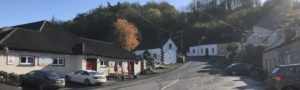


Whether you are climbing your family tree or interested in social history, local place names or folklore we welcome you to Glenmore-History.com and hope that you enjoy your visit.
L A T E S T P O S T S

Archaeology Around Glenmore
-
From Danny’s Files: The Early Public Transport Through Glenmore
-
Founder of Glenmore History’s Anniversary
-
An Unusual Glenmore Grave: The Brereton Family
-
The Plight of Richard Fitzgerald (1793-c. 1860) of Aylwardstown, Glenmore
-
The 1882 Contested Application for a Glenmore Pub
-
From Danny’s Files: Rev. Fr. John Fitzpatrick (c. 1758-1835) P.P. of Slieverue-Glenmore
-
The Tragic Death of John Millea (1870-1935) of Treanaree, Slieverue
-
Family Tree Workshop 2026 Photos & Forms
-
More Glenmore Photos: From the Eamon Jones Collection


South Kilkenny Historical Society’s Events for Heritage Week 2024
Below are two local free events for Heritage Week 2024.
Mystery Tour of Carrigeen
Tour Guide: Eoin Walsh
Sunday, August 25th
Starting point and time: St. Kevin’s Church, Carrigeen at 2pm
Free – all welcome
Walking in the footsteps of the O’Neills’ of Owning
Tour Guide: Paddy O’Shea
Saturday, August 31st
Starting point and time: Owning National School at 10.45am
Free – all welcome
The O’Connor Brothers of Ballyfacey, Glenmore: Edward & John J. O’Connor

Recently we were asked about a grave marker in Kansas City, Missouri. It marks the graves of two Glenmore brothers Edward O’Connor (1882-1943) and John J. O’Connor (1886-1943) of Ballyfacey, Glenmore. They were younger brothers of George O’Connor (1881-1966) of Ballyfacey. Today, we are going to highlight the lives of these two brothers and their tragic deaths within two weeks of each other in 1943.
Ballyfacey, Glenmore
The name O’Connor was generally called Connors or Conners in Glenmore even in the Parish Records. The O’Connors’ originated in Wexford (Michael Hoynes, 4 Aug. 2024). The name George Connors has long been associated with Ballyfacey, and at one point two cousins bearing the name lived side by side. To distinguish the families the locals referred to them as Big George and Little George.
The first record located in the parish records of a George Connors was a baptism on 11 November 1793 at Ballyfacey. The child’s parents were Thomas Connors and Johanna née Bolger. Two years later another George Connors was baptized at Ballyfacey on 2 May 1799, the son of John Connors and Mary née Culleton.
Parents of John J. O’Connor (1886-1943) & Edward O’Connor (1882-1943)
The parents of the brothers who died in 1943 were John Connors (1830-1911) of Ballyfacey and Bridget Roche (1847-1905) of Rathinure, Glenmore. John and Bridget married on 4 March 1878 at Glenmore. John was the son of George Connors (farmer) & his wife Catherine Dollard. Bridget Roche was the daughter of Edward Roche and his wife Elizabeth Malone of Rathinure, Glenmore.
John Connors and his wife Bridget Roche had five known children all born at Ballyfacey: [1] Catherine Connors (b. 1879); [2] George Connors (b. 1881); [3] Edward Connors (b. 1882) [4] Patrick Connors (b. 1883); and [5] John Connors (b. 1886).
John J. O’Connor (1886-1943) Kansas City, Mo.
According to the Naturalisation documents that John Joseph O’Connor filed in the Federal Courts of Missouri seeking US citizenship, he emigrated from Ireland in 1905 aboard the Campania, landing in New York on 17 September 1905. He was granted citizenship at Kansas City, Missouri on 4 March 1908.
A review of the Campania’s register reveals that the ship arrived in New York on 16 September 1905. John was 19 years of age, and stated that his father paid his fare. He declared that he had $10 and was traveling to his cousin, Rev. P. Culleton at St. Mary’s Rectory, Westville, Illinois.
It is not clear how or why John went to Kansas City, Missouri, however, he attended and graduated from the Kansas City School of Law in 1908. This independent law school was founded in 1895 by three young local lawyers. Its most famous graduate was Harry S. Truman. In 1911, John married Catherine Queenan, (a native of Mayo) and the couple had 6 children. Catherine died 21 November 1941 at the age of 53.
It does not appear that John practiced law. He became a broker of food and was president of the O’Connor-Thompson Brokerage Company, located at 1104 Union Avenue. A quick newspaper search revealed that John was busy in the community. He was a member of the Committee for Friends of Irish Freedom along with Patrick J. Harpy; James Ahren; P.A. M’Kenna; C.A. Lawler; M.J. M’Nellis; and R.E. O’Malley. During de Valera’s trip to New York in 1919, the Committee telegraphed de Valera and asked him to come to Kansas City for a “monster rally.” (Kansas City Journal, Mon. 30 June 1919, p. 1). Some of the men on this Committee and other organisations that John belonged were John’s pallbearers when he died in 1943.
According to John’s obituary his other business interest was that he was a director of the South Side Bank. He was also a member of the local Democrats, Co-operative club, the Allied Food club, the Knights of Columbus and the Holy Name Society. He held city, state and national offices in the Ancient Order of Hibernians. In fact, he was first elected President of the Missouri Branch of the OAH in 1916 (Kansas City Journal, Fri. 1 Sept. 1916, p. 10).
Kansas City Scandal
The only negative news story that could be located was from 1938 when a former friend sued John. Maurice J. McNellis sued Roy W. Crimm, executor for the estate of William D. Boyle; J.L. Cashen and John J. O’Connor. McNellis stated that from 1921 until December 1935 he was President of the South Side Bank of Kansas City. He alleged the defendants conspired to destroy his professional reputation and asked for damages of $200,000 (The Kansas City Times, Thu. 29 June 1938, p. 2). It is not clear what transpired that led to this suit, but it was during the Great Depression when many banks failed. We found another case that may have been the cause of the lawsuit against John.
William D. Boyle left an estate of $484,499.61 when he died on 3 June 1938 after being hit by a bolt of lightning while watching a golf tournament. Boyle was a member of the Boyle-Pryor Construction Company. This company received city contracts and was being sued by the city to recover $356,000. Boyle’s partner Pryor was indicted in the $356,000 water leak scandal. Two notes in the Boyle estate were alleged to have been executed by McNellis. Both were listed at no value (Kansas City Star, Thurs. 6 July 1939, p. 3).
The City believed that Rathford Engineering was a dummy company operated by William D. Boyle and John J. Pryor of the Boyle-Pryor Construction Company. Rathford was set up to defraud the City (Kansas City Star, Thu. 15 June 1944, p. 6). Ultimately a ten day trial was held and Judge Thomas J. Seehorn found for the defendants. The City appealed to the Missouri Supreme Court where a new trial was ordered (Kansas City Star, Tues. 6 March 1945, p. 3).
John J. O’Connor was not named and apparently had nothing to do with the “water leak scandal.” He and the other defendant, J.L. Cashen were Directors of the South Side Bank and it appears likely they took actions to protect the bank from the scandal. The deceased, William D. Boyle had stock in the bank and secured two notes from McNellis when he was President of the bank. Maurice McNellis went on to form the McNellis Real Estate Investment company, and no further newspaper coverage of his case against John J. O’Connor could be found.
Death 24 October 1943

Just two years after his wife’s untimely death, John O’Connor was killed on 24 October 1943 at 3:55 a.m. when “a motor car in which he was riding crashed into a trolley pole across the street from 5335 Ward Parkway. The motor car spun in the roadway and struck the pole broadside. The side on which O’Connor was riding was crushed. More than an hour was required to extricate him.”
Police reported that the pole was on a curve and a downhill grade. Earlier in the year it also was the scene of a crash “which killed LeRoy Simons, the president of the Simons-Wiles Buick Company.” O’Connor was the passenger in a coupe driven by Eugene P. Sheridan, 49 of 305 West 37th St., a credit manager for a rubber company. Sheridan told police that they were returning to O’Connor’s home at 4133 Mercier St., after an afternoon and night at the Milburn Golf and Country Club (Kansas City Times, Mon. 25 Oct. 1943, p. 1).
John’s wake was held in the family home. He was buried next to his wife and infant daughter, in St. Mary’s Cemetery, Kansas City, Jackson County, Missouri. John’s pallbearers were: Frank Sullivan; John J. Sullivan; Edwin M. Thompson; James P. Aylward; R.B. Lustig; John V. Hill; James A. Edwards; and Joseph M. Morrissey (Kansas City Star, Tues. 26 Oct. 1926, 1943, p. 7). A photo of the O’Connor grave marker can be viewed on Find a Grave.
[Editor’s note: The name Aylward has long been associated with Glenmore. The James P. Aylward (1885-1982) pallbearer was an attorney and served at various times as the chairman of the Kansas City Democrats, the Jackson County Democrats and the Missouri State Democrats. In 1934 the “Pendergast” machine asked him to stand for the US Senate. Aylward declined and instead recommended a county judge named Harry S. Truman” (Kansas City Times, Mon. 26 July 1982, p. 10.) James P. Aylward (1885-1982) the pallbearer was the eldest son of Tobias John Aylward (1860-1923) a native of Rochestown, Glenmore. See our A family surname page for further information.]
Children of John J. O’Connor (1886-1943)
[1] John J. O’Connor, Jr. (1912-1959) graduated from Notre Dame and the University of Kansas City School of Law. He worked for a time as a teller at the City National Bank, and in 1940 he went into the food business as a vice-president at George Hogue Mercantile, Co. . On the death of his father in 1943 he became chairman of the board of the South Side Bank. In 1957, he sold his interest in the mercantile and became president of the South Side Federal Savings and Loan Association in Waldo. He was married and had a large young family at the time of his death aged 47 (Kansas City Star, Tues. 24 Mar. 1959, p. 13).
[2] Catherine B. O’Connor Wyrsch (1914-1976) married Frederick R. Wyrsch, Sr. who was President of the South Side Bank and died in 1964. They had a large family. After Catherine was widowed she married Leo J. Cusick who was a manager of the Kansas City Area Transportation Authority and was a consultant to the Chicago Regional Transportation. Catherine died on vacation while in London, England (Kansas City Times, Thur. 6 May 1976, p. 84).
[3] Eliz. E. “Betty” O’Connor (1916-1918) died in infancy.
[4] Margaret Mary O’Connor Barry (1916-1989) married Robert C. Barry. Prior to her marriage she attended Alvila College and was a 1938 graduate of the College of St. Catherine of St. Paul, Minnesota. During the 1940’s Margaret worked as a librarian in the Kansas City Public Library. She had 5 children (Kansas City Times, Fri. 5 May 1989, p. 50).
[5] Mary Ellen O’Connor Ervin (1921-1999) continued to live in the family home 4133 Mercier until at least her brother’s death in 1959 (Kansas City Star, Tues. 24 March 1959, p. 13). She married Robert Edward Ervin in 1945. He died in 1984. The couple had five known children. Mary Ellen died in Leawood, Kansas in February 1999. In her obituary it was noted that her best friend remained her brother Edward (Kansas City Star, Sun. 21 Feb. 1999, p. 28).
[6] Edward Patrick O’Connor (1924-2020) was a freshmen at Notre Dame in Sept. 1941 (Kansas City Journal, Tues. 16 Sept. 1941, p. 8) just two months before his mother’s death. He graduated from the ROTC Naval Program in May 1944 and served as a Lt. on the USS Alvin C. Cockwell, a destroyer escort ship. He was on the deck of the USS Missouri and watched General McArthur accept Japan’s surrender. Returning to civilian life in Kansas City he became President of the Heritage Federal Savings and Loan, married and raised a family (Kansas City Star, Wed. 29 Jan. 2020, p. A3). He was he last of his family and died at the age of 95 in 2020.
Edward O’Connor (1882-1943) Kansas City, MO to Chicago, IL
Edward O’Connor filed naturalization papers in Kansas City, Mo. stating that he was born 23 April 1882. Edward stated that he arrived in the U.S. on the 27th of September 1907.
According to the Diary of James Aylward of Ballyhobuck, Glenmore [Danny Dowling’s Notebook 2], “Edward Connors of Ballyfacey and W. Grace of Kilbride sailed for the U.S. on 18 September 1907.” The 1901 Census provides that only one Grace family resided in Kilbride, Glenmore. W. Grace was William Grace (b.c. 1881).
Armed with this information we were able to find the two young men on the Baltic’s passenger list. The Baltic landed in New York on 28 September 1907. William Grace, aged 26, stated that he was a farmer. Edward O’Connor was 24 and stated that he too was a farmer and was planning to go to Kansas City where he had a brother.
Edward was naturalized on 6 July 1914 at Kansas City, Missouri. One of his witnesses was Maurice O’Connor of 1822 Summit St., Kansas City, Missouri. Maurice O’Connor per the 1911 City Directory was with the Fire Department. According to the 1910 Census, Maurice (b. 1870 in Ireland) was single, an Assistant Chief, and lodged with his cousin Joseph R. Scanlon who was also employed by the City.
Edward O’Connor remained a bachelor and lived for several years with his brother John J. O’Connor and his family in Kansas City. He worked as a clerk, an accountant and later sold life insurance. In the 1940 Census he recorded that he finished his education after the sixth grade.
Around 1926 Edward moved to Chicago, and died there in 1943. He appears to have remained close to his brother and his family the newspapers reported that he was “an out of town guest” at his niece’s wedding (Kansas City Journal, Sat. 25 Oct. 1941, p. 19). No newspaper articles could be found for Edward prior to 1943. By all appearances he led a quiet life, but here in Glenmore it was reported that he was robbed and killed on his way home one evening. Another rumour was that he was shot. We were unable to find any Chicago newspaper articles that indicated that Edward was the victim of a robbery or other violence that caused his death.
Death of Edward O’Connor (1882-1943)
The Kansas City Times (Tues. 9 Nov. 1943, p. 4) reported the following:
A Second Brother Killed: Tragedy Strikes John J. O’Connor Family Twice in Two Weeks—Tragedy has struck twice in two weeks in the family of John J. O’Connor, 4133 Mercier St. Mr. O’Connor was killed in a motor car crash near 53rd St and Ward Parkway October 24th, and yesterday his family was informed that M. O’Connor’s brother, Edward O’Connor, 61 years old, was found dead along a railroad right-of-way on Chicago’s near North Side early yesterday morning.
Friends of Edward O’Connor in Chicago said he was apparently in good health and spirits when they last saw him. Edward O’Connor, a bachelor, has made his home in Chicago for the last 16 years. He was in the life insurance business. Born in Ireland, Mr. O’Connor came to the United States and Kansas City in 1905. For many years he worked for Bruce Dodson & Co., and was a member of the Knights of Columbus. He left Kansas City in 1926.
He is survived by a brother, George O’Connor who lives in Ireland. A nephew, John J. O’Connor, Jr., East 61st St. Terrace, left last night for Chicago. He said that funeral services would be held in Kansas City.
The Culleton Cousin

The Rt. Rev. Mons. Culleton of Peoria was Patrick Culleton (1877-1960) of Kilbride, Glenmore. He was the son of James Culleton (1845-1912) and his wife Margaret Connors (1839-1918). His parents were married 3 February 1876 at Glenmore. Patrick was ordained in 1900 and appointed to diocese of Peoria on American Mission. He had two brothers, Michael & George Culleton (b. 1881). Margaret Connors Culleton (1839-1918) was a sister of John Connors (1830- 1911) the father of John J. O’Connor (1886-1943) and Edward O’Connor (1882-1943). Thus, the three men were first cousins.
Patrick served in the Peoria Diocese all his religious life. He officiated at the marriage of John J. O’Connor’s daughters in Kansas City in the early 1940’s. Patrick died in 1960 in Miami Beach, Florida. He is buried in St. Mary’s Cemetery of West Peoria, Illinois. To view Monsignor Patrick O’C Culleton’s headstone, see Find a Grave.
It is not known why Patrick used O’C for his middle initial. It is believed that there may have been other priests with the same or similar names, and he wished to distinguish himself by using his mother’s maiden name as his middle name. One of his nephews later became a priest and was also assigned to the Peoria Diocese.
Please send any corrections, additional information or photos to glenmore.history@gmail.com. Special thanks to Michael Hoynes of Ballybrahee, Glenmore for helping sort out the Ballyfacey Conners. The featured photo above is John J. O’Connor’s (1886-1943) yearbook photo from the Kansas City School of Law (1908).
We located a chapter in a book concerning John J. O’Connor which is held in the Kansas City Library. It is not available on line and when we secure a copy we may update this post.
Dr. Kathleen Moore Walsh
Ancient Irish Wakes: The Merry Wake, Keening and the Art of Crying
A Lecture by – Ann Moylan, MA (Hons) Ethnomusicology
Friday 23rd August from 6.00 – 7.45 in Loughboy Library
“Regardless of whether custom calls for festive or restrained behaviour, the study of death rituals throws into relief the most important cultural values by which people live their lives. Life becomes transparent against the background of death, and all fundamental social and cultural issues are revealed.”
Understanding the origins of our Wakes and Funeral Practices may be a key to explaining why we Irish hold our death rituals in such high regard within our communities. This lecture will explain how our ancestors would have seen death not as being instantaneous, but they in fact believed that the spirit of the deceased would continue to preside over the proceedings throughout the three nights of the Wake.
The Wake, unlike today, would not have been led by the clergy, but by the Mna Caointe (Keening Women), or the ‘Caoineadh’, who were hired as professional ‘criers’ and without them, the Wake could not take place. In stark contrast, within the same room, there was what became known as the Merry Wake which was a much-anticipated event of games, boisterous festivities and even courtship.
This 2-hour lecture will explore how, whether riotous or reverent, the Wake was an important ritual for the Irish to honour the spirit of their dead. It will be an immersive event and designed to look as if taking place at a 19th Century Irish Wake, finishing with the creation of a vocal soundscape, a modern-day Keen, as a tribute to the fascinating heritage of our ancestors.
(Please note that due to mature content, this is an adult only event.)
Places are limited. Please phone 0567794176 or email loughboy@kilkennylibrary.ie to book a place.
Loughboy Shopping Centre, Waterford Rd. Kilkenny. R95 TD71
Glenmore in the News: June 1924

In June 1924 the weather improved. It was reported early in the month that a large number of people took advantage of the extremely fine weather and cycled or took an excursion train to Tramore “or other beauty spots” (Munster Express, Sat. 7 June 1924, p. 3). The focus of several of the local newspapers articles was on roads and road crashes. The main road between Waterford and New Ross, that ran through Glenmore, was being improved. One newspaper proclaimed that when the work was complete it would be the finest road in the South of Ireland. There was also a tragic crash involving the Mullinavat handball team that resulted in the driver being charged with murder.
All Ireland Senior Football Final Abandoned
The Kerry football team refused to play Dublin in the All Ireland football final as a protest against the continued detention of the political prisoners was “received with all Irish sportsmen with keen regret. It was hoped that sports would be kept free from politics.” It was thought that it would split the ranks of the GAA.” (New Ross Standard, 20 June 1924, p. 4). “The reason for the sensational refusal to play was the continued detention of Mr. Austin Stack, Chairman of the Kerry County Board and other members of the Kerry GAA,” (Munster Express, Sat. 14 June 1924, p. 5).
Additionally, the Leinster Council GAA reported that the Leinster Championship hurling fixture between Dublin and Leix arranged for Kilkenny was cancelled owing to the refusal of Leix to take part until the prisoners were released. Likewise, the junior hurling tie between Dublin and Kildare arranged for Kilkenny was also cancelled (Kilkenny People, Sat. 21 June 1924, p. 7).
Glenmore GAA Fixtures
Senior Hurling—Glenmore v. Callan, at Thomastown on the 29th of June, Mr. T Mullins, referee.
Senior Football—Cotterstown v. Glenmore, at Thomastown, date to be named (Kilkenny People, Sat. 7 June 1924, p. 11).
Junior Hurling—Glenmore v. Hugginstown, at Knocktopher on August 10th, Mr. Peter Walsh referee.
Junior Football—Courtnaboughla (Goresbridge) v. Glenmore, at the Rower, July 30th, Mr. Patrick Walsh, referee (Munster Express, Sat. 28 June 1924, p. 6).
Emigrants
With the end of hostilities emigrants came home to visit. The estate of an emigrant who was a native of South Kilkenny also featured in the New Ross Standard.
During the middle of June “some twenty returned Americans arrived in the New Ross districts on a visit to their relatives. One lady from near Campile had been away forty years” (New Ross Standard, 20 June 1924, p. 5).
Several claimants from New Ross were “interested in the property of a man named Walsh who is it stated, died intestate in America recently. It appears that he hailed from South Kilkenny, and it is thought he was worth about £30,000. Amongst the relatives who are making claims in respect of the assets are Messrs Martin and John Hand and Mrs. Kneightly, New Ross (New Ross Standard, Fri. 6 June 1924, p. 10). Unfortunately, we were not able to locate further articles to determine where the deceased was from in South Kilkenny.
New Ross Market Prices
New Ross Market Prices best coal, 55s. per ton; second coal, 50s. per ton; eggs 11d. per dozen; chickens, 1s. 2d. per lb., young ducks, 7s. per pair; fish, 2s. 4d per lb. (New Ross Standard, Fri. 6 June 1924, p. 10).
Mullinavat Handball Team Crash
When I mentioned this crash to my husband, he was immediately able to identify the driver as the son of the Kilmacow Creamery Manager. He related that he heard his father, Thomas Walsh (1908-1992) speak about the crash with Danny Dowling (1927-2023). We were unable to locate any notes on the subject in any of Danny’s notebooks that have been transcribed. One person was killed outright, another died a few days later and at least eight others were seriously injured and hospitalized.
The Crash of 8 June 1924
On Sunday the 8th a party of handball players from Mullinavat were traveling to Owning, Kilkenny, to “engage local players in a series of friendly matches.” The lorry carrying the Mullinavat players lost control on a steep hill and turned onto its side. Rev. Father Foskin, of Mullinavat, was seated next to the driver and jumped from the lorry and escaped serious injury. The scene of the crash was a couple hundred yards from the village of Owning, and was at the foot of the hill known in the district as Rath Hill. Eighteen people were being transported in the lorry (Munster Express, Sat. 14 June 1924, p. 4).
One Mullinavat player, John Murphy (c. 1903-1924) the son of James Murphy, publican was killed at the scene. The following were seriously injured and hospitalized.
[1] Andrew McLoughlin, Mullinavat Village, sustained a depressed skull fracture and was operated on Tuesday evening. He died of his injuries at 7:30 on Thursday night the 12th of June.
[2] Andrew Foskin, Mullinavat, Village (brother of Father Foskin) suffered severe injuries to his head. He remained unconscious for some days.
[3] Philip Hoban, Mullinavat Village, suffered cuts to his head.
[4] John White, suffered injuries to his spine.
[5] Thomas Hoban, of Glendonnell, suffered injuries to his head, face and a broken collar bone. A brother of Thomas Hoban was shot by the British military about three years before in Mullinavat.
[6] Patrick Kelly, of Rahard, suffered injuries to his hip and shock.
[7] Patrick Mackey, aged 12, Mullinavat, suffered a broken hand.
[8] Sergt. Dalton, civic guards, Mullinavat, suffered three broken ribs, and severe head and facial injuries.
[9] Guard Leahy, Mullinavat, injured his shoulder and suffered bruises.
Murder Charge
Thomas Walsh, the driver of the lorry was charged with “feloniously, unlawfully, and of malice aforethought kill and murder John Murphy…” Thomas Walsh (18) was the son of Richard Walsh, the Kilmacow Creamery Manager (Munster Express, Sat. 14 June 1924, p. 4).
It is not clear from the newspaper accounts why the driver Thomas Walsh (b.c. 1907) was overcharged with murder. It is difficult to see how on the facts presented that it could have been murder.
The 1911 Census provides that Richard Walsh was 41 (b.c. 1870), and was married to Eliza Walsh, aged 28. Richard was employed as a creamery manager. The family lived in Aglish, Kilmacow. Six children were born to the union but only four were alive in 1911. The eldest child was Thomas Walsh, aged 4, followed by Edward Walsh, aged 3, Michael aged 1 and John Walsh, aged 8 months.
Death of John Murphy (c. 1903-1924)
A witness at a hearing held in Waterford on Wednesday the 11th testified that the lorry was sometimes used as a hackney car. The vehicle was a one ton Ford lorry. There were benches “on the platform” and there were sides around the lorry “platform.” As the lorry was slowly descending the hill the witness heard a loud crack. He assumed it was the brakes. At the bottom of the steep hill the road turned sharply to the right and straight in front was a stone wall. The lorry turned onto its left side when the driver attempted to make the sharp right turn. The witness was unable to state how fast the lorry was traveling as it was the first time he had travelled on a lorry (Munster Express, Sat. 14 June 1924, p. 4).
The judge noted that it would likely be proved that the crash was an accident, however, he wished to hear from other passengers that were sitting on the front bench with the driver. The driver was remanded for eight days and bail was fixed at £100 and one personal recognisance of £100 (Waterford News & Star, Fri. 20 June 1924, p. 2).
According to the 1911 Census James Murphy, aged 36, was a publican in Mullinavat. He was married, but his wife was not listed in the Census. His sister Ellen Murphy, aged 28 was present as were his three children: Patrick Murphy, aged 12; Bridget Murphy, aged 11 and John Murphy, aged 8.
Hearing of 18 June 1924
The defendant returned to court on the 18th and Father Foskin testified that the driver was sober and kept his head even after the brakes failed. Father Foskin was unable to state what the driver was doing trying to control the vehicle after the brakes failed because he knew nothing about motor cars. Richard Walsh testified that he was the owner of the lorry and bought it new. He said it was allowed to carry 14 passengers and it was also used for hauling goods. His son was trained to drive it and had a driver’s license. District Justice Mr. J. J. Molloy refused the information filed against the driver Thomas Walsh for the murder or manslaughter of John Murphy (Waterford News & Star, Fri. 20 June 1924, p. 2).
Inquest for Andrew McLoughlin (c. 1909-1924)
Although no inquest was held for the death of John Murphy an inquest was held for 15 year-old Andrew McLoughlin (c. 1909 -1924) a verdict of accidental death was returned. It was also revealed in testimony at this inquest that the driver doggedly tried to control the lorry and negotiated two turns after the brakes “cracked.” One witness said that the lorry would have made the sharp turn at the foot of the hill except the front left tyre blew (Munster Express, Sat. 21 June 1924, p. 3). The death register reveals that Andrew McLoughlin was a 15 year-old school boy from Mullinavat. He died in the Waterford Infirmary on the 12th of June of a fractured skull.
The Main Road Through Glenmore
The Waterford to New Ross main road was being prepared for steam rolling. Improvements were being carried out by the “efficient” County Surveyor of Kilkenny. “In addition to cutting away the banks at the road sides and levelling them with road material, an arrangement was made with Mr. Doherty to widen the road at Belmount which was so narrow that two cars scarcely had room to pass one another.” Workmen were also engaged in removing the sharp corners at the Milepost Cross and under Slieverue. Further on nearer to New Ross, “the famous Pink Rock—the grave of many a tin lizzy—is to be blasted away and the materials used for filling the sides of the road. When the work is completed it will be one of the finest roads in the South of Ireland.”

“The only obstacle remaining is the railway bridge at Ballyverneen, Glenmore. The approaches are a real death trap to the unwary. It was monstrous ever to allow the railway company to construct the bridge in such a manner over this important road which is the key from Dublin and Wexford to the South of Ireland for all traffic even before the advent of motors. Had the Irregulars blown up this trap during their operations in the district, there would not be many tears shed for it” (Munster Express, Sat. 14 June 1924, p. 6).
Advert: Everyman’s Embrocation
The local newspapers were filled with adverts for local businesses as well as adverts for “remedies.” One that was for Everyman’s Embrocation.
“Don’t say your rheumatism can’t be cured. Send to-day for a bottle of Everyman’s Embrocation. Everyman’s is sold everywhere at 1s. 6d. to everybody” (New Ross Standard, Fri. 27 June 1924, p. 8).
Please send any corrections or additional information to glenmore.history@gmail.com.
Dr. Kathleen Moore Walsh
Vernacular Barns: Glenmore & Ontario

Recently Richard Corcelli shared some information and photos of barn raisings in Ontario, Canada from sometime around the turn of the twentieth century. In many respects the building of barns in Ontario and Glenmore at the time were similar in that both were examples of vernacular architecture. “Vernacular architecture refers to buildings outside the academic or professional architectural tradition. Vernacular building methods and building styles are handed down during the building process by demonstration, rather than by architects’ plans.” These buildings were built by local builders or semi-skilled builders and followed local tradition, limited by local needs, using available building materials. (“Vernacular Buildings” in Art & Architecture of Ireland, Vol. IV: Architecture 1600-2000, Andrew Carpenter (ed.) Royal Irish Academy (2015) p. 330). See our post of 13 June 2024 featuring several old photos of the Murphy family of Ontario, Canada, in the early 20th century shared by Richard.
Irish Vernacular Barns
Vernacular farm buildings in Ireland cannot be readily dated, but examples earlier than 1750 are considered rare. Use of timber as a walling material ceased by this time and outhouses [farm buildings] were built in various Irish regions by mud walling or of rubble stone laid in earthen mortar, with thatched roofs and white washed. (“Vernacular Farmsteads” in Art & Architecture of Ireland, Vol. IV: Architecture 1600-2000, Andrew Carpenter (ed.) Royal Irish Academy (2015) p. 337).

Barns were often the largest structures in Irish farmsteads, and were especially important in the tillage regions of south Leinster and east Munster…often housing lofts for grain and shuttered window openings onto the haggard where corn was stored and threshed. Barns generally had one door and a single slit window for ventilation. Stables and byres were commonly lower structures with cobbled floors. (“Vernacular Farmsteads” in Art & Architecture of Ireland, Vol. IV: Architecture 1600-2000, Andrew Carpenter (ed.) Royal Irish Academy (2015) p. 337). There are still a large number of stone barns across Glenmore, but they no longer feature thatch roofs.
It was not uncommon for Irish stone buildings, no longer in use, to have their stones re-used to build other structures or walls. Danny Dowling noted that the stones from the early church in Hanrahan’s field (across from the present Creamery in Glenmore Village) were used to build the walls around St. James’s Church of Glenmore.
Ontario Vernacular Barns
An unusual event for the Murphy family of Ontario, Canada in the late 19th-early 20th century era was the communal barn raising “bee” where 60-100 men and boys would gather to erect a barn. Women and girls would also gather to prepare the meals for the huge work crew.
The photo above of the men sitting atop the skeleton of a barn being raised was found by Richard Corcelli in his grandparent’s archives, so it likely the featured barn raising took place in their community in Ontario. The Ontario barns were ‘timber built’ due to the large local forests.

Barns were of the ‘post and beam’ design using 10 inch by 10 inch white pine beams to build the skeleton of the structure followed by pine boards as exterior cladding. Classically, barns in the area were 40 foot x 60 foot, built on a local stone foundation, which would form the stable for winter time housing of cattle and horses. Most barns had four bents, (an engineering term for a transverse frame), so that there was a threshing floor in the middle and two bays on either side for the hay and straw and a built-in granary to one side.
Often, barns were ‘bank’ barns’ with one foundation side built into a shallow hill to provide a ramp so that horse drawn wagon loads of hay or grain could be pulled up onto the central ‘thresh floor’.
The beam framework, or ‘bent’, was built lying on the floor of the barn and then raised into position by many men with long pike poles, first to breast height; then supported with short timber beams while the raisers got a breath, then hoisted to the upright position. As illustrated in the photo some men ‘rode’ the bent to upright, then drove hardwood pegs into previously squared mortise and tenon joints,…no metal nails were used.

The roof was made of decay resistant, split cedar shake shingles, once again using local, natural building materials. Richard’s uncle bought a farm on which the timber barn had burned but the stone foundation survived. He located a no longer used intact barn about a 100 miles away; numbered all the beams and hauled them on flatbed trucks to his farm where the barn was re-assembled. An example of early re-cycling.
Thus, the Irish who remained in Ireland like their emigrated kin used local materials to construct their barns and built the buildings with no professional plans. The barns were built to take advantage of local landscape features and needs. It would be interesting to determine how many stone barns are still standing in Glenmore as well as how many are still in use.
Special thanks to Richard Corcelli for sharing the information and photos of the Ontario barns.
Please send any corrections or additional information to glenmore.history@gmail.com. For further information on Irish architecture see the National Inventory of Architectural Heritage.
Dr. Kathleen Moore Walsh
The First Death: Building the Railway Through Glenmore

The railway extension line from New Ross to Waterford began in August 1900 and by February 1901 newspapers were reporting on the drunkenness of the railway labourers or navvies as well as injuries and a death. Surprisingly, in the same article where it was reported that two navvies suffered severe injuries the editor of the Waterford News & Star opined that the best course of action to tackle shebeening and drunkenness by the navvies was to put a well managed pub into Glenmore Village.
See our post of 3 June 2024 regarding the setbacks the railway encountered, the recorded feelings of New Ross leaders regarding the project, and the published list pf proposed compensation to people in the path of the line from Rosbercon to Balyverneen, Glenmore.
Danny Dowling (1927-2021) stated that there were two pubs in Glenmore Village until the then parish priest forced them to close circa 1870. Glenmore Village did not obtain a pub until 1963. See our post of 8 May 2023 regarding Glenmore Village losing its dry distinction.
Tremendous Drunkenness Among the Navvies
The Waterford News & Star (Fri. 22 Feb. 1901, p. 8) published the following article:
“At the Petty Sessions,… District Inspector Mercer, Piltown, Prosecuted one Mary Fokes, alias Russell, a New Ross traveling huckster, with selling intoxicating drink without a license. The prosecution was brought under the 3rd section of the Licensing Act of 1872, and for the defence, Mr. John B. Colfer, solicitor appeared. Sergeant Stapleton proved that the navvies working on the Railway line at Glenmore were lately more drunk than ever, and that Mary Russell’s movements amongst them he suspected that she was conveying them lots of stimulants.”
“On the fourth of the present month he ambushed the defendant with a pony and car arrived on the scene, the navvies regaled themselves with porter, and he saw money pass. The car contained several dozen of full and empty bottles of porter and whiskey. John Power, navvy, deposed to having purchased three bottles of stout, and paid six pence for them on the occasion, where Mr. Colfer remarked that they were dirt cheap. Mr. Mercer pressed for the full penalty, and said there was tremendous drunkenness amongst the navvies.“
“Mr. Colfer ridiculed the D.I’s statement as to all he drunkenness amongst navvies being attributed to Mary Russell. He confessed that he never heard of sober navvies. He submitted that the defendant was ignorant of the law…, however the court imposed a £5 fine…”
Dry Glenmore
The editor of the Waterford News & Star then stated, “Those who like navvies are determined on obtaining drink will surely succeed somehow in their intention, and the persistent refusal of the licensing authority to grant a license between the bridge of Ross and the village of Slieverue, a distance of nearly 12 miles, covering a populous district of country serves as a strong inducement to the carrying on of such illegitimate drink traffic, and much Sunday debauchery as well as on Monday.”
“The granting of a publican’s license in the parish of Glenmore to our mind would raise instead of lower the morale of the district. It would be waste of time to argue the superiority of a well conducted public house where good drinks would be sold, over the prevailing shebeening in noxious intoxicants carried only in stealth all over the district, particularly on Sundays and holidays.”
“There seems to be a basis of old standing against granting a license for the sale of intoxicating drinks in Glenmore. It dates from the time that faction fights, when there were a couple of badly conducted licensed houses in the village, and of course in the time of Sunday selling, and it would appear that forty or fifty years ago, the abuses had become so glaring that the authorities felt bound to abolish the then publican’s license.“
“Since then applications, all without avail have been made for new licenses, consequent on the fears and apprehensions given rise by the sandals of two or three generations ago. The writer, however, thinks and believes the majority of people in Glenmore will agree that the time has come when the ban of half a century ago ought in justice be removed” (Waterford News & Star (Fri. 22 Feb. 1901, p. 8).
Serious Injuries at the Milltown Cutting, Glenmore
After advocating for a pub the newspaper then reported on two very serious accidents that occurred on the Ross and Waterford railway line under construction. “The accidents, though two miles apart, occurred almost at the same time. At the Milltown cutting, within 3 miles of New Ross, a man named Power, who belonged to the locality was the victim of an embankment slip of a couple tons of earth. Power’s body was badly crushed and one of his legs broken. He was conveyed by the ambulance car to the Union Workhouse Hospital, New Ross” (Waterford News & Star (Fri. 22 Feb. 1901, p. 8)
Serious Injuries at the Carrigcloney Rock Cutting, Glenmore
“The second accident took place at the Carrigcloney rock cutting, and where a navvy named Roche unknowingly approached a part of the cutting where an explosive was just set, and one of his limbs was just severed from his body, while his body and head suffered terribly. The doctors in attendance decided that an amputation of the limb was necessary to prolong his life, but Roche would not assent to the ordeal and was sent to the Waterford Union Hospital. It is considered that his case is a very serious one indeed” (Waterford News & Star (Fri. 22 Feb. 1901, p. 8).
Death of Patrick Roche (c. 1859-1901)
Our research in the death register has revealed that Patrick Roche, a 42 year old married, labourer, residing in Glenmore, died on the 22nd of February 1901 at the County and City Infirmary of Waterford. He died “from the effects of injuries accidentally received on the 19th of February whilst blasting.” An inquest was held into his death on the 28th of February by the Waterford Coroner, Edmund Power. We believe that Patrick was the first man to die during the construction of the railway line through Glenmore.
The Munster Express reported that Patrick Roche was injured on Wednesday the 20th of February. He was engaged in blasting a quarry at Glenmore, Co. Kilkenny. “His injuries were very serious, and he was at once conveyed to the County Infirmary, where it was deemed by the doctors necessary to amputate one of his legs. He, however, succumbed to his injuries on Friday at 3 pm. His remains were removed to his late residence on Saturday evening. An inquest was held at Mr. David Cant’s public house, Johnstown [Waterford City], on Thursday last. Mr. Smith, D.L., Head Constable Alen, and acting sergeant Teese watched the case on behalf of the police, and Mr. D. Dunford, solr. was present on behalf of the contractors (Pearson & Son, New Ross).” A jury was sworn (Munster Express, Sat. 2 March 1901, p. 5).
The Evening News (Waterford) provided additional details. Evidence was given by Michael Connolly, who was working with the deceased at the time of the accident, to the effect that the deceased, whose business it was to set the charge and ignite it, returned after putting the fuse to it, bit as there was no explosion, and thinking he had not set fire to it, he again returned, and just as he was within a yard of the place it exploded (Evening News (Waterford) Thurs. 28 Feb. 1901, p. 3.)
After hearing the evidence of the widow, Mr. Bannett (engineer) and a labourer named Walsh, employed on the extension; also Dr. Kelleher and Head Constable Allen, the jury found that the deceased died from the effects of the injuries of an accident received whilst blasting on the New Ross and Waterford Extension Railway at Carrigcloney, and that as deceased was inexperienced blasting, the company should compensate deceased’s widow for the loss she has sustained, and they came to the conclusion that an experience person should be in charge and see that the proper time should be given before the men should return to the place of blasting” (Munster Express, Sat. 2 March 1901, p. 5). According to the New Ross Standard, Patrick Roche was from the north County Kilkenny (New Ross Standard, Sat. 23 Feb. 1901, p. 5).
James Power (c. 1854-1920) of Jamestown, Glenmore
The New Ross Standard, identified the other man injured, named Power. He was James Power of Jamestown, Glenmore. He was badly crushed by falling earth from the Forrestalstown (sic) cutting rather than the Milltown cutting (New Ross Standard, Sat. 23 Feb. 1901, p. 5). James Power survived his injuries and was found still residing in Jamestown, Glenmore in 1911.
We believe that the injured James Power, of Jamestown, was married to Catherine Purcell (c. 1861-1945). The couple married on 3 October 1886 at Glenmore. James was a labourer and son of John Power (farmer) of Jamestown. Catherine was the daughter of Edmund Purcell (labourer) of Forrestalstown (sic). At the time of their marriage James was 34 and Catherine was 25. In the 1901 Census Catherine was living in Jamestown, Glenmore (aged 35) with her children. James was not present, but he may have still been in the hospital. In the 1911 Jamestown Census he gave his age as 60 and Catherine or Kate said that she was 50. In 1911, James was employed as an agricultural labourer. The couple are buried in Glenmore, and their headstone provided their dates of death.
Please send any corrections or additional information to glenmore.history@gmai.com.
Dr. Kathleen Moore Walsh